Posts

Toolkit: Measuring impact

Return to Toolkit homepage

It’s easy to claim that local studies libraries are contributing to broad service priorities, such as increasing the visitor economy. However, making a claim that can’t be backed up by strong evidence runs the risk of undermining the credibility of the service with decision-makers within the authority.

Although activities often have some sort of evaluation or feedback, this may not always be designed in such a way as to collect evidence that can be used to demonstrate how this has helped the local studies service to contribute to strategic priorities.

It is often easier to measure outputs rather than outcomes, which is why outputs are often used as evidence. The drawback with this approach is that outputs don’t demonstrate impact and don’t necessarily resonate with stakeholders.

Outputs are defined as what was produced or delivered (e.g. the number of family history courses run) whilst outcomes are the differences made and the benefits that customers receive as a result of the outputs (e.g. a person using the knowledge they gained on the course to find lost family and feel a sense of identity that they hadn’t felt before). Whilst outputs are the “what”, outcomes are the “why.”

Outcomes may best be measured through stories rather than statistics, so it can be useful to try to capture stories from participants in any activity.

The Inspiring Learning for All (ILFA) framework was launched by the Museums, Libraries & Archives Council (MLA) in 2008 as a way for museums, libraries and archives to develop their learning offer. 

The framework transferred with other MLA functions to the Arts Council in 2011 and was refreshed in 2014. 

The ILFA framework includes the use of Generic Learning Outcomes (GLOs) and Generic Social Outcomes (GSOs) to provide evidence of the benefits people gain by interacting with arts and cultural organisations. 

The Arts Council website give useful tips for capturing impact as well as other resources and templates relating to the GLOs and GSOs.

Got something to add?

Do you have any comments, suggestions or updates for this page? Add a comment below or contact us. This toolkit is only as good as you make it.

Return to Toolkit homepage
Event: Lessons learned from family history digitisation

Archives South West Webinar

Lessons learned from family history digitisation

Wednesday 21 April 2021 10.00-12.00

Archives South West is an English regional collaboration of local authority funded services whose vision is to promote collections care and knowledge and to encourage public engagement with the South West’s rich and varied archival heritage.

In recent years, many local authority archive services have worked with family history publishers such as Ancestry and Findmypast to digitise, index and publish popular collections such as parish registers. The costs of the digitisation are met by the publisher whilst the archive service also receives a royalty.

As part of a project looking at the potential of newspaper digitisation, Archives South West have collated lessons learned from previous digitisation projects that used a licensing approach. This project was funded by The National Archives.

This webinar is aimed at local authority archives and library staff in the United Kingdom who are thinking about working with a family history publisher to digitise collections or are renegotiating current contracts.

The webinar will be facilitated by Janet Tall,  Head of Archives, South West Heritage Trust, and Heather Forbes, Head of Archives Service, Gloucestershire Connty Council. Current speakers include:

– Kevin Bolton, independent consultant: lessons learned from the South West.

– Kim Collis, County Archivist, West Glamorgan Archives: the Welsh parish registers digitisation project.

– Larysa Bolton, Heritage Collections Manager, Manchester Central Library: the Greater Manchester Archives and Local Studies Partnership approach to family history digitisation.

There will also be an opportunity for questions and a general discussion.

The webinar is free, but priority will be given to Archives South West members and local authority archives and library staff in the United Kingdom.

The webinar will take place on Zoom, login details will be sent nearer to the event. To register, please visit https://www.eventbrite.co.uk/e/archives-south-west-lessons-learned-from-family-history-digitisation-tickets-141261185007

For more information, contact Kevin Bolton at kevin@kevinjbolton.com

Job: Heritage Development Librarian, Bristol

Bristol City Council are advertising for a Heritage Development Librarian. This is a permanent/full time position. Applications close: 21/03/2021.

“We are looking for an enthusiastic and self-motivated individual to apply for the post of Heritage Development Librarian. You must be a qualified librarian or archivist with a passion to develop and promote the local studies collection, and the ability to inspire all ages to discover family and local history. In short, we need a person who will bring our collections to life to enable our customers and citizens to celebrate Bristol’s rich cultural heritage and diversity.”

Further details here


Local studies and me

Janet Knight, Local Studies Assistant at the Rochester upon Medway Studies Centre from 1993 to 2008, looks back at her time in local studies:

Firstly I would like to declare that working as a local studies and archives assistant for many years was fulfilling, exhilarating and fascinating.

My schooling after the War was mediocre and as much as I loved history not everyone in our class did, so lessons ended up being all giggles and yawns.

I did a variety of jobs over the years. I worked as a rental car manager for 10 years, but it was never what I ever imagined myself doing. It was extremely stressful and at times very unrewarding with no fulfilment. My real love was history especially medieval.

So imagine my joy when I applied for and got a job at Rochester upon Medway Studies Centre in 1993. At my interview I was given my first glance of the strongroom it was full of wonderment and surprises, then I was shown the Local Studies Area and  I knew I just had to land the position of Local Studies Assistant.

How incredibly lucky was I that the Team at the Centre saw in me a passion for history and a desire to learn about past and present life. They offered me a once in a lifetime experience of working with archives and local studies. In the many years I worked at the Centre it never disappointed.

So what was it that made this job, being a local studies and archives assistant, so special?

Local Studies and Archives are closely linked but different.  When used correctly and together Archive collections and Local Studies collections are a marriage made in Heaven.

For instance, the Local Studies materials could help answer questions posed by documents in the Archive collection or fill the gaps between official documents and so assist researchers.

It was about caring and preserving unique and rare documents and then making them available to all who want to research the history, people, places, and events of the local area.

It was about using and spreading information to all ages. It was about needing to provide and care for ephemera, photographs, written evidence, memory tapes and so very much more. It was about protecting all these resources for future generations to share. It was about keeping wonderful documents for ever- never to be lost.

And now in the computer age it is about saving them and sharing them in whatever format is desired.

Local Studies staff of course need training and qualifications; these are very are important.  But this job requires a passion and dedication to finding out about the past and sharing it with people today and in the future. I am so glad that I was given the opportunity.

Toolkit: General web-based resources

Return to Toolkit homepage

What can’t I find on this page?

We have tried to put web-based resources and projects into our main theme pages:

  1. Book stock
  2. Maps & plans
  3. Oral history
  4. Photographs & other visual material
  5. Newspapers
  6. Ephemera
  7. Directories
  8. Archives
  9. Subscription websites
  10. Archive transcriptions

However, there are some online resources and projects that defy classification, so here is is a selection of them.

General local studies resources:

British History Online : What it says on the tin – as of December 2020, it contained “nearly 1300 volumes of primary and secondary content relating to British and Irish history, and histories of empire and the British world. BHO also provides access to 40,000 images and 10,000 tiles of historic maps of the British Isles.” Plus material from the Victoria County Histories!

 Society of Antiquaries of London subject index contains lots of references to local history material dating from 1930s to 1988.

Scottish Resources:

Scottish Local History Forum’s special issue on online resources

Got something to add?

Do you have any comments, suggestions or updates for this page? Add a comment below or contact us. This toolkit is only as good as you make it.

Return to Toolkit homepage

Toolkit: What is the role of a Local Studies Librarian?

Return to Toolkit homepage

The Local Studies Librarian is the person who collects, arranges and makes available resources about the local area. In essence, they curate the ‘National Collection’ for their section of the country.

Those with responsibility for a local studies collection should hold an accredited postgraduate qualification in library and information science. Many employers also look for CILIP Chartership or a willingness to work towards Chartership of CILIP.

As can be seen by the structure of this toolkit, Local Studies Librarians are all-rounders. An experienced local studies librarian will have the vast majority of the skills required by librarians across the sector, including cataloguing, classification and indexing skills, customer care skills, creating and maintaining relationships with stakeholders, managing staff and volunteers, service planning, website design, teaching and presentation skills, project design, digitisation, conservation, marketing and, after a long day, the willingness to shelve heavy bound newspapers. Most will quickly fall in love with the history of the area they care for and it will become a life-long affair.

Local Studies Librarians used to feature in every major library.  In some places this responsibility is no longer a separate specialism, but one shared by several staff. But the essence of the role is the same and its importance must be upheld.

The big three

Collecting

The Local Studies Librarian has the responsibility to monitor and collect information output about their collection area

Typical library resources are collected:

  • Books, journals, newspapers, maps and these resources can be catalogued in the normal way
  • But information comes in many other formats, all of which should be collected if possible:
  • Pamphlets, leaflets, ephemera: tickets, notices, posters, notes, cuttings, reports, directories
  • Community produced materials
  • Visual documentation:
  • Photographs, Postcards, Prints,
  • Digital data sources; Born digital files; film clips, audio recordings

Once they have been collected they then need to be catalogued, with different resources being described in different ways.

Sorting and storage

Unlike most lending stock in the library, local studies materials tend to be kept even when they are not being borrowed and their content is deemed outmoded or even inaccurate; as with clothes, fashions will change. The remit is to build up a comprehensive collection of materials from all ages and standpoints. We are not particularly swayed by the literary merit of works; we are interested in capturing resources from all decades and keeping them for their interest to future generations.

So storage is a potential problem; our collections increase with the years. This is often difficult to convey to colleagues, both within the library service and elsewhere in our parent organisations.

Sorting the material we collect is also problematic. In the past many Local Studies Librarians devised their own classification schemes to try to circumvent the fact that much of the material is likely to end up with the same class number or code when a standard classification scheme is used. But using such in-house schemes is no longer so common. They cause problems for succeeding staff, and do not sit comfortably with networked library catalogues, especially when many library services are now part of consortia with joint catalogues.  

Promotion and sharing of resources

Local Studies Collections at their best are important heritage and cultural resources for the local community and for those interested in the catchment area.  They can help people of all ages to find out more about and to appreciate their surroundings. They are useful for creative people, learners and educators. The Local Studies Librarian has a responsibility to share the resources held; to educate, inform, entertain, enrich and add value to the life of the local community.

Methods of promotion/ community engagement include:

  • Answering enquiries and helping people use the collection.
  • Exhibitions
  • Publications and articles
  • Special events
  • Training courses
  • School and learning resources
  • Partnership working
  • Forging relationships with local organisations and community groups
  • Reminiscence and oral history
  • Group visits
  • Indexes
  • Social media
  • Media interviews

Our collections reflect the lives of the ordinary people who make up an important aspect of our nation’s history, one which has not always been recognised. But Local Studies Librarians know the value of local history and it is our job to share that knowledge with others.

The Local Studies Librarian has an endlessly interesting role, enthusing others about our collections, preserving old publications, engaging with collections about the past, collecting information as it is produced and saving it for the benefit of the current and future generations.

Typical local studies roles:

Local studies paraprofessionals

Additional local studies staff should be provided in sufficient numbers to oversee public access to the collection effectively, to answer routine enquiries and to assist local studies librarians with their other duties.

All members of the local studies team should possess a reasonable proportion of the attributes expected of a local studies librarian, with customer care skills and a willingness to develop personal knowledge of local studies of prime importance.

As with everyone who walks into a local studies library, supporting staff will bring with them their own strengths, weaknesses and experiences and these should be harnessed in order to build an effective local studies service. After all, if a Local Studies Assistant had a background in family history, the use of social media, teaching or IT, local studies units would be unwise not to make the most of their skills.

If the collection is housed within a joint local studies & archives unit, assistants may take on both local studies and archive duties.

Volunteers

Volunteers are increasingly becoming important members of the local studies team, providing help and support by performing talks that staff would never have time to do. More information on the role of volunteers will be found in the volunteers section of the toolkit.

Head of Heritage

A heritage professional normally responsible for the management of services such as the County Archive, Local Studies Services, Museums and Archaeological Services. Can be part of the Senior Leadership Team of a wider Library or cultural service. Some post holders will also be the “County Archivist”, which is a role reserved for a qualified archivist.

County Local Studies Librarian/Senior Librarian, Local Studies

The co-ordinator of local studies work across a county. Increasingly they sit within a County Record Office structure and are a member of the service management team, reporting to an officer with responsibility for archives and other heritage services.

Local Studies Librarian in a county record office

Assist the County Local Studies Librarians with their duties.

Local Studies Librarian within a unitary authority

As County Local studies Librarian, though on smaller scale. The post could be a within a small Borough archive service or within the library service.

Librarian with Local Studies as part of their role

In a county tends to be the librarian with responsibility for collections and initiatives within part of a county. In a smaller service local studies this can be one aspect of a larger role. Line management of this role tends to be within the library service structure.

Sample Job Descriptions and Person Specifications

Got something to add?

Do you have any comments, suggestions or updates for this page? Add a comment below or contact us. This toolkit is only as good as you make it.

Return to Toolkit homepage

New events with People’s Collection Wales

In March and April, our friends CILIP Cymru Wales  are running three events of interest to local studies librarians. This follows on from last year’s successful event on sharing collections with People’s Collection Wales. Sessions are free and open to all.

Contributing to the Memory Archive with People’s Collection Wales

11/03/2021

This session will look at using special collections and archive material for reminiscence with people living with dementia. Further details: https://www.cilip.org.uk/events/EventDetails.aspx?id=1480408&group=201306

Creu, rhannu a mesur effaith cynnwys digidol Llyfrgelloedd Cyhoeddus

25/03/2021

Dilynir y sesiwn hon gyda hyfforddiant rhithwir a chefnogaeth bwrpasol i helpu llyfrgelloedd yng Nghymru i roi eu heitemau a’u casgliadau ar-lein. Further details: https://www.cilip.org.uk/events/EventDetails.aspx?id=1480519&group=201306

Curated content: using digital materials to tell stories with impact

08/04/2021

This session looks at creating stories with impact by bringing together digital and digitised materials in People’s Collection Wales. Further details: https://www.cilip.org.uk/events/EventDetails.aspx?id=1480502&group=201306

Toolkit: Who uses a local studies collection?

Return to Toolkit homepage

General principles

Local studies play a vital role in fostering community awareness and identity. By maintaining and broadening a shared interest in our common heritage the local studies service can actively promote the principles of equality and diversity.

Users of local studies libraries come from all areas of society, irrespective of class, colour, religion, ethnicity, educational background, gender, age or disability. All users’ needs should be served with equal care and attention. Some people are less able to explain their needs and requirements so library staff must be prepared to spend time with them, helping them to derive full benefit from the library’s resources.

The first step is creating and maintaining a welcoming atmosphere that is available to all. This includes providing extensive opening hours, a comfortable reading room and an easy to use online presence. Libraries Connected provides some guides which are aimed at lending libraries but include some useful hints – https://www.librariesconnected.org.uk/resources (especially Talking to customers and The reader experience).

Equality, diversity and inclusion

Local studies libraries have a proud tradition of reaching out to communities and the various groups within them and this tradition should be maintained and further developed. Further details will be found in the Community Engagement planning section of the Toolkit.

Many people still believe that local studies libraries are “not for us” so special efforts have to be made to attract users from all backgrounds. An understanding of the principles of equality and diversity is essential.

The Archives and Records Association has a useful section of diversity and inclusion resources in the resources section of their website.

Consultation with users and non-users is another tool to make services more relevant to all. The National Archives has some guides.

Keeping statistics which record information on users’ backgrounds can show which communities are not being reached. With this information in hand, you can then find ways to reach the more elusive parts of the community.

The Local Studies Librarian as the facilitator

The task of the local studies librarian is to assist users by providing the resources for research, alerting researchers to relevant material and providing guidance in use of the material, both within and beyond the immediate collection.

Requests for moderate amounts of subject information should be accommodated. Though users should normally carry out their own research, the amount of help an individual researcher will require will vary from case to case. For example, users who cannot visit through distance or disability may require special consideration.

Staffing levels are not always sufficient to deal with the demand so guidelines allocating time and resources should be established. Enquirers should be given clear information about the level of service they can expect free of charge. Some local studies libraries limit this to half an hour and some charge for additional support.

Building and maintaining relationships with users is essential. Use of social media and e-mail lists is essential to promote library events, put people in touch with one another, provide speakers for talks, facilitate consultation and assist in stock selection by providing information about research priorities.

An informal atmosphere and interaction with users is invaluable in building up the collection, increasing use, providing volunteers and reacting to demand.

Types of researcher

It is essential for the local studies librarian to develop an understanding of the full range of users expecting service.

Use of collections has expanded enormously and readers come from a wide variety of backgrounds and professions while demand from traditional areas such as family and local historians and educational users has also increased.

Family historians

The massive expansion of interest in family history over the last twenty or thirty years has led to genealogists becoming a mainstay of all local studies libraries. Some family historians are people with no tradition of library use and perhaps limited formal education. The group will also contain some of your most enthusiastic users.

Library staff will need knowledge of the practice and principles of family history and referral skills to point users to other relevant collections.

Support through guides, information sheets and possibly courses and workshops will be necessary though the active and supportive family history community may provide volunteers who can help with this. Close liaison with family history societies benefits the society and the library, with many now manning information points, helping to run Ancestry drop-in sessions and family history courses in the library.

For many the fact that the library holds material relating to their family is a matter of pride and creates a sense of attachment. This often leads to family history users becoming volunteers and donating interesting material to the collection.

Local historians

There has been a similar expansion of interest in local history. The story of your area is no longer just a tale of the rich and powerful of the distant past, but is a rich tapestry of experiences of everyone who has lived within your collection area. It attracts a wide range of people, some without a tradition of library use, but including many retired and unemployed people who may feel they are denied the opportunity to contribute to society in other ways. Local history is a rare area of study where amateurs can produce work of equal value to professionals but newcomers may need guidance in using resources and possibly in research, analytical and evaluation skills. The development of these transferable and life skills often leads to a growth of self-confidence and can only benefit people, especially in an era of “fake news”.

House historians

People are fascinated by the history of their houses and the full range of local history resources can be used to discover more about the history of a property and the land beneath. It is a good way of getting non-users interested in the collection and the wider history of their area.

Teachers

Schoolchildren are now expected to use primary sources and the combined expertise of library staff and teachers is needed to make the most of complex materials. Liaison with local teachers is vital but can be difficult to achieve, though links with colleagues from schools library services and children’s teams can often help.

Though primary school children in Key Stage 1 & 2 are often given local history projects, our resources can be used for virtually any area of the curriculum; though links to citizenship and geography are more obvious, English teachers can examine changes to language contained in materials from different eras, maths teachers can use maps to teach scaling and art teachers can find inspiration in anything and everything.

Our resources can also be used by all ages, from Reception-aged children doing colouring to A-Level Geography pupils investigating how a local high street evolved over the decades. Less academically inclined pupils can also share an interest in their locality which can help to build community awareness.

Creation of online lesson plans linked to the curriculum can be useful. Examples can be accessed at https://www.tameside.gov.uk/archives/educationalresources. Examples of other services for schools linked to the curriculum appear at http://www.archivesplus.org/schools/. Walsall & Merton have also produced a guide to their services for schools.

A good introduction to a local studies library is thorough class visits and INSET sessions for teachers. The provision of materials for class-based activities can be the spark which leads to a lifelong interest in local history.

Children

Children can be reached through more leisure-orientated events such as craft sessions or local history treasure hunts, especially during the school holidays. Again, good contacts with your children’s team are essential.

Researchers, undergraduate students & postgraduate students

Academics probably need less help than other users but will draw heavily on your stock knowledge, making an awareness of other relevant regional, national and specialist collections especially helpful.

Many researchers, both professional and amateur, will be interested in a wider field such as economic or social history, transport history, the history of photography or science etc.

As with teachers, though historians are likely to use your collection in greatest numbers, researchers in virtually any field will come through your door. Geographers, geologists, archaeologists, folklorists are all likely to use local studies libraries at some point as they may need access to your maps, photographs, statistics, reports, grey literature, music, folk tales, dialect writings and speech. Some of this will be of a technical nature and unique to the local studies library – presenting cataloguing and indexing challenges.

The reports these researchers produce can be useful additions to the collection, especially any unpublished materials.

Black and Minority Ethnic community

The contribution of people from Black and Minority Ethnic groups to the history of the locality needs to be recognised and recorded. Without relevant materials in the collection people from these communities are not likely to use the library or consider depositing materials and this could result in an increasingly partial and irrelevant local studies collection and service.

Depending on the circumstances of its development, a local studies collection may need to be pro-active in engaging with the BME community and may even involve the creation of sources, for example, through oral history projects. People from minority ethnic communities have lived in the UK for generations and it is sometimes possible to harness the energies of the army of family historians to highlight any early references they may come across in their research in a “recovering history” project. The Black and Asian Studies Association has useful material on its website.

LGBTQ+ community

In a similar way to the BME community, materials should be sought out or created to make sure the contribution of LGBTQ+ people is recognised and collections are made relevant for them. Cataloguing and indexing of this material should be sensitive to the community and use terms which they find acceptable. A similar “recovering history” project can pick up references to the hidden history of these groups. Manchester Archives+ holds material relating to the local LGBTQ+ community – https://manchesterarchiveplus.wordpress.com/category/radical-manchester/.

Other under-represented groups

Local Studies collections need to reflect and attract the communities in their collecting area. Local Studies Librarians should be aware of the different groups in their community and how they are represented in their collections and be proactive in filling the gaps in their collections. As well as groups such as BME and LGBTQ+ groups discussed above, it should also look at groups such as women, class and migration from different areas of the UK. Most authorities will have members of library staff with ‘inclusion’ as part of their remit and making the most of their knowledge, experience and contacts should be advantageous. Visit the Collection Development section of the toolkit for more information.

People with disabilities

It is rare for public buildings not to be fully accessible, but there may be other ways of providing the local studies service to people with disabilities. Attempts can be made to take resources and exhibitions out to groups who cannot visit, materials can be made available through digitisation and loan boxes. Audio material and podcasts can reach people with visual impairments. Bringing people together for talks, workshops or as volunteers can have beneficial effects on combating isolation and mental health problems.

Elderly people

Local history has a particular appeal for older people. Nostalgic interest in the past can often lead on to more serious study, involvement as a volunteer or in a specific project. Links with Age UK and similar groups help promote the library to older people. The local studies collection includes a range of resources of great use for reminiscence work with older people and those suffering from dementia. Old photographs, adverts, oral history materials, music, dialect writings can all be useful. Many elderly people are unable to visit libraries. Local studies services should consider visiting residents of care homes and sheltered housing. There may be activities coordinators based in these locations who can assist in the organisation and delivery of sessions. Your authority’s home library service may have some useful contacts.

Projects can be as simple as printing-out carefully selected images from your collection in loan boxes or, as North Somerset has done, placing them on tablets. Examples of oral material recorded by the East Midlands Oral History Archive can be heard online. There is a good introduction to reminiscence work for those in care homes can be found on the Social Care Institute for Excellence website, whilst tips can be found on the oral history pages of the toolkit. Lincolnshire also ran an interesting lottery-funded project combining reminiscences and craft activities.

Commercial interests

Businesses need to use local studies libraries for building community profiles and for publicity materials. Pubs and restaurants often want old photographs for display. All forms of media – radio, television, print media, social media and websites can use library resources. Commercial interests are entitled to a basic free service and there may be additional opportunities for income generation. With media use a balance may have to be struck between promotion of the service and charges – see the Budgeting section of the Toolkit.

It is always useful to impress on commercial users that the library will benefit from material they publish such as reports, trade catalogues and brochures.

Community groups

Many community groups such as churches, trade unions, amateur dramatic societies, civic societies, women’s groups, leisure organisations and, of course family and local history societies use local studies libraries for a variety of purposes – such as enquiries, commemorations of events in their history, talks, exhibitions etc. This can be mutually beneficial as the societies can promote the library and may have material which can be added to the collection.

As with researchers, these groups create histories of their own organisations and it is important to collect the fruits of their work once they have been published.

Tourists

People may visit for information about the locality such as museums, places of interest, even existence of hotels and places to eat, especially in areas without a tourist information office, but the local studies library can also attract heritage tourists from all over the globe as people come to visit the homes of their ancestors. It can be useful to collect information about the proportion of visitors from outside the area and whether they are staying in hotels, shopping or using cafes as a way of indicating the service’s contribution to the local economy.

Tourist information services may benefit from input from the local studies service – for example in creating historical trails, information for blue plaques and other interpretive displays.

Local government officers and other officials

Planners, engineers, environmental health, legal officers, health workers may need to consult maps, reports, previous local authority publications, old newspapers and similar sources. General historical material may be needed by country park wardens, museums staff, events and publicity people. Local studies input may be required for the preparation of grant applications. This can be helpful to show the usefulness of local studies to the local authority as a whole – and may help in the collection of material produced by other departments.

Local Studies materials can also be used at Civic events to show guests that the Council has pride in its area and its history.

General library users

General readers may contact the library for one-off queries such as background for planning applications or disputes, other legal disputes, rights-of-way, local byelaws, checks of old voters lists, quiz questions, trivia etc. They may be searching for long lost acquaintances, looking for information about adoption, checking whether a relative’s old friendly society book is still valid, trying to establish whether a garden boundary has been moved. Surprising enquiries will always turn up and some have to be dealt with very sympathetically. It can be possible to build up a quick reference file which provides the tools to answer some of these queries. One of the joys of manning a public library enquiry desk is that you never know what the next question will be.

Remote users

Many people will only have contact with the local studies service through the website or social media. They may make direct contact with the library with an email enquiry or comment on social media or they may just browse an online photograph or oral history collection. It is important to record this use, which is just as valid as someone visiting the building to browse the collection. See other relevant sections of the Toolkit for ways to reach remote users.

Future users

Unlike many other areas of the library service, local studies libraries have to consider very long-term future users and their interests should be regarded as of equal importance to those of present patrons. Storage and conservation are important issues here and are dealt with elsewhere in the Toolkit.

Got something to add?

Do you have any comments, suggestions or updates for this page? Add a comment below or contact us. This toolkit is only as good as you make it.

Return to Toolkit homepage
Toolkit : Budgeting

Return to Toolkit homepage

Funding is essential to further the vast majority of local studies priorities.

Local Studies budget

Local Studies core budget: Local Studies Librarians are normally granted budgets to run core activities, such as stock purchasing, binding and preservation. These can be divided into a number of budget lines for specific areas of activity or they can be concentrated in one local studies fund. It may give you more flexibility if separate budget lines can be amalgamated into one so if less books are published than usual during the year, the left-over money can be spent on other priorities.

Local Studies can be paid out of other library (and council) budget lines….

Other potential funds within your service:

  • ICT- digitization equipment
  • E-resources: subscriptions to products such as Ancestry and Find my Past. Could you argue that a new heritage website is an e-resource?
  • Volunteer expenses: should that money come out of the same pot as other library volunteers?
  • Seed money may also be available for projects that match the priorities of your wider service and the local authority. As is shown in the LA priorities sections of the toolkit, local studies materials are tools that can be used by other departments to further their priorities and, if they do, surely should help pay for the costs incurred.

Looking further afield for funding

If you have a large project, perhaps a donation, a group of materials or a project that needs indexing, digitizing or researching, then often the only way to progress it is by applying for special funding. In the past this may have been possible to achieve via internal funding from a council body, but this is now rare, and most funding is received externally. Sources of external funding includes:

  • Crowdfunding
  • Harnessing the power of volunteers
  • Grants: There are many grant schemes available offering a wide range of amounts of money and up to date information is available on the government website: https://www.gov.uk/government/publications/libraries-applying-for-funding/potential-funding-sources-for-libraries. Digitisation company Townsweb have also provided an annual grant to help support digitisation projects.
  • Friends group: If you work in an archive or record office, then you may be able to raise money through a “Friends” group, as a small voluntary organization can often access grants which a local authority cannot. These groups are less common in library settings, although you may occasionally receive a bequest which may have conditions attached as to how the money should be spent.

Making money go further

Many public libraries, archives and record offices have had their budgets reduced over the past few years, so you may need adopt more creative approaches:

General income raised via digital prints, microfilm copies or the sale of publications may be another way of increasing income, along with hiring rooms or staff giving talks, but in a library setting this may go into the general pot rather than being passed on to the local studies team.

Users can also be authors and publishers and will often be happy to help support you in obtaining their books, such as presenting a copy of their work as an acknowledgement of the help you have given or giving you a discount for the purchase of multiple copies. You can also barter, so if an author or publisher wishes to include photographs from your collection, it may be possible to negotiate a discount or free copies of books in lieu of payment, (in addition to a credit). A book signing or an offer of hosting a talk to promote the book could also be offered in return for free copies.

It is also worth asking suppliers if they are able to offer you a discount as they may be able to do this if a large amount is being spent, if they have older or display stock that they need to sell quickly, or if it is a quiet time of year.

If money is very tight it may be necessary to think of how you can achieve something over a number of years, for example, specialist conservation of a collection could be undertaken in small sections over a number of years rather than in one batch.

It is also useful to have a wish list of items that can be quickly purchased if money is left over toward the end of the year, or if a pot of money is found elsewhere. Conservation items, for example, acid free photograph pockets are always needed and the time between ordering and receiving the goods can be within a couple of weeks, so this is always a good option. However, it is also important to identify larger items that may need replacing, for example, scanners, microfilm readers, or display cabinets, so details can be provided quickly if money is available unexpectedly.

Be realistic with any project costs, especially if part of a grant funded project. HLF and similar funders expect to pay professionals for their time, and to cover costs. This can include time taken to catalogue items, room hire, staff time and storage. These costs need to be built into the project pan from the start.

Are your charges at the right levels? Many people, though not all, realize that local services need to cover their costs and users are now more used to paying to access electronic versions of parish records and old newspapers. Compare your costs for providing copies, room hire, answering enquiries, giving talks etc. to others, including neighboring library authorities.

Lastly is it time to check that your priorities are the correct ones? For example:

Is your Local Studies Collections Policy right, for example, are you collecting for the right geographical area? Are your collections duplicating those of others? Are there gaps which need concentrating on?

Rather than have items conserved it may be advisable to ensure the originals do not deteriorate by directing users to online surrogates, such as those hosted by https://maps.nls.uk, https://www.hathitrust.org and https://archive.org/details/books

Most importantly, are you doing what users want and need? Does data and users’ comments support your priorities?

Further reading:

Got something to add?

Do you have any comments, suggestions or updates for this page? Add a comment below or contact us. This toolkit is only as good as you make it.

Return to Toolkit homepage
It Ain’t Necessarily So… Misleading Photos

Most of us will have examples where items in our collections aren’t what they seem – a photo is not of the place where it says it does on the back; a book has a map which may be a little dubious and fanciful; or a book may have information which isn’t backed up by footnotes or other indications where it came from

I’ve been caught out a few times at events. In Derby I was showing a group round on a tour and had photos of their village out to show them examples of what we held in the library, but they immediately said some of Well Dressing photos I had out couldn’t be their village as the theme was religious and their village never did those, even if the back of the photo said it was that village. 

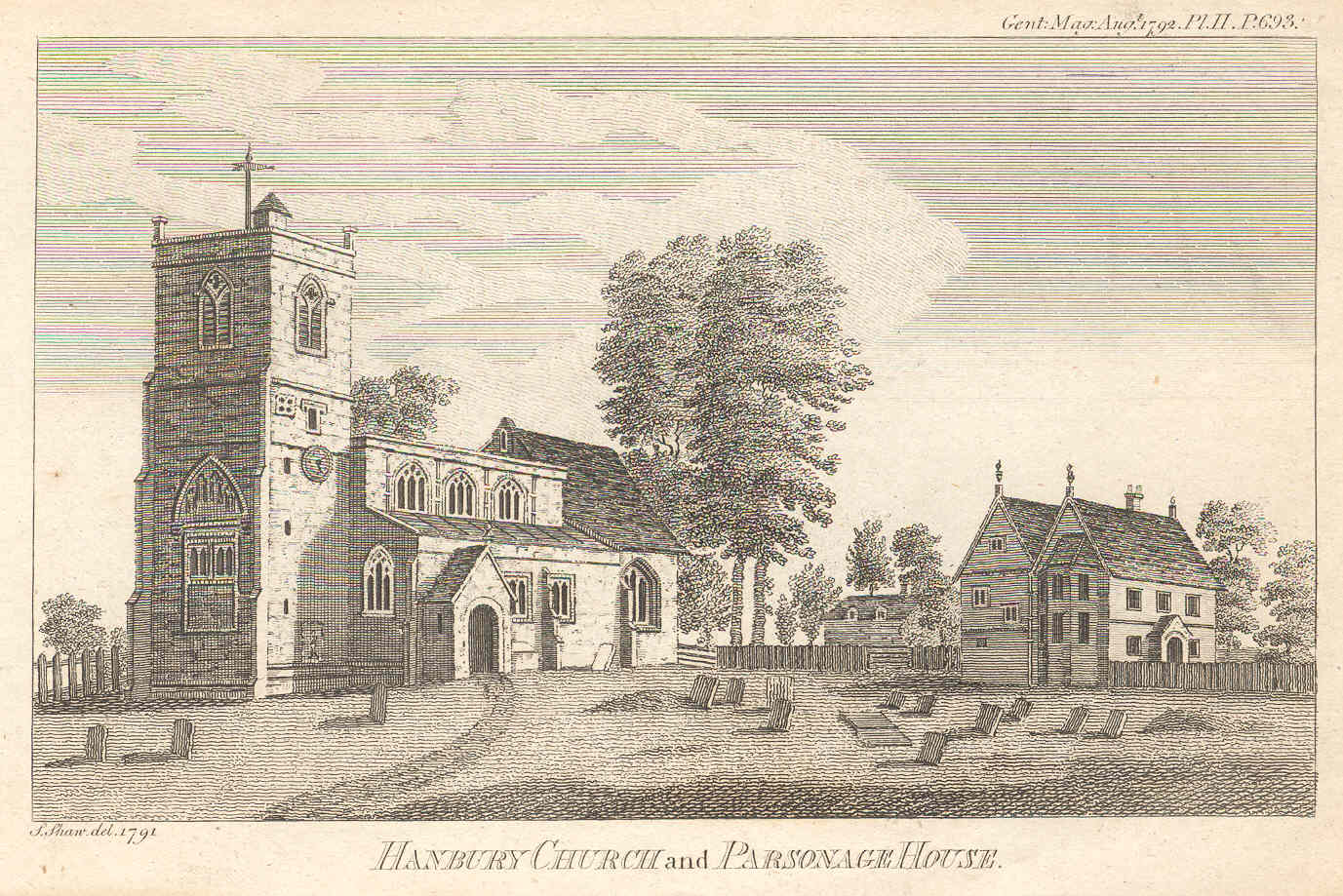
Speaking to Hanbury WI in Worcestershire I showed them various images on powerpoint, including an engraving of their church (which also doubles as St Stephen’s in The Archers!), which they all insisted wasn’t Hanbury Church. A little embarrassing! This was a bit strange because the actual engraving said it was. Was it pre Victorian alterations, with a bit of artistic licence thrown in? Then someone, when I mentioned this story to them later, said they wondered if it was a different Hanbury. I searched the internet, and yes it is Hanbury Church in Shropshire, not Worcestershire. Someone obviously came across the engraving and passed it to us, assuming it was our Hanbury and we added it!

Hanbury Church in Shropshire, not Worcestershire

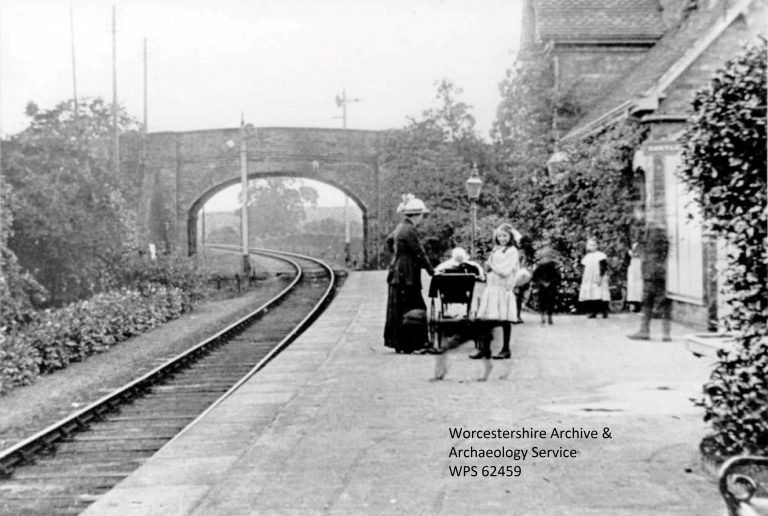
Sharing on social media opens up the possibility of people sharing their knowledge and letting us know if we’ve got anything wrong. What we thought was a photo of Broadway Railway Station which we put online is in fact Harvington Railway Station – the former was double lined and the latter single lined, so the description was obviously wrong and we’ll update.

Listed as Broadway Station, it’s actually Harvington.

As none of us are experts on our entire area we’ll all have plenty of times when we need to go with what something is labelled as.

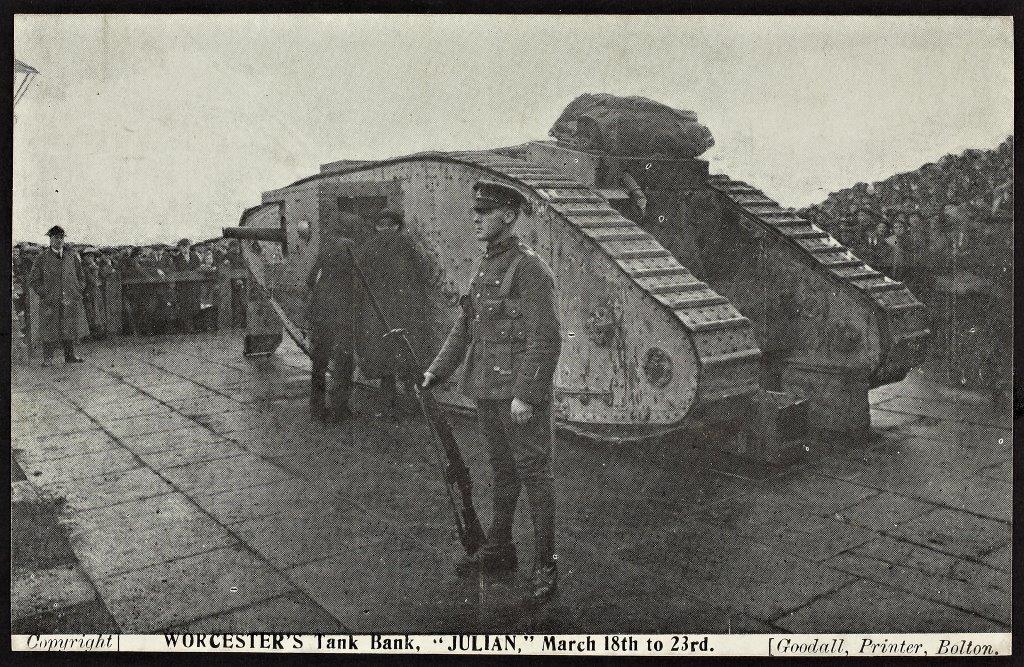
I recently came across another image wrongly titled, but one created 100 years ago and with the location printed on a published postcard. For the WWI Centenary in among the many images we used during exhibitions and projects was one of the Julian Tank in Gheluvelt Park Worcester. The Julian tank toured round the country helping to collect money from the public for the war effort. It would attract big crowds who flocked to see this new-fangled contraption, and it was ideal for encouraging donations to the Tank Fund.

Postcard which claims to be of the Julian tank in Worcester

Goodalls of Bolton produced postcards of the visits of the tank to the different towns. Except… they are not Julian and they are not of the place they say they are. I came across this when researching it to add information alongside the photo recently. The full story can be found on a website (warning – rather colourful language!). It seems Goodalls did the 100 year old version of photoshop, taking out distinctive backgrounds, and adding names of places and dates to the image to sell as postcards around the country! Apparently, the exact same image can be found with numerous town names printed on. You may have one in your collection! It shows you can’t always take what is printed on a postcard at face value. So it looks like we’d been incorrectly using it during centenary events.

So, as we have probably all found out, things aren’t always as they are described.