Not ticking the box – Local Studies and meaningful impact. An online presentation by Tracey Williams

Local Studies Group are proud to publish this talk based on Tracey’s section on Linking with local authority priorities in Local Studies Toolkit. A must watch for all librarians, archivists and other heritage professionals.

What did you think? Let us know by leaving a comment.

Toolkit – Why local studies matters

Return to Toolkit homepage

Public libraries are at the heart of many communities and their existence is an important opportunity to engage people with their local heritage. Local history documents, books and secondary sources are unique assets owned by local authorities. They have been collected by specialists for over a century and the vast majority of this content is not yet on the internet nor likely to be so for some decades. Every civilized society should be preserving books and other published sources on the history of local communities and employing Local Studies librarians is the only way to insure this material is collected comprehensively.

An appeal to Heads of Library & Archive Services

Local Studies librarians are among your most committed and knowledgeable staff members. We know our users, we know our sources and we know our communities.

An appeal to Councillors and senior local authority officers

Local Studies make a difference to individuals: the young couple in their first house who visited because they had chopped down some trees which were inside their fence only to find that their neighbour claimed the land and the trees; the schoolteacher who said that her students’ A level results had improved as a result of class visits to the local studies library; the family who were helped to find essential evidence about a local company and were able to obtain compensation for the loss of a loved one.

Local Studies projects have the power to engage people from widely different backgrounds and generations. Interesting and creative projects have the power to motivate individuals to overcome barriers to learning, to experience digital technologies, to build new social networks (combatting isolation, depression and related health issues) and to rekindle an in interest in life through informal learning opportunities. Librarians working creatively, and in partnership with a wide range of educational providers, facilitators and artists, and others, can ensure that opportunities exist to engage different levels of ability and ranges of interest.

An appeal to Local Studies librarians

Congratulations in gaining one of the best jobs in our profession. However, in these difficult days of public spending reviews and staffing cuts, never has there been more of a need to prove our worth to our employers. We need to seize the day, be proactive, imaginative, try to make time for external funding bids and really prove our value. We need to analyse how we envisage how our services can develop, and find out not just what our current users want, but what non-users may want, now and in the future. Once funding is in place and staff are running projects, it becomes possible to make real improvements to our services and engage the public as users and volunteers.

Got something to add?

Do you have any comments, suggestions or updates for this page? Add a comment below or contact us. This toolkit is only as good as you make it.

Return to Toolkit homepage
Toolkit: Measuring impact

Return to Toolkit homepage

It’s easy to claim that local studies libraries are contributing to broad service priorities, such as increasing the visitor economy. However, making a claim that can’t be backed up by strong evidence runs the risk of undermining the credibility of the service with decision-makers within the authority.

Although activities often have some sort of evaluation or feedback, this may not always be designed in such a way as to collect evidence that can be used to demonstrate how this has helped the local studies service to contribute to strategic priorities.

It is often easier to measure outputs rather than outcomes, which is why outputs are often used as evidence. The drawback with this approach is that outputs don’t demonstrate impact and don’t necessarily resonate with stakeholders.

Outputs are defined as what was produced or delivered (e.g. the number of family history courses run) whilst outcomes are the differences made and the benefits that customers receive as a result of the outputs (e.g. a person using the knowledge they gained on the course to find lost family and feel a sense of identity that they hadn’t felt before). Whilst outputs are the “what”, outcomes are the “why.”

Outcomes may best be measured through stories rather than statistics, so it can be useful to try to capture stories from participants in any activity.

The Inspiring Learning for All (ILFA) framework was launched by the Museums, Libraries & Archives Council (MLA) in 2008 as a way for museums, libraries and archives to develop their learning offer. 

The framework transferred with other MLA functions to the Arts Council in 2011 and was refreshed in 2014. 

The ILFA framework includes the use of Generic Learning Outcomes (GLOs) and Generic Social Outcomes (GSOs) to provide evidence of the benefits people gain by interacting with arts and cultural organisations. 

The Arts Council website give useful tips for capturing impact as well as other resources and templates relating to the GLOs and GSOs.

Got something to add?

Do you have any comments, suggestions or updates for this page? Add a comment below or contact us. This toolkit is only as good as you make it.

Return to Toolkit homepage
Local studies and me

Janet Knight, Local Studies Assistant at the Rochester upon Medway Studies Centre from 1993 to 2008, looks back at her time in local studies:

Firstly I would like to declare that working as a local studies and archives assistant for many years was fulfilling, exhilarating and fascinating.

My schooling after the War was mediocre and as much as I loved history not everyone in our class did, so lessons ended up being all giggles and yawns.

I did a variety of jobs over the years. I worked as a rental car manager for 10 years, but it was never what I ever imagined myself doing. It was extremely stressful and at times very unrewarding with no fulfilment. My real love was history especially medieval.

So imagine my joy when I applied for and got a job at Rochester upon Medway Studies Centre in 1993. At my interview I was given my first glance of the strongroom it was full of wonderment and surprises, then I was shown the Local Studies Area and  I knew I just had to land the position of Local Studies Assistant.

How incredibly lucky was I that the Team at the Centre saw in me a passion for history and a desire to learn about past and present life. They offered me a once in a lifetime experience of working with archives and local studies. In the many years I worked at the Centre it never disappointed.

So what was it that made this job, being a local studies and archives assistant, so special?

Local Studies and Archives are closely linked but different.  When used correctly and together Archive collections and Local Studies collections are a marriage made in Heaven.

For instance, the Local Studies materials could help answer questions posed by documents in the Archive collection or fill the gaps between official documents and so assist researchers.

It was about caring and preserving unique and rare documents and then making them available to all who want to research the history, people, places, and events of the local area.

It was about using and spreading information to all ages. It was about needing to provide and care for ephemera, photographs, written evidence, memory tapes and so very much more. It was about protecting all these resources for future generations to share. It was about keeping wonderful documents for ever- never to be lost.

And now in the computer age it is about saving them and sharing them in whatever format is desired.

Local Studies staff of course need training and qualifications; these are very are important.  But this job requires a passion and dedication to finding out about the past and sharing it with people today and in the future. I am so glad that I was given the opportunity.

Toolkit: What is the role of a Local Studies Librarian?

Return to Toolkit homepage

The Local Studies Librarian is the person who collects, arranges and makes available resources about the local area. In essence, they curate the ‘National Collection’ for their section of the country.

Those with responsibility for a local studies collection should hold an accredited postgraduate qualification in library and information science. Many employers also look for CILIP Chartership or a willingness to work towards Chartership of CILIP.

As can be seen by the structure of this toolkit, Local Studies Librarians are all-rounders. An experienced local studies librarian will have the vast majority of the skills required by librarians across the sector, including cataloguing, classification and indexing skills, customer care skills, creating and maintaining relationships with stakeholders, managing staff and volunteers, service planning, website design, teaching and presentation skills, project design, digitisation, conservation, marketing and, after a long day, the willingness to shelve heavy bound newspapers. Most will quickly fall in love with the history of the area they care for and it will become a life-long affair.

Local Studies Librarians used to feature in every major library.  In some places this responsibility is no longer a separate specialism, but one shared by several staff. But the essence of the role is the same and its importance must be upheld.

The big three

Collecting

The Local Studies Librarian has the responsibility to monitor and collect information output about their collection area

Typical library resources are collected:

  • Books, journals, newspapers, maps and these resources can be catalogued in the normal way
  • But information comes in many other formats, all of which should be collected if possible:
  • Pamphlets, leaflets, ephemera: tickets, notices, posters, notes, cuttings, reports, directories
  • Community produced materials
  • Visual documentation:
  • Photographs, Postcards, Prints,
  • Digital data sources; Born digital files; film clips, audio recordings

Once they have been collected they then need to be catalogued, with different resources being described in different ways.

Sorting and storage

Unlike most lending stock in the library, local studies materials tend to be kept even when they are not being borrowed and their content is deemed outmoded or even inaccurate; as with clothes, fashions will change. The remit is to build up a comprehensive collection of materials from all ages and standpoints. We are not particularly swayed by the literary merit of works; we are interested in capturing resources from all decades and keeping them for their interest to future generations.

So storage is a potential problem; our collections increase with the years. This is often difficult to convey to colleagues, both within the library service and elsewhere in our parent organisations.

Sorting the material we collect is also problematic. In the past many Local Studies Librarians devised their own classification schemes to try to circumvent the fact that much of the material is likely to end up with the same class number or code when a standard classification scheme is used. But using such in-house schemes is no longer so common. They cause problems for succeeding staff, and do not sit comfortably with networked library catalogues, especially when many library services are now part of consortia with joint catalogues.  

Promotion and sharing of resources

Local Studies Collections at their best are important heritage and cultural resources for the local community and for those interested in the catchment area.  They can help people of all ages to find out more about and to appreciate their surroundings. They are useful for creative people, learners and educators. The Local Studies Librarian has a responsibility to share the resources held; to educate, inform, entertain, enrich and add value to the life of the local community.

Methods of promotion/ community engagement include:

  • Answering enquiries and helping people use the collection.
  • Exhibitions
  • Publications and articles
  • Special events
  • Training courses
  • School and learning resources
  • Partnership working
  • Forging relationships with local organisations and community groups
  • Reminiscence and oral history
  • Group visits
  • Indexes
  • Social media
  • Media interviews

Our collections reflect the lives of the ordinary people who make up an important aspect of our nation’s history, one which has not always been recognised. But Local Studies Librarians know the value of local history and it is our job to share that knowledge with others.

The Local Studies Librarian has an endlessly interesting role, enthusing others about our collections, preserving old publications, engaging with collections about the past, collecting information as it is produced and saving it for the benefit of the current and future generations.

Typical local studies roles:

Local studies paraprofessionals

Additional local studies staff should be provided in sufficient numbers to oversee public access to the collection effectively, to answer routine enquiries and to assist local studies librarians with their other duties.

All members of the local studies team should possess a reasonable proportion of the attributes expected of a local studies librarian, with customer care skills and a willingness to develop personal knowledge of local studies of prime importance.

As with everyone who walks into a local studies library, supporting staff will bring with them their own strengths, weaknesses and experiences and these should be harnessed in order to build an effective local studies service. After all, if a Local Studies Assistant had a background in family history, the use of social media, teaching or IT, local studies units would be unwise not to make the most of their skills.

If the collection is housed within a joint local studies & archives unit, assistants may take on both local studies and archive duties.

Volunteers

Volunteers are increasingly becoming important members of the local studies team, providing help and support by performing talks that staff would never have time to do. More information on the role of volunteers will be found in the volunteers section of the toolkit.

Head of Heritage

A heritage professional normally responsible for the management of services such as the County Archive, Local Studies Services, Museums and Archaeological Services. Can be part of the Senior Leadership Team of a wider Library or cultural service. Some post holders will also be the “County Archivist”, which is a role reserved for a qualified archivist.

County Local Studies Librarian/Senior Librarian, Local Studies

The co-ordinator of local studies work across a county. Increasingly they sit within a County Record Office structure and are a member of the service management team, reporting to an officer with responsibility for archives and other heritage services.

Local Studies Librarian in a county record office

Assist the County Local Studies Librarians with their duties.

Local Studies Librarian within a unitary authority

As County Local studies Librarian, though on smaller scale. The post could be a within a small Borough archive service or within the library service.

Librarian with Local Studies as part of their role

In a county tends to be the librarian with responsibility for collections and initiatives within part of a county. In a smaller service local studies this can be one aspect of a larger role. Line management of this role tends to be within the library service structure.

Sample Job Descriptions and Person Specifications

Got something to add?

Do you have any comments, suggestions or updates for this page? Add a comment below or contact us. This toolkit is only as good as you make it.

Return to Toolkit homepage
Local Studies is democratic education

by Alice Lock, LSG Secretary

Now that I’ve become a library user (viruses permitting), rather than a staff member, I can’t help noticing how many events and initiatives are arts based. I suppose that this is partly because the Arts Council has national responsibility for libraries and grants for activities come from them. This must bring in new audiences who can make use of local studies collections in different ways, but I worry that it an emphasis on arts rather than learning might have its drawbacks.

I’ve always believed that local history and family history are important because they are the most democratic form of education available to anyone. Anybody can walk through the door and decide for themselves what they want to study and how. They can interact with other people through chatting to others in the library or through societies – or they can work completely on their own if they wish. They don’t have to pay fees to an educational organisation, they can pick whatever aspect of history that interests them – and, if they adopt proper research techniques, their work has equal value to professionals in the field. Very few subjects allow complete amateurs opportunities like this. In my working life I came across many people who had not done well at school and had come to regret their perceived “lack of education” – local history gave them a second chance to learn, on their own terms. I can’t count the number of people who complained that the history of “kings and queens” which they encountered in their young days at school was of no interest to them. Local and family history is not only of interest because it concerns our immediate environment but it also focusses on the past lives of people like us.

Many years ago family history was regarded as a rather pointless exercise of collecting names and dates. Nowadays its value as a way of learning about our past and how society works is as evident as in the study of local history. But students learn so much more – research techniques (both online and with documents), how to evaluate evidence, how to analyse evidence, how to present findings etc etc.

To me this is what makes local studies collections important.

Toolkit: Linking with local authority priorities

Return to Toolkit homepage

Business or service plans

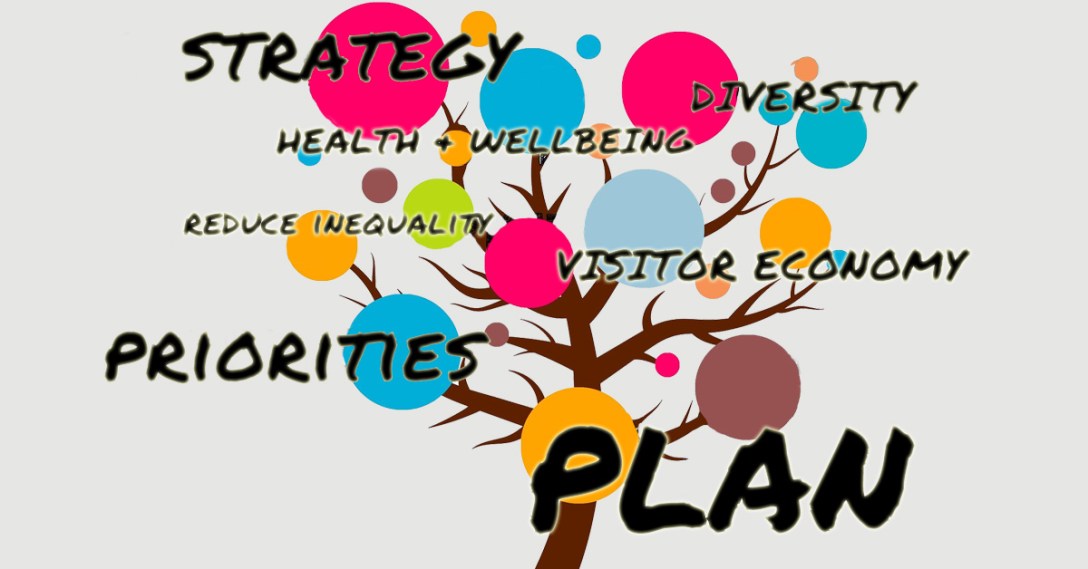
Every local authority is likely to produce a Council Plan that sets out its vision and strategy for the next two to ten years.     

Common priorities, which local studies services may be able to link with, include:

  • Promoting stronger, safer and healthier communities
  • Increasing educational attainment and skills development
  • Developing the visitor economy
  • Celebrating diversity
  • Encouraging sustainable economic growth and regeneration
  • Protecting and enhancing the environment
  • Reducing economic, educational and health inequality and improving the lives of the most vulnerable
  • Increasing organisational efficiency 

Increasingly, as financial pressures continue, there may be a focus on collaboration and partnerships as many councils aim to reduce direct delivery of services and, instead, to use their resources to enable, influence and facilitate delivery by others.

The Council Plan should form the basis of the library service’s strategic plan and trickle down to inform objectives for teams and individual staff. In this way, it shouldn’t be too difficult for local studies services to align their services with council aims.

However, this shouldn’t be a tick-box exercise but should involve real alignment and be backed up by evidence including measurable outputs and outcomes. 

It may be advisable to concentrate on one or two target areas and demonstrate real impact, rather than making broad claims that are not backed up by robust and specific evidence.

Learning, wellbeing and community

Particular themes where local studies has the potential to make a real difference include learning (formal and informal, across all age groups), health and wellbeing, and supporting the development of stronger communities through helping to foster a sense of place and the strengthening of community networks.

Learning though using local studies resources isn’t only a matter of acquiring local or family history knowledge. It’s unlikely that anyone will be motivated to increase their IT skills in order to access official government information. However, learning how to research family history may motivate the digitally diffident to use a computer, thereby also enabling them to be more confident in using government services that are increasingly digital by design.

To have the most impact, a joined-up approach to activities and events is likely to be most effective. For example, a library service may run family history courses as a means of income generation. The income target could be met and the learners could all go their separate ways at the end of the course. The library service may achieve its income target and it could be considered that the activity was a success on this basis.

However, added value could be created by aligning the activity to priorities relating to wellbeing and stronger communities. For example, the family course participants could be encouraged to stay in touch with the library service and to join or form a self-organised family history group that continues to meet in the library once the course ends. This creates an ongoing relationship between the library and the learners, in a way that’s not likely to happen if the course were run in a more traditional education setting. 

Over time, members of the group are likely to develop friendships and the group then becomes a source of emotional support for its members in addition to being a means of staying motivated to continue learning. 

The group may also become a source of support and a resource for the library service – for example, members may be willing to assist with family history drop-in events or focus groups, encouraging more take-up of the family history courses and becoming advocates for the library service in general.

An activity that started out as a means of income generation can thus develop into a virtuous circle that may be life-changing for participants, by increasing IT skills, reducing isolation through developing community networks, and sharing their skills and knowledge to help others to learn.

Measuring impact

It’s easy to claim that local studies libraries are contributing to broad service priorities, such as increasing the visitor economy. However, making a claim that can’t be backed up by strong evidence runs the risk of undermining the credibility of the service with decision-makers within the authority.

More information on this topic can be found in the measuring your impact section of the toolkit.

Useful tips

  • Keep a list of potential projects
    Most local studies librarians have more ideas for projects and initiatives than they have capacity to implement them. It can be handy to have a note of these so that if the opportunity arises – e.g. for an external funding bid, or to meet a corporate requirement – they can be tweaked to fit the funding criteria or relevant requirement. 
  • Be aware of forthcoming anniversaries or awareness days/months
    Many local studies libraries keep lists of local anniversaries or significant dates which may be of use for community engagement activities. Awareness days/months – e.g. Black History Month – may be an opportunity for the library service to make an important contribution to council activities marking the event.
  • Case studies and inspiration
    The CILIP Local Studies Group blog and Twitter feed aim to feature news and ideas that may provide inspiration for activities and events. The UK Web Archive also includes an archive of case studies from the old CILIP LSG website. 

Further reading

Case study from the Greater Manchester Archives & Local Studies Partnership, 2015

Got something to add?

Do you have any comments, suggestions or updates for this page? Add a comment below or contact us. This toolkit is only as good as you make it.

Return to Toolkit homepage

Share your innovative ideas for Local Studies

Do you work with local studies collections? Are you and your colleagues working in innovative ways to share those collections?

If yes, then we would love to hear from you. We are looking for great examples of how local studies materials are being used to support communities and individuals in accessing information and improving their mental health and wellbeing. We are especially interested in online delivery, whether it was developed before or after the arrival of Covid-19 and lockdown, but are welcoming any contributions.

Working with local studies material, we know the value and positive impact our collections have on people’s lives. Now we want to demonstrate those benefits, great and small, to a wider audience.

The aim is to collate all the good things happening throughout the country and share the results via the CILIP Local Studies website https://lslibrarians.wordpress.com/ and social media pages @CILIP_LSG

If you have any experiences or stories to share, please email the County Local Studies Librarian at the Wiltshire & Swindon History Centre julie.davis@wiltshire.gov.uk

Thank you for your time and we look forward to receiving your replies.

Julie Davis on behalf of CILIP LSG

Inspirational Local Studies Librarian awareded Honorary Fellowship

Marin Hayes, the excellent County Local Studies Librarian for West Sussex, was awarded a well deserved Hon FCLIP last Thursday.

For those who did not get to the CILIP AGM (yes, I’m guilty too), here is what Martin said……

Thank you so much to colleagues involved in Local Studies for the nomination and to CILIP for this Fellowship award. Although I’m truly touched and proud of this personal achievement, it’s equally an award for my authority West Sussex County Library Service, my brilliant colleagues and our 150+ local history volunteers. They’ve provided the environment and support by which we’ve been able to achieve improvements to our Local Studies service.

Public libraries are, of course, at the heart of many communities and their existence is an important opportunity to engage people with their local heritage. Local history documents, books and secondary sources are unique assets owned by local authorities. They have been collected by specialists for over a century and the vast majority of this content is not yet on the internet nor likely to be so for some decades. Every civilized society should be preserving books and other published sources on the history of local communities and employing Local Studies librarians is the only way to insure this material is collected comprehensively.

An appeal to Heads of Library & Archive Services: Local Studies librarians are among your most committed and knowledgeable staff members. We know our users, we know our sources and we know our communities. Lose this expertise at your peril!

An appeal to my Local Studies colleagues: in these difficult days of public spending reviews and staffing cuts, never has there been more of a need to prove our worth to our employers. We need to seize the day, be proactive, imaginative, try to make time for external funding bids and really prove our value. We need to analyse how we envisage our services developing, and find out not just what our current users want, but what non-users may want, now and in the future. Once funding is in place and staff are running projects, it becomes possible to make real improvements to our services and engage the public as users and volunteers.

Finally, although I’m the fortunate recipient of this award, it really is, in my eyes, a tribute to the hundreds of hard-working librarians in Local Studies Libraries and History Centres across the UK.

And this is what CILIP said….

Martin’s work is vital in helping local people to learn about where they live and their community. He is known for his commitment to supporting other professionals and for bringing the subject of local studies to life. He has helped colleagues at all levels of Local Government to see the value of local studies, developing exhibitions and materials to inspire and engage the public. In his role he has carried out 30 years of pioneering work that has helped develop the field.

He is known for his commitment to supporting other professionals and for bringing the subject of local studies to life. He has helped colleagues at all levels of Local Government to see the value of local studies, developing exhibitions and materials to inspire and engage the public. In his role he has carried out 30 years of pioneering work that has helped develop the field. The honour recognises his enthusiasm and comprehensive expertise.

Martin has led recent projects that enable local volunteers to document and digitise their heritage, leading to donations of new material, helping to enrich the documentary record for West Sussex county.

There were a few other people who became Hon FCLIPs… more info about them here: https://archive.cilip.org.uk/news/cilip-honorary-fellows-2017

9 unexpected ways local studies have made a difference

The news about East Sussex is very disheartening, especially as it’s being replicated elsewhere – the Community History staff in Lancashire Libraries have also all gone. The threat to the collections, and the loss of the staff to maintain and give access to them, seems very short sighted just as the Libraries Taskforce consultation document is encouraging libraries to concentrate on learning, digital skills, community cohesion, sense of place, health etc – all areas where local studies can play a very important role (though local studies don’t seem to be mentioned at all in the consultation document). After decades working in local studies I decided to list some of the more unexpected uses of the collections which I remember –

Local studies libraries can provide important supporting material for HLF bids in other parts of the authority, for example refurbishment of Victorian urban parks.The extensive descriptions in the newspapers when the parks were opened often allowed the original planting to be reinstated and the huge number of Edwardian postcards and other illustrations meant almost entire parks are recorded. Staff can also point out biographical material on the benefactors to the parks.

Queries from Legal departments. The minutes of old council meetings were often found to be very basic records of decisions, and if the accompanying reports have not survived, newspaper accounts of the meetings were often required to fill in the background.

Maps are often used for boundary disputes and disputes over rights of way. I remember a young couple in their first house who visited because they had chopped down some trees which were inside their fence only to find that their neighbour claimed the land and the trees. The old OS maps confirmed their boundary line and by talking to other neighbours and comparing information with the old voters lists they were able to track down previous residents who had photographs which helped them.

We regularly used maps for the local homing pigeon society. Each new member’s house had to be pinpointed on the map and the exact grid reference noted.

Missing people. The old voters lists and Kellys Directories have often helped track down missing people, from family members to old school friends. They are important in providing proof of residence for legal reasons too, especially for people whose right to be in this country is being queried.

Local businesses sometimes want historical material for promotional purposes. I remember a graphic designer who had set up in a very unusual building on a corner. Staff were able to point him to a printed history of the local co-operative society which included a history of the building, which had been one of their shops, and several photographs. He incorporated this information into his prospectuses.

Many people (men!) who spent their working life in one trade want to keep themselves active by restoring some piece of old equipment connected with their work. Our large collection of cotton textbooks (used by workers who were trying to get on by studying their trade at night school) often helped later generations in their restoration projects. Sometimes we had the makers’ trade catalogues for the relevant machines too.

I’m sure many local studies libraries are contacted by people now living in the USA wanting proof that they finished their schooling. As we don’t have the “high school diploma” they need proof of their O levels and A levels. Often the list found in old newspapers is adequate, but the paper will also give a clue as to which exam board was used by each school so the enquirer can approach them too.

Most of these are very practical uses of our collections, but we all have stories of the emotional value of local materials. Since Who Do You Think You Are many people get very emotional as they find out about their family’s past and this helps link them to the area and build local identity. But I also remember doing a talk for a group who met at one of the lending libraries. I played extracts about housework from our oral history collections and was a bit worried that one woman seemed to take the event over, she kept adding her memories of helping her mother. I was afraid the rest of the group felt excluded until one of the others told me later that this lady had never even spoken at any previous meetings of the group. I also remember a girl whose father had committed suicide when she was very young. She was seeing a counsellor who had suggested that she find out more about how he died so she came to read the newspaper account of the inquest. She was very upset, but glad that she knew what had happened.

I feel very concerned that these important collections are under threat and that we are losing the staff who can preserve them for the future and help people get the most out of them today.

Do you have any other examples of how local studies work has made a difference to the local community or individuals within it? Please leave a comment to this blog