
We are pleased to publish a new case study by Katie Heaton, Local History Librarian at Poole Museum.
Introduction
I have been a Librarian for fourteen years and have spent the last ten as a Local History Librarian at Poole Museum. I work closely with the museum team researching for exhibitions, alongside helping the public with family and local history enquiries.
Poole Museum has been working on a Heritage Lottery Funded Project, ‘Poole, the First World War and its Legacy’ since 2016, and this has been a major aspect of my role.
Name of Service Poole Museum
Title of Project Poole, the First World War and its Legacy: informal learning event.
Give a brief description of the project
The Heritage Lottery Fund has granted £50,600 to enable us to launch our project on Poole, the First World War and its Legacy. With our team of volunteers, and our partners in the community, we are creating a brilliant new website: www.pooleww1.org.uk
We will then go on to chart the nature of post-war Poole: those who mourned the 700 Poole men who fell, the returning servicemen – many of whom were damaged by the war – and the women who had supported the war effort and were no longer needed. It was a time of great change that played a part in forming modern Poole.
Our mission is to provide resources on what the War meant to those who fought, to those who made munitions, nursed soldiers, manned fishing boats – all the Poole people who were involved.
What made you start?
An important outcome of the Heritage Lottery Fund Project is more people and a wider range of people will have engaged with heritage. Therefore alongside building a website we built a number of outreach activities into our project plan. One of these was to work with the Museum Learning Team and make the First World War a time period in their popular ‘Turn Back Time’ summer holiday event programme.
This would mean two days of learning activities all about Poole and the First World War.
What resources did you need?
- Staff time – Poole History Centre research and Learning Activity Leaders planning and implementing time.
- Ingredients for cooking.
- Craft materials.
- Costumes.
- Project publicity materials.
What challenges did you face?
The project team had to put a case to the Learning Team to take on the theme of the First World War as part of the summer holiday programme. This was important as informal family learning workshops are an approved purpose of the Heritage Lottery funding.
Once the Learning Team had agreed, we needed to find suitableactivities for informal learning that tied in with the home front theme andmade the public aware of this aspect of the First World War.
A challenge is always staff capacity and time. Another challenge was making visitors aware of the link between the activities and the Heritage Lottery Fund project. Probably the greatest challenge was how to evaluate the two days. How do we know that more people engaged with the heritage?
What results have you had?
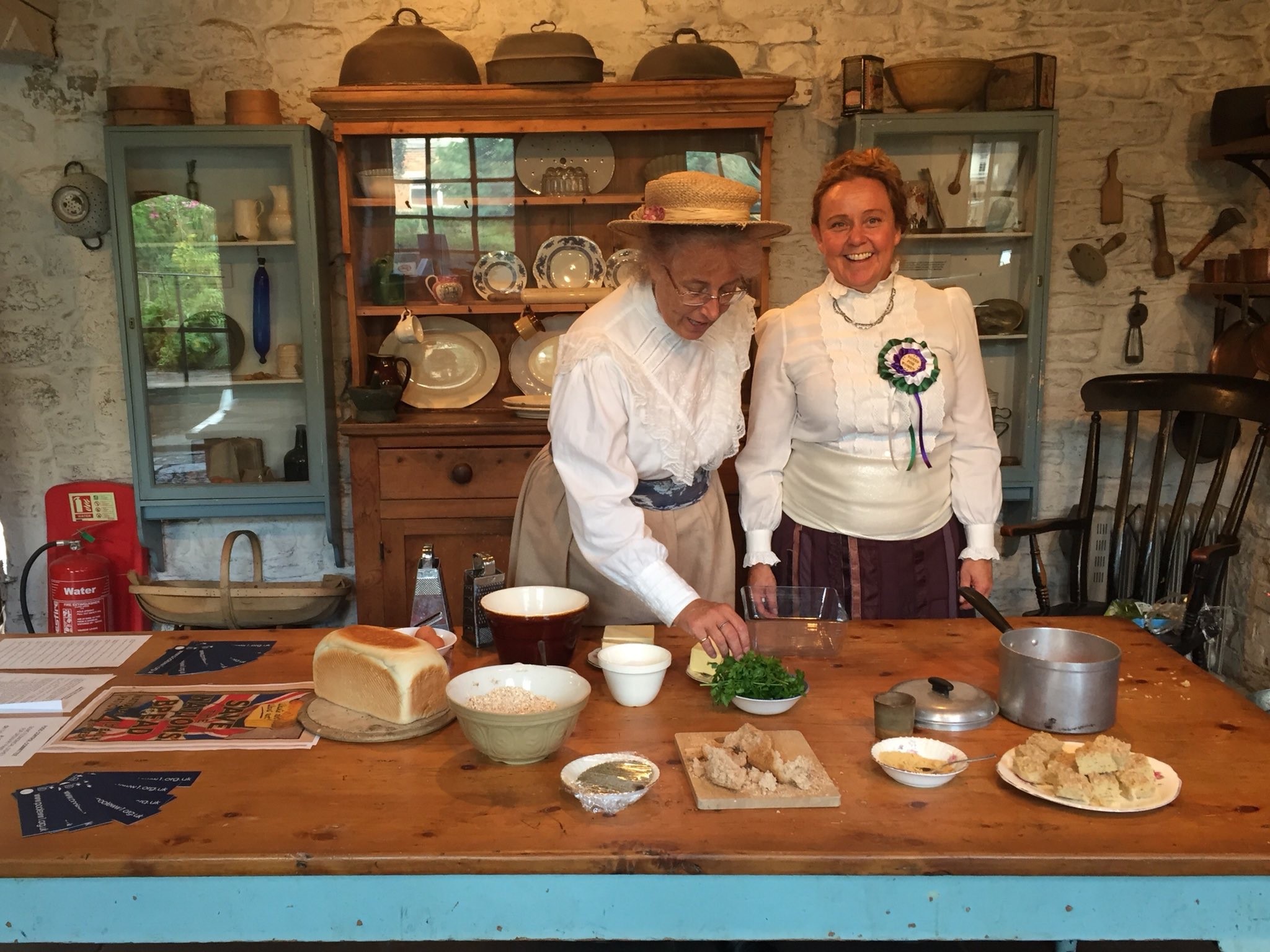
Part of our project research had uncovered a really interesting story in the local newspaper. During the war a Poole Councillor, Evan Gambier, had run a series of cooking demonstrations to teach ordinary people how to cook on a budget and with rations. We decided that the main part of the learning days would be a cookery demonstration with recipes from the time.
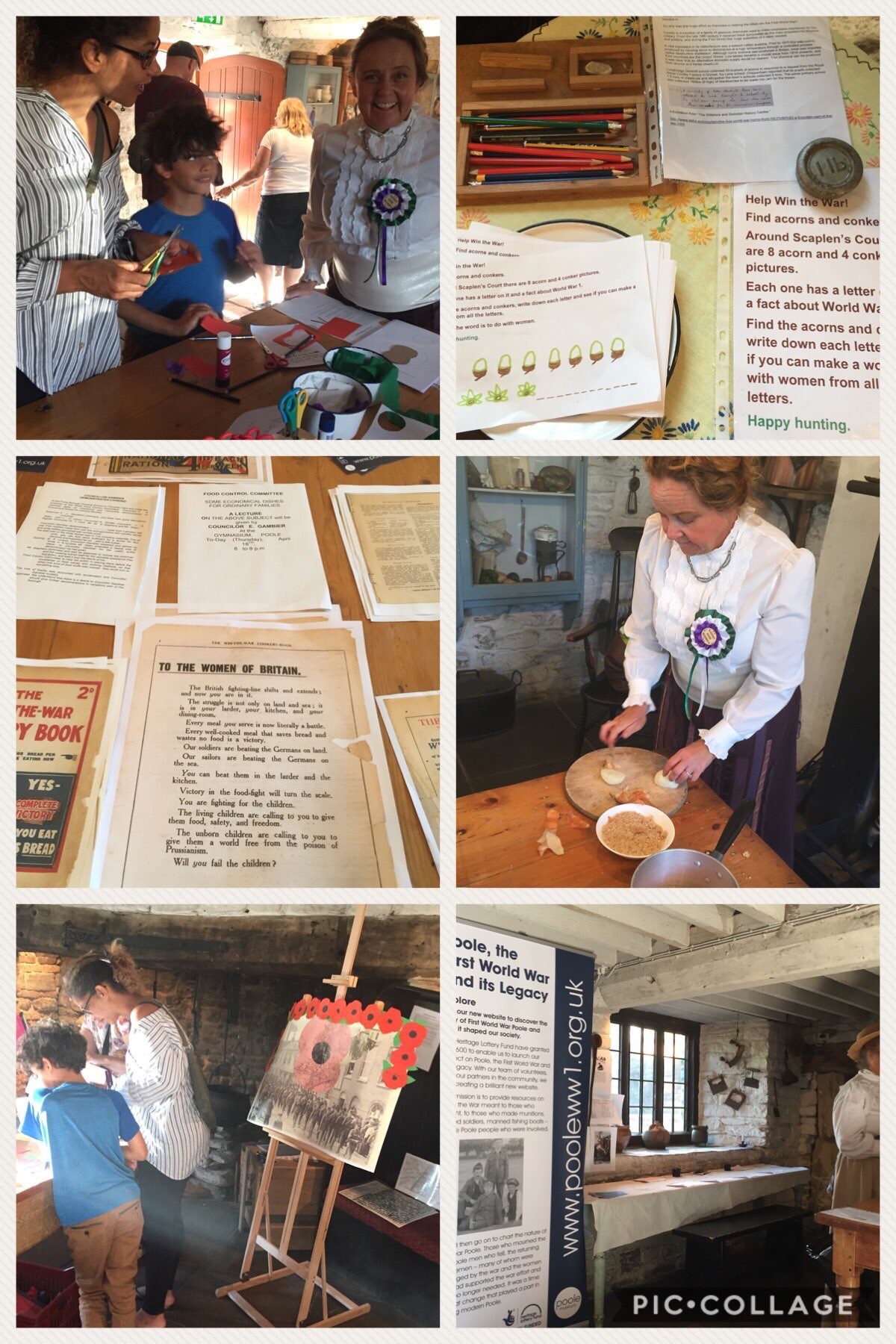
People could watch the demonstration through the day, try the food and engage with the activity leader about why cooking on a budget was necessary. Posters, newspaper articles and information was available to read.
Alongside the cooking, visitors could make a poppy and dedicate it to one of Poole’s fallen; there was a print of the Roll of Honour. Visitors could also make a suffragette rosette.
A collection of First World War letters provided inspiration for people to have a go at writing their own in pen and ink. An acorn trail around the building helped people find out why acorns were collected in the war.
There were over 800 visitors over the two days and families were enjoying engaging with the activities. Project team members took part to chat about the Heritage Lottery Fund project.
The days were well attended, with 883 visitors over the two days, so more people definitely learnt about the heritage. We are hoping to repeat the days next summer and will spend more time planning evaluation. This needs to be much more robust for the Heritage Lottery Fund. Additionally we could work harder to link the activities to the project. We had good results over the two days, but also learnt that there is a lot more we could do. A challenge was staff time and capacity so next year I will start planning much earlier.
How much time did it take?
Two planning meetings, Learning Activity Leader planning time and two full days of activities.
What advice would you give to others?
If you’re planning an informal learning event or family activities then this case study might inspire you!
As a Local History Librarian working as part of the Museum Team I have access to different skills and ideas. If your local Museum has a learning team make contact with them as they can help you bring history and projects to life. Collaboration was fundamental to the event.
The variety and number of activities helped to keep people engaged and the mixture of guided and self guided activities was a good one and worked really well for the two days.
If we do this again I will definitely strengthen the evaluation as no matter how good the event is evaluation is key – either for funding, a case to managers to continue activities or to simply see why the event worked or what aspects didn’t.
Weblinks
https://ww1poole.wordpress.com/
Twitter: @WW1Poole
Contact
Katie Heaton, Local History Librarian, Poole Museum
 CILIP Local Studies Group