Volunteers and users can very quickly become your unit’s most enthusiastic advocates and, by working together to form a Friends Group, their support can be grown in different ways.
What can a Friends Group do for you?
They can support your local studies service and your parent body as:
They can raise awareness of your service and its wonderful resources
They are a vehicle for recruiting able volunteers
They can be vocal and active advocates for your service. They can lobby on your behalf.
They can help with fund-raising and accessing funding streams
They can assist with outreach and engagement
Be clear about your service’s relationship with your Friends
Establish parameters: what Friends do with you, what they for you and what they don’t do
Underline that suggestions and assistance are welcomed but that it is library staff and the parent organisation who make policy decisions about your local studies service
It is wise to encourage your Friends to set themselves up as a separate independent group with a constitution and a committee
Discuss what they will do. Will they have their own events, projects and fundraising activities?
Will they have charitable status?
Having Friends is a responsibility
Don’t take your Friends for granted! Their status must be recognised in some way: remember to thank them as you would any other volunteers.
Hold regular reviews. Attend their events and report to their committee and to each AGM
The Friends must get something out of the relationship. Devise joint projects. Ask for help with funding specific projects and purchases.
Establishing and running a Friends Group
In order to be able to apply for funding, a Friends Group needs to be officially constituted. The Community Archives and Heritage Group has some excellent advice on setting up and running volunteer led voluntary organisations, whilst if you decided to become a registered charity you will need to register with the Charity Commission and their website has the most authoritative guides on how to take the process forward.
After the group is established, the Friends might find some of the Lottery Heritage Fund’s pointers on organisational sustainability and planning of use and there is also a lot of useful information from Brighton and Hove’s Resource Centre.
However, running a Friends Group is not all about structures, as AIM points out, it is about having a good spirit and ethos.
Public libraries are at the heart of many communities and their existence is an important opportunity to engage people with their local heritage. Local history documents, books and secondary sources are unique assets owned by local authorities. They have been collected by specialists for over a century and the vast majority of this content is not yet on the internet nor likely to be so for some decades. Every civilized society should be preserving books and other published sources on the history of local communities and employing Local Studies librarians is the only way to insure this material is collected comprehensively.
An appeal to Heads of Library & Archive Services
Local Studies librarians are among your most committed and knowledgeable staff members. We know our users, we know our sources and we know our communities.
An appeal to Councillors and senior local authority officers
Local Studies make a difference to individuals: the young couple in their first house who visited because they had chopped down some trees which were inside their fence only to find that their neighbour claimed the land and the trees; the schoolteacher who said that her students’ A level results had improved as a result of class visits to the local studies library; the family who were helped to find essential evidence about a local company and were able to obtain compensation for the loss of a loved one.
Local Studies projects have the power to engage people from widely different backgrounds and generations. Interesting and creative projects have the power to motivate individuals to overcome barriers to learning, to experience digital technologies, to build new social networks (combatting isolation, depression and related health issues) and to rekindle an in interest in life through informal learning opportunities. Librarians working creatively, and in partnership with a wide range of educational providers, facilitators and artists, and others, can ensure that opportunities exist to engage different levels of ability and ranges of interest.
An appeal to Local Studies librarians
Congratulations in gaining one of the best jobs in our profession. However, in these difficult days of public spending reviews and staffing cuts, never has there been more of a need to prove our worth to our employers. We need to seize the day, be proactive, imaginative, try to make time for external funding bids and really prove our value. We need to analyse how we envisage how our services can develop, and find out not just what our current users want, but what non-users may want, now and in the future. Once funding is in place and staff are running projects, it becomes possible to make real improvements to our services and engage the public as users and volunteers.
Got something to add?
Do you have any comments, suggestions or updates for this page? Add a comment below or contact us. This toolkit is only as good as you make it.
Volunteering in public libraries has become mainstream in recent years with many libraries around the country now offering general volunteering opportunities for specific events or projects, for example assisting with the children’s Summer Reading Challenge. The biggest exception to this rule has been local studies collections, which have harnessed the power of volunteers for decades. Classically helping with indexing newspapers and census records, the variety of opportunities have mushroomed in recent years.
See the following sections of the toolkit for examples of how volunteers can play a role in local studies projects:
Though running projects with volunteers can unlock material within collections, aid collecting and help you to find new audiences, whilst making a real difference to those who give their time, it is also a big commitment to any organization, as recruiting, managing and celebrating volunteers is very time consuming.
When to use volunteers and not to use volunteers:
In 2012 CILIP released the following policy statement:
CILIP believes that society benefits from the contribution that trained and skilled library, information and knowledge workers make to developing and delivering services. We do not believe that volunteers should undertake core service delivery or be asked to replace the specialised roles of staff who work in libraries.
Volunteers have long supported and provided highly valuable additional support, working alongside qualified and paid staff, and they should be acknowledged and valued for this role. They should also be given appropriate role descriptions, training and management.
CILIP is opposed to job substitution where paid professional and support roles are directly replaced with either volunteers or untrained administrative posts to save money. This applies to all library and information services in every sector.
If this happens services will suffer and will be unsustainable. What remains would be a library service unable to serve the community comprehensively, support people’s information needs or provide everyone with the opportunity for learning and development.
CILIP will not assist in recruiting or training volunteers who will be used to substitute the role of qualified, trained and paid library and information workers.
We acknowledge the difficult times that we live in, but now more than ever, high quality information services are vital to people’s lives, and local communities, learners, workers and businesses need the support of a trained and skilled workforce to thrive.
A local studies unit should clearly define what is their core local studies service and, by extension, which activities should be undertaken purely by professionals and what activities are open to volunteers. For example, stock selection and cataloguing books are core roles for a local studies professional, however the extent of photographic collections means that volunteers are often asked to help catalogue and digitize photographs.
Volunteers as a resource for meeting your objectives
Using volunteers is not an end in itself, but a very powerful tool in helping you meet your objectives. Unsurprisingly, once a local studies unit has decided its priorities and examined the projects open to them, many activities will involve volunteers. For more information on deciding your objectives, please see section 6 of this toolkit.
As volunteering has become more central to the work of public libraries and local authorities in general, you are likely to have to ensure that your procedures are in line with the wider organisation’s volunteer processes and policies. However, there are still key stages that should be followed whether it is part of your wider volunteer process or not:
Defining a project: The running a large project and evaluation sections of this toolkit highlights the importance of a having a clear plan.
Defining a volunteer role: A project requires tasks which need to be performed, whether by paid project workers or unpaid volunteers. Roles will be of different durations, with some requiring a few hours or days of help whilst others will be decades long. A volunteer should be appointed to a project and, when that project comes to an end, they should be considered for another project and only appointed if they are right for the role. Consider putting together a short description of a volunteer role, which can then be used for advertising. For example: Volunteer at your library or archives | Hertfordshire County Council
Appoint a named contact: Volunteers should have a named person to whom they can raise problems, concerns and questions. In some organizations with a larger number of volunteers, there will be a specific member of staff dedicated to coordinate volunteer work.
What skills, knowledge and abilities do you need for your project?
Consider working with people from the community who wouldn’t naturally see libraries as a place for them.
Work experience students looking for a career in heritage. This group of people should be given experience in some areas normally reserved for professional staff.
Many younger people who volunteer do so as part of the Duke of Edinburgh Award scheme. They may be required to undertake a particular number of hours and so a formal method of recording hours maybe relevant.
Those seeking work, whether they are short-term or long-term unemployed. As staff may be asked to act as a referee, making a note of punctuality and absence should also be considered.
Those with specialist knowledge and skills, such as those from the local family history society who could help with family history IT support and members of the Art Society with conservation skills. See section on working with partners.
Approach a local company which releases groups of their employees to volunteers for local good causes – especially good for short sharp projects such as re-boxing material into conservation grade materials.
Remote volunteering is becoming increasingly popular, for example indexing projects, with material being emailed out to volunteers. This extends the scope of the project to reach volunteers unable to leave home, or those with an interest in the subject from around the world, in addition to those living locally. See the Crowdsourcing part of the indexes and transcriptions section of the toolkit.
Mix the groups, perhaps look towards an intergenerational project linking younger and older people.
The recently retired looking for a new challenge – including those who have recently retired from your own library – some of the finest volunteers are retired librarians!
Recruitment: As with recruiting for a paid position, you are looking for the right person to fill the right role, so do not feel that you have to accept everyone who asks to become a volunteer. The potential volunteer may also feel that the opportunity is not right for them. It is useful for a potential volunteer to come in for a tour, an explanation of the volunteer roles available and an informal chat. Most authorities are likely to have their own application forms and volunteering agreements, though a checklist is also useful to have.
Induction: It is important that new volunteers receive a good induction, covering
Bread and butter issues, such as a health and safety briefing, location of the toilets and tearoom.
Introducing them to staff and other volunteers.
It is also important to point out that volunteering is not a permanent position and that it is fine if volunteers change their minds and decide that the position is not for them.
You should also point out that volunteering is a two-way process and that, if problems occur, you can work together to try and resolve them and, in the worst case scenario, end the relationship, subject to the procedure laid down in your volunteer policy.
A check-list can be useful to ensure that all items are covered.
Training and Supervision: Support given to volunteers by library staff may involve specialist staff in training and explaining the role and in giving ongoing support.
Written guidance is often useful for more detailed roles, such as photograph scanning and cataloguing.
Many roles may not require any close supervision, however an element of checking work should be built into the process, some of which can be done by fellow volunteers. Some volunteers enjoy this additional responsibility and are invaluable for managing large projects. For projects that produce large amounts of data, such as indexing projects, staff can sample data and use searches and filters on spreadsheets or queries on databases to identify and remove common problems and, if significant problems are identified, another volunteer could be asked to review the work line by line.
It is very easy for volunteers to deviate from the way they were taught to undertake their project, especially as they quickly become the expert in their section of the collection. You should keep an open mind about whether you should take on board their changes or not but remember that results need to be consistent.
Some authorities will require volunteer coordinators to hold appraisals, but even if they do not, it is worth taking opportunities to discuss how things are going on a one-to-one basis with individual volunteers and take on board positive suggestions on how things could be improved.
Recognise why a volunteer gives their time to you:
As with everyone working with your organization, you need to ensure their contribution is valued and you need to demonstrate that they are making a positive contribution.
Ensuring that you are offering well thought-out projects that the chosen volunteer can do well. Though the importance of choosing volunteers to meet the requirements of projects are listed above, you should build on the strengths of potential volunteers. After all, if you have a volunteer with a passion for images and has already scanned and catalogued their own photos at home and you have boxes of fascinating unsorted photos, it would be tempting to start an image project or if you have a volunteer who just likes inputting data, them creating a digital version of a card index could be invaluable.
Volunteers often enjoy the social side and make new friends. Working on computers or other jobs around the same table can provide this opportunity, as does working together on group projects. The importance of tea breaks and an occasional slice of cake can never be overestimated.
Celebration: Thanking your volunteers is the most important thing anyone running a volunteer project needs to do. Social activities maybe popular including trips out to different locations, summer garden parties and talks on relevant subjects.
Measuring impact: As with any other project, those involving volunteers should be reviewed, and impacts measured. See measuring impact section of the toolkit for more information. As well as helping to develop your collections and your audiences, volunteering does have a positive impact on the volunteers themselves. Volunteering can tackle loneliness, raise community cohesion and pride, give people additional skills that they can use in the workplace and more. Local authorities will ask you to collect statistics on the number of hours that volunteers help you, but also supply those above with stories about how volunteers and volunteering has made a difference.
Further reading:
Local Studies Toolkit – Friends Groups
Got something to add?
Do you have any comments, suggestions or updates for this page? Add a comment below or contact us. This toolkit is only as good as you make it.
There is still time to submit a proposal to the CILIP Metadata and Discovery Group (MDG) biennial conference “Metadata and Discovery” to be held from 7th-9th September 2022 at IET Birmingham: Austin Court in Birmingham, England.
The deadline is 15th April 2022. Further details here.
In the week we announce the latest winners of the McCulla Award, Sally Jenkinson of Surrey History Centre, reflects on the achievements that won her the Award in 2019/20.
Highlights of my projects
When I first joined Surrey History Centre my main role was to help with a project to set up volunteer run Local History Centres in libraries around the county, mainly supporting the volunteers with training and resources. Some of their excellent work can be seen online at Epsom & Ewell History Explorer and the RH7 History Group
I soon became involved in developing the Surrey History Centre website, and in due course in an interesting new project to make it possible for customers to pay for events and buy books online. This has now been superseded by Surrey Heritage’s combined online catalogue and shop.
The Quarter Sessions project was rather special as it was undertaken by the Surrey History Trust. The project was led by volunteer John Holland who sadly passed away before completion. I was pleased to be able to help finish producing the CD, and a few years later to arrange to put the same data on Findmypast where it continues to produce income for Surrey Heritage.
Probably the most important work I have done has been arranging to put records online on Ancestry, Findmypast, Forces War Records and The Genealogist. To be able to make so many records available all over the world so easily is something we would never have thought possible when I started work in Surrey Local Studies Library in Guildford. That was in 1989, when enquiries arrived on paper in the post.
The database I most enjoyed making is the Loseley Letters database. I created this for colleagues so that they could enable researchers to reconstruct sequences of correspondence as well as searching for a person, place, subject or keyword.
My favourite volunteers project was the Surrey tithe records project because tithe records are so useful for local history research. We made transcripts and copies of the maps available to purchase, and we were all very pleased that the project also helped the Surrey Wildlife Trust protect some ancient woodlands. In the second phase of the project volunteer David Young produced GIS-enabled tithe maps and first edition 25 inch OS maps for the county which researchers could purchase, and we were able to provide courses to show them how to use them.
We are pleased to announce the winners of the McCulla Award aka Local Studies Librarian of the Year. Two McCulla Awards for Local Studies Librarian of the year have been made this year, as the pandemic interrupted the usual arrangements. The Award is in memory of Dorothy McCulla, who was Head of the Local Studies Department at Birmingham Central Library from 1969 until her untimely death in 1981. The judges, from CILIP Local Studies Group, had a difficult job choosing winners from a strong field, which reflects the excellent work being done under difficult circumstances in the past few years.
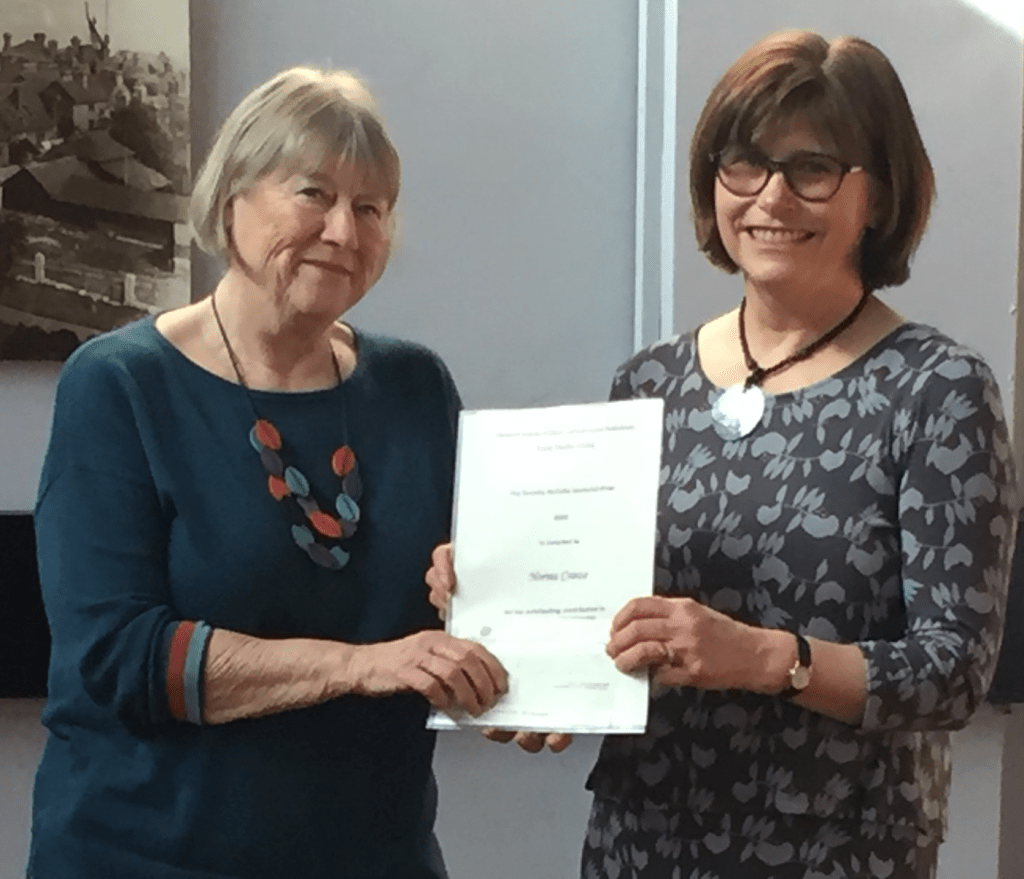
Norma Crowe receiving her certificate
Norma Crowe, Local Studies Librarian at Medway Archives Centre, won the Award for 2020. She has worked in local studies in Medway since 1995 and has a fine record of community engagement. Her work on the history of Short Brothers of Rochester led to the founding of the Short Brothers Commemoration Society (which she chaired) and the erection of a memorial in the town. A similar project led to the setting up of Strood Heritage Society. Her outreach work often uses exhibitions to involve local volunteers and encourage visitors to the Archives Centre, in recent years she has featured women’s history and World War I. New audiences have also been attracted by her wide range of publications and web pages.
The 2021 winner is Louise Birch who has been Senior Librarian Manager, Local Studies, in Leeds since 2015. She has strategic responsibility for the department and is particularly concerned with building digital platforms and leading an externally funded oral history project in partnership with other library authorities. During the pandemic, she was able to oversee the development of a new website for the Leeds online photograph archive of over 66,000 images, which has massively increased public engagement with the collection. She also runs a regular programme of events for Heritage Open Days, is developing the local studies offer to schools and has created heritage tours of the Central Library building.
Alice Lock, Secretary of CILIP Local Studies Group
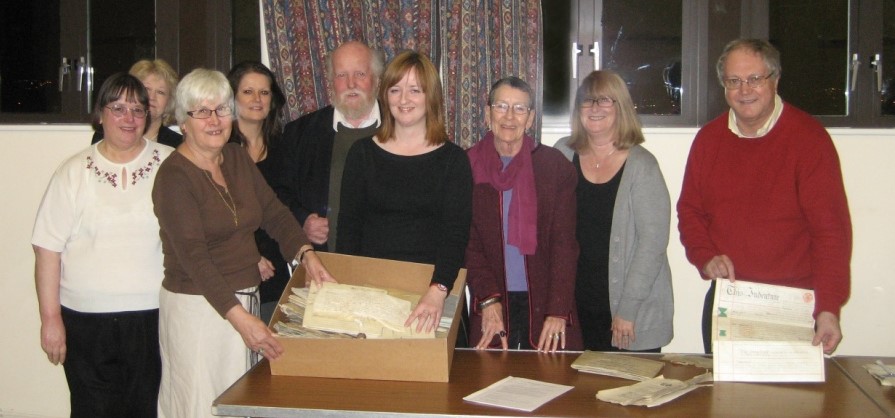
Norma Crowe, former Local Studies Librarian at Medway Archives Centre Elaine Gardner, Friends of the Medway Archive member since 2006 and current Chairman Amanda Thomas, Friends of the Medway Archive member and Editor of FOMA’s journal, The Clock Tower
The foundation of a Friends group attached to and supporting Medway Archives was the brainchild of the Archivist, Stephen Dixon, in 2005. It was clear that the Centre needed to explore mechanisms and methods to raise the profile of the Centre and to assist with fundraising.
The Friends group was set up and fortunately a good number of folk with recognised communication skills and also with a firm interest in Medway’s local history became founder members.
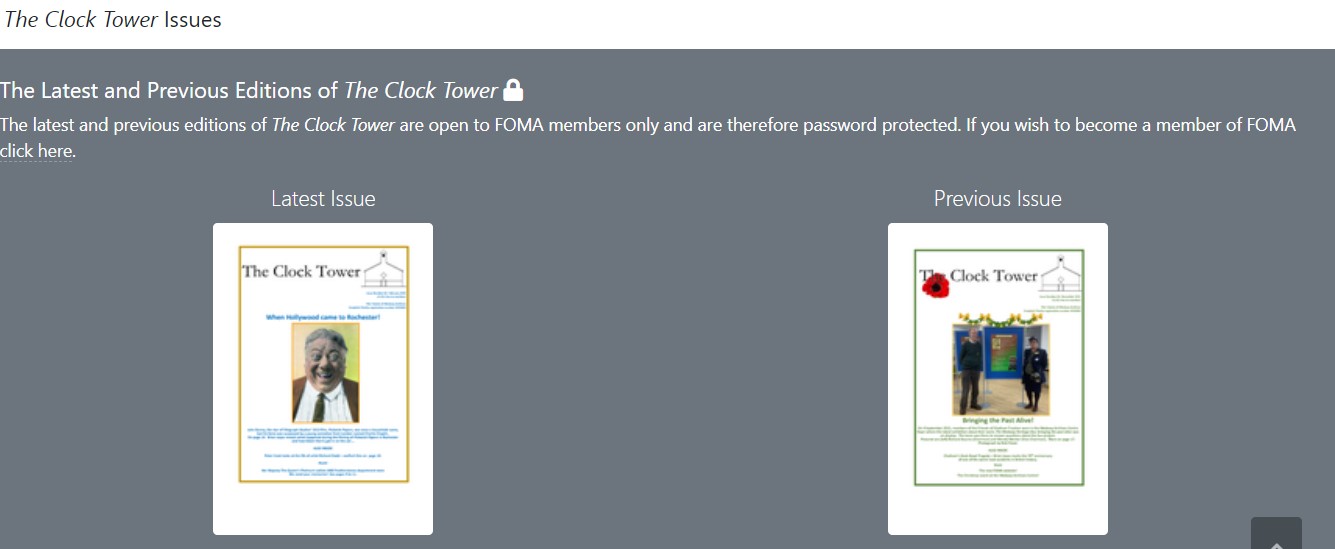
The Friends of the Medway Archive (FOMA) operates as an independent organisation with a constitution and a committee. The Society lends its support to the Centre by helping with Centre activities but also by organising their own events, fundraising, promotion and research. FOMA has its own website which includes an index of Medway men who fought and died in the First World War. It publishes a quarterly journal, The Clock Tower, which includes articles about Medway local history, forthcoming events and letters. Articles are written by Society members, staff of Medway Archives and other organisations with a local interest. Past journals, the FOMA De Caville Index and other information can be accessed via their recently upgraded website: http://foma-lsc.org
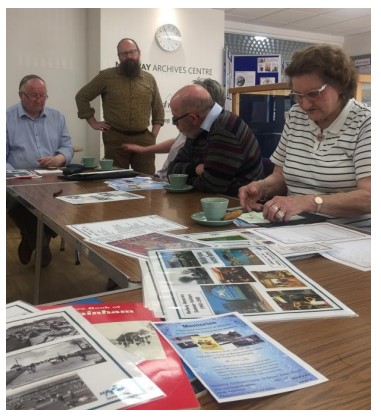
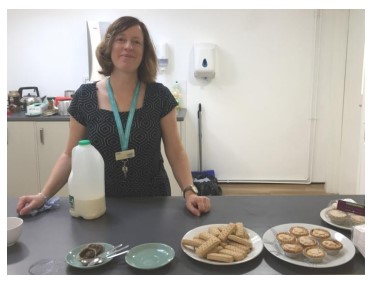
Image 1 training for a reminiscence project, image 2: the importance of tea and cake for any event! Image three: A MAC letter transcribed by a FOMA volunteer.
View from the Local Studies Librarian: Norma Crowe
I am fortunate to have had the support and assistance (not to mention the friendship) of many members of the Friends of Medway Archives. It can be a lonely job, trying to compete for recognition, notice and funds in the fraught world of local government. The backing of our Friends was helpful and reassuring in many ways. I had been in post for 10 years when the Friends came into being, so I can compare what it was like with and without them!
Here are some of the ways in which the Friends have assisted Medway Archives:
Events
Friends help at Centre events, stewarding, refreshments etc. They are also supportive, attending talks and other Centre events. Joint FOMA/ Centre events and initiatives are also possible. FOMA members sign up as volunteers if they offer their services in this way.
Exhibitions
Committee members have devised displays for the Centre, providing research and using Centre resources.
Outreach and education
FOMA volunteers have assisted Centre staff and colleagues from other departments of Medway Council with education and outreach projects, notably with the World War One-related Medway Soldiers Stories on our Streets project. They have assisted with research and with delivery of projects in schools and to interest groups. FOMA members have assisted with reminiscence events and with local history open days and talks.
Promotion/ Awareness raising
FOMA, as an independent body, is able to raise matters of concern with MAC’s parent body (Medway Council) and with other institutions. It can get articles in the local press; it can express opinions and criticise when important to do so. Centre staff are effectively prevented from doing this. The opinion of the electorate (sadly) has more clout!!
Grant applications
Working closely with the Archivist and centre staff, FOMA submitted a grant application to the Heritage Lottery Fund for funds to catalogue part of the Rochester City records. An important and fund- securing part of the HLF application was that the project archivist would work with volunteers. The selected volunteers (all members of the Friends) were trained to read old handwriting and to sort and repackage documents in the collection. And at the end of the project volunteers helped with outreach to local schools, promoting the use of the Rochester’s fascinating Archives in historical research.
Fundraising
Through its annual events and its subscription FOMA has raised funds which have supported the Centre. FOMA has, over the years, funded digitisation, microfilming, exhibitions and exhibition boards and the purchase of documents for the archives and local studies collections.
Support
It is good for the Centre to have the support of people with an interest in the local area and its history, knowing that they are on your side and are prepared to stand up on your behalf.
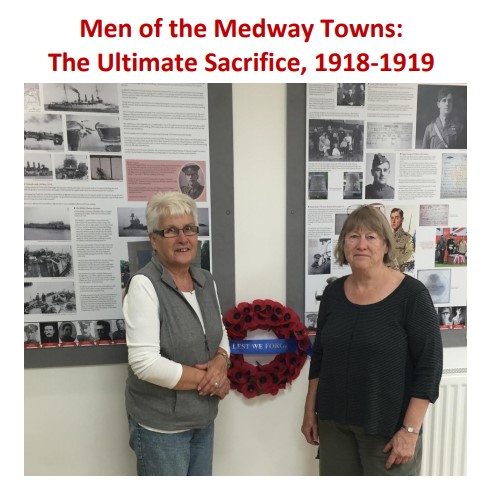
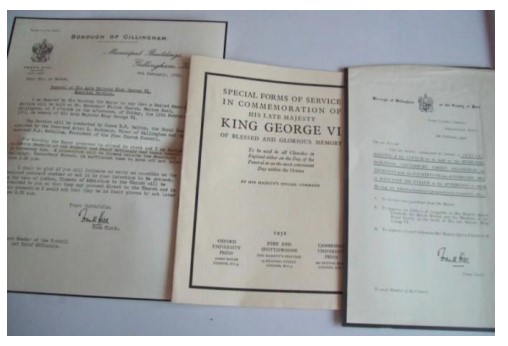
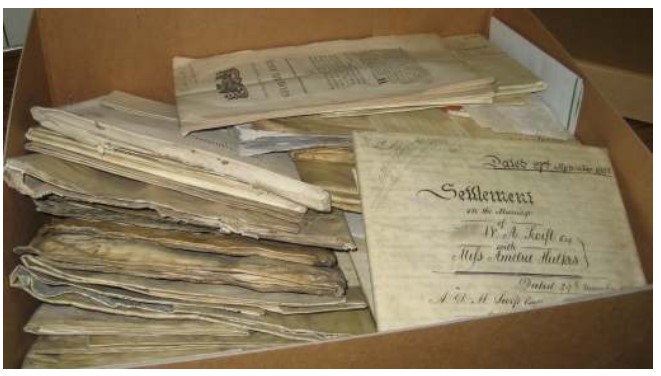
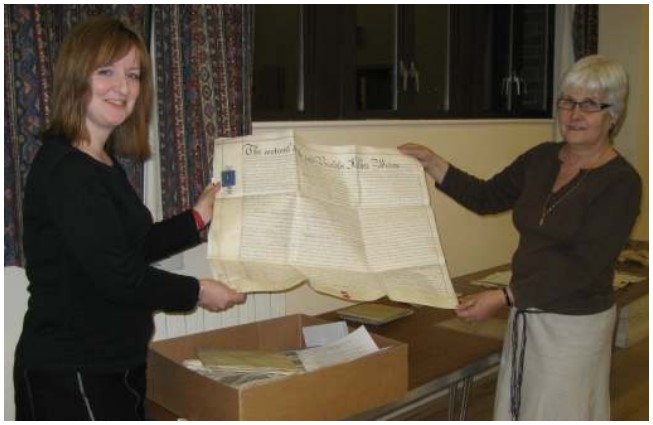
Images 1 & 2: FOMA exhibition. Images 3 & 4 Material purchased by FOMA from Ebay and elsewhere and donated to MAC.
View from the Friends: Elaine Gardner:
Having heard of the launch meeting via the City of Rochester Society and an ex-colleague who was involved with the County History for Everyone project I went along and signed up as a member that evening. I did not really get involved with any specific activity until I was co-opted on to the committee a year or so later as Stephen, the Archivist, wanted someone involved in education to help with the education side of the Heritage Lottery bid. Pointing out that I taught Maths and knew very little about the History curriculum carried no weight!
Once the bid had been obtained and was underway, I took on the education aspect that any HLF project demands, delivering the programme both in schools and through talks to adult groups highlighting the material in the City of Rochester Archive over the three years of the project, something I’d not done before. I also helped as part of a group repackaging the archive material to help with its conservation once it had been catalogued.
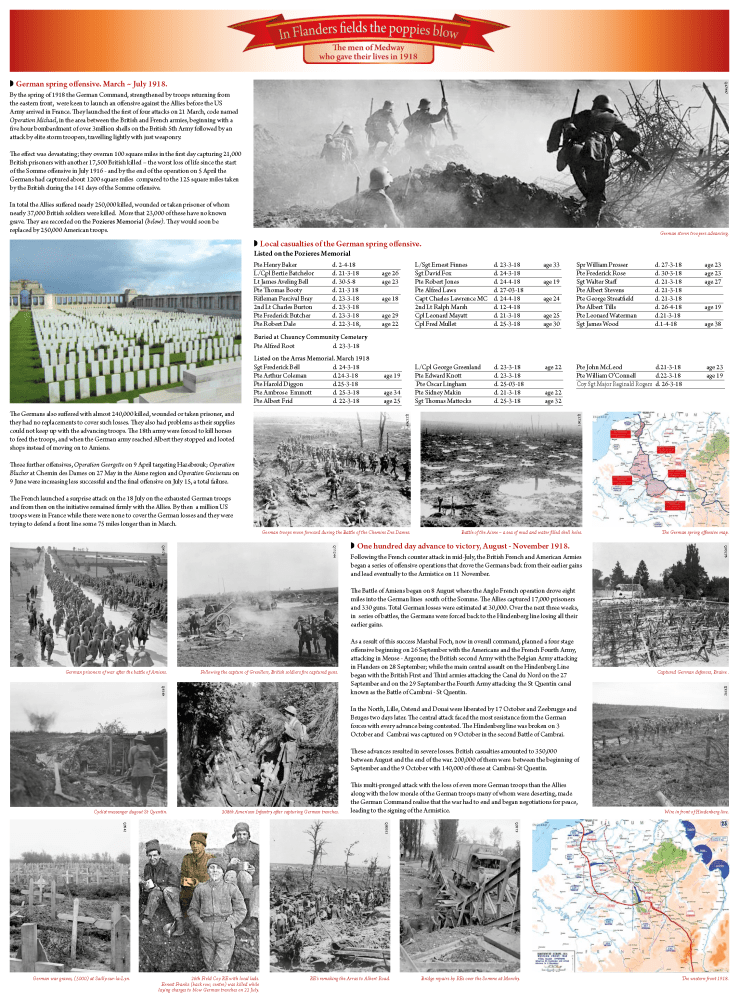
I was not involved with collating the FOMA De Caville Index of Medway’s First World War casualties, but once it was launched in 2014 and Norma asked the FOMA committee if we could stage exhibitions based on the casualties, I finished up working with the then FOMA chairman producing an exhibition each year, from 2014 to 2018 inclusive, highlighting the men who lost their lives and the First World War events in which they were involved. Much of the content of these can be seen on the FOMA website. This led to involvement with Medway Councils 1918-2018 Heritage Lottery Project Soldiers Stories on Our Streets, where I again went into primary schools along with the Guildhall Museum education team.
Whilst I’d always had an interest in local history, 40 years of teaching secondary mathematics hadn’t really developed many research skills! Being involved as a volunteer gave me new interests as I retired, and I have enjoyed helping Medway Archive and Local Studies in a variety of ways as well as being involved with fundraising in FOMA.
Finding member volunteers to get involved with the committee, especially as many of us get older, isn’t always easy but I think that this is something many societies find and events of the last two years [Covid-19] have not helped. It is very satisfying to be able to support the work of our Archive and Local Studies service and provide a voice and funds where they are limited.
I joined FOMA in 2006. Prior to this, I had visited the Medway Archives Centre for historical and family research purposes and already felt I had a relationship, especially with the staff who were always very friendly. However, not living locally, I was concerned this might be a barrier to becoming more involved; I need not have been concerned.
I was not a founding member, but I was one of the earliest. I responded to an appeal by Stephen Dixon, the then Archivist, who was looking for someone with writing experience to set up a FOMA journal, later named The Clock Tower. Having taken time out of full-time work to raise a family, this was a wonderful opportunity to ease back into my career, and what I love doing most. It also gave me a reason to spend more time in the Medway Towns, where I was born and have many happy memories. One of the joys of the Friends is that everyone shares the same passion for history and for raising the profile of Medway’s heritage. It was this coming together of like-minded people, many of whom were women, which was so exciting and – most important of all – beneficial for the Archive.
Over the years we Friends have taken on the role of ambassadors for the Archive and local Medway heritage. We are always looking for helpful and promotional opportunities and some of us have even travelled overseas, for example with the Live Bait Squadron Society, to the Netherlands during the World War One commemorations. In addition, we are constantly listening to the needs of the Archive and their customers, and are also able to liaise with the local council. We have most definitely created both a bridge – and a conduit – for better practice.
All images courtesy of the Friends of Medway Archives (FOMA)
Historic England has recently announced a major new initiative Everyday Heritage Grants: Celebrating Working Class Histories. These grants will fund community-led projects that focus on “heritage that links people to overlooked historic places, with a particular interest in recognising and celebrating working class histories”.
Community and heritage organisations can apply for grants up to £25,000. There is a focus on sharing untold stories and encouraging volunteering.
Count Dracula walks into a bar and orders a whisky … It sounds like the start of bad joke, but in 1951, if you were drinking in a certain bar in the East Midlands, you would have got the fright of your life. That year, Bela Lugosi was reprising his most famous film role in a performance of Dracula at the Theatre Royal Nottingham. After the Monday night performance, he walked straight out of the stage door and, in full costume, headed for the Flying Horse Hotel in need of refreshment. Mr. Stokes, the Night Porter, remembered the shock of the regulars for many years afterwards. (You can see a copy of the original program on the Theatre Royal online archive.)
This anecdote is one of the highlights of Nottingham’s oral history collections. The Unlocking Our Sound Heritage (UOSH) project has been spent the last four years digitising oral history and sound collections from around the Midlands. This is part of a national project run by the British Library to preserve at-risk collections and improve public access, where possible.
Over on their blog, UOSH give overviews of the work they have been doing with Nottingham Local Studies and Nottingham University Special Collections. The former post includes a clip of the Bela Lugosi anecdote. Major collections that have been digitised by the project include:
Making Ends Meet: Earning a Living in Nottinghamshire 1900-1950
Join the Historic Libraries Forum on Wednesday 1 December for a fascinating trio of case studies exploring the various ways historic libraries have sought to engage their users and stakeholders online. The event will start with a short AGM and finish with a round table featuring librarians from a variety of historic/special libraries discussing their experiences under Covid-19. Register here
Schedule
14.00 Welcome, introductions and housekeeping
14.05 Historic Libraries Forum AGM
14.20 Session One
Enhancing collection access, online and off– Mari James (Library Development Officer, St David’s Cathedral)
Engaging digital volunteers– Tom Bilson (Head of Digital Media, The Courtauld)
15.15 Break
15.30 Session Two
Delivering a successful online event – Dr Jamie Cumby (Assistant Curator of Rare Books & Manuscripts, Linda Hall Library)
Has Covid-19 exacerbated a digital divide in our sector? Round table discussion
Steven Archer (Sub-Librarian, Trinity College, Cambridge), Julie Davis (County Local Studies Librarian, Wiltshire & Swindon History Centre), Dr Helen Kemp (Plume Librarian, Thomas Plume’s Library) and Emma Laws (Devon and Exeter Institution)


 CILIP Local Studies Group
