
More brilliant events from ISG London & South East

The trip around the RUSI Library of Military History looks especially good – a real hidden gem…. (though as a former librarian there, I am a biased!) … plus the Herts visit (yes, you guessed it, I have worked for Herts too!)

ISG L&SE have arranged a number of visits to collections of interest over the next few months, plus a training course.  Each visit will last about two hours and is free of charge (except the Library of Birmingham tour).   Places on all tours are limited, so book early to guarantee a place.

Institution of Civil Engineers Library

Wednesday June 25th, starting at 2.30pm

This is a return visit to a collection we visited last year.  The ICE Library is the largest resource in civil engineering in the world and has been designated as being of outstanding national importance.  It houses over 130,000 volumes, 900 periodical titles from around the world, major reports and conference series, an audiovisual collection of videos and slides, and a growing e-resource collection.  There is also an extensive archive of engineer’s reports and drawings (most notably the papers of Thomas Telford) and of the Institution itself.  Our visit should take in a tour of the building, as well as an introduction to the library and the archive.


Keeping up to date with new research: skills and tools for library staff and users.  Half-Day Course joint with the Academic and Research Libraries Group, led by Karen Blakeman     Wednesday July 9th   1.30-6pm at CILIP HQ, Ridgmount Street, London

Information sources are getting more varied and the sheer volume of accessible new research is huge, but it is vital that staff and customers undertaking research keep up to date with the latest literature in their subject.

The aim of this half day course is to give attendees a good understanding of the main tools library and information staff can use, either in their own research or when helping customers, with keeping up to date with new research or searching for recent academic journal articles.

Topics to be covered include:

  • Free internet search tools
  • Using social media
  • Journal TOCS (Table of Contents) service
  • Access to Research project

Discussion sessions will give everyone the opportunity to exchange ideas and experiences.  This could be extended over an optional evening meal in a local hostelry afterwards.

There is a charge for this course.  For further details and to book a place, please contact Anne Hayward on hayward.anne@gmail.com


New Library of Birmingham

Friday July 11th, starting at 2pm                     

Built at a cost of £188M, the new Library of Birmingham is a massive investment for the future.  31,000 square metres, spread over ten levels, make it one of the largest public libraries in the world.   Our visit is well outside the usual L&SE area, but the new library is an exceptional development in a period of austerity and may give an opportunity for the development of new services that could be copied elsewhere.  Please note: there will be a £5 charge for the tour, payable on the day.

Hertfordshire Central Library and Information Service, Welwyn Garden City

Date to be confirmed in September.

Hertfordshire County Libraries maintain an active information service with an extensive file of hardcopy official publications, a rarity these days, and an  business information service that offers access to British Standards online: one of the very few library services still able to do so.  Come and see how an information service can be offered to a scattered and diverse population, and compare it with Birmingham.  The date has not been finalised, so let me know if you are interested in coming along, and I will send you details when available.

Royal United Services Institute Library

Tuesday October 14th

Founded in 1831 by the Duke of Wellington, RUSI is the UK’s forum for national and international defence and security.  The Library (correctly, the RUSI Library of Military History) is made up of over 30,000 volumes on military history from the Napoleonic War to current conflicts.  There is an extensive collection of materials on the First World War, so our tour complements the visits we made to the services museums earlier this year.

Architectural Association Library and Archives

Tuesday November 4th,   starting at 10.30am  – please note starting time

Another long-established collection.  Founded over 150 years ago, the Library now holds more than 45,000 volumes and 150 journal titles on all aspects of architecture, along with an extensive range on online databases and online resources.   We have also been promised tea and biscuits!  Numbers are limited to ten only, so book early to guarantee a place.

For further information on any of these visits, please contact:

Alan Power

Visits Secretary, ISG L&SE

Email: apower@buckscc.gov.uk

Tel: 08452 30 31 32
Family History Research: Recent trends and older sources. Day school booking now open

Booking has now opened for LSG North West’s latest day school. Book now to avoid disappointment!

Day School: Family History Research: Recent Trends and Older Sources

Grosvenor Museum, Chester

Wednesday, June 18th 2014

 Fee (includes lunch): £24.00 (members / reduced earnings) £30.00 (non-members)

09.30:                Welcome and Coffee

09.50:                Introduction – Chairman, Andrew Walmsley

10.00:                Researching Your WW1 Ancestors – Andrew Walmsley, Community Heritage Manager, Lancashire County Council

11.00:                Break

11.15:                Manorial Records – David Tilsley, Collections Manager, Lancashire Archives

12.15:                Tour of the Museum Galleries

12.45:                Lunch (included in Booking Fee) & AGM

13.45:                 Family Historians & Local Studies Libraries / Archives: Managing Expectations – Gay Oliver, Family History Society of Cheshire

14.45:                 Family History and Social Media – Paul Weatherall, Library & Archive Services Officer, Manx National Heritage

15.45:                 Close & Evaluation

Download a booking form here. For more information, please contact Paul Weatherall on 01624 648040, text 07624 479436, or email Paul.Weatherall@gov.im.

More thoughts on the future of Local Studies Librarianship

Local Studies Group NW have been hosting a series of discussions about various topics which affect Local Studies.  These are a few points from our first discussion which focused on the role of Local Studies Librarian.

As Local Studies Librarians, we take care of the Local Studies collections. We identify gaps and acquire, or even create, sources to fill them. We preserve ephemera and grey literature. We champion the user’s right to access to our collections. The majority of the collections are secondary sources. Secondary sources are important, anybody studying local history needs to know what others have already written before they start using the primary sources held in record offices.

Local Studies is the “secret weapon of the library service”. Collections and projects can engage new audiences, both in visitor figures and remotely. They can help to challenge perceptions and engage new audiences.  Ways of access to records are becoming more inventive e.g. using social media, outreach, remote volunteering, partnerships etc.

New technologies make this an exciting time for local studies. Using digitisation, the internet and social media local studies collections can be made available to users who perhaps would not visit a library. There are also opportunities with established family history websites to display our collections through their web pages. As budgets are tightened this can be an opportunity for income. Financial restrictions are also making the way we develop local studies collections become more imaginative. Manx Heritage have struck a deal with a publishing company to receive PDF copies of local newspapers.

Local Studies Librarians have to develop strong links and relationships with users including community groups, local and family history societies, schools and  online users. These relationships not only benefit local studies but also the shareholders of an organisation. For example, local authority users may promote the service through word of mouth, local and national press, talking to councillors etc.

This article first appeared in the LSGNW newsletter. The full newsletter can be accessed here.

Somewhere else to shout about your collections: Directory of Rare Books & Specal Collections

You know that cupboard of rather snazzy locked cupboard of old books sitting out the back…. the one you occasionally open up, smile at, think these are proper books and say to yourself “one day someone is going to be very happy we have these”. You know the ones, the stuff that is not quite 100% relevant, but were collected by a local big-wig a good few years ago and were in pride of place in the 1960s. Well, this is the opportunity to let people know about it and hopefully help to find those specialist readers.

The guys in the Rare Books & Special Collections Group have re-started their directory of specialist collection and they want to know about our collections. As the editor says “local studies collections are special collections par excellence” (flattery gets you everywhere). Not only do they want to know about our core local studies collections, but it is a great place to add a line on each of those collections hidden in the locked cabinets, no matter if they are beautifully catalogued or not.

However, time is getting short. Entries close by the end of the month.

For information on how to complete your entry, contact the editor, Dr Karen Attar, at RareBooksDirectory@outlook.com.

World War 1 and Schools

A couple of weeks ago I went to a Day Conference on ‘Schools and WWI’. As we, like many of you, are expecting an upsurge in interest from schools on this topic, I booked on.

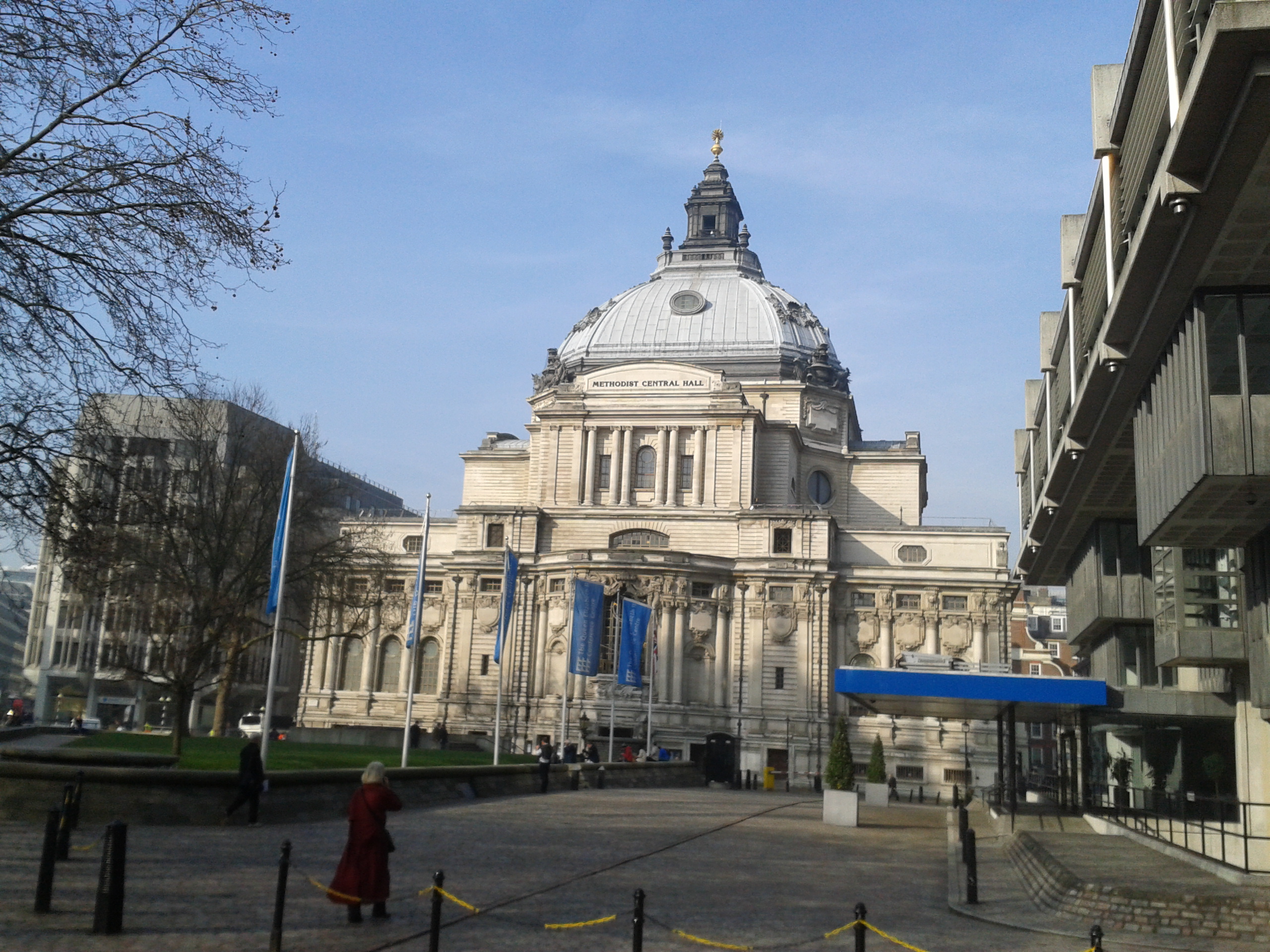
It was a very interesting day, held in Westminster Central Hall, where anti-war meetings took place in summer 1914, and where the United Nations first met. It was rather different from most day schools and conferences I’ve been to. Partly on scale, over 400 people there, and speakers, with Jeremy Paxman, Ian Hislop, Michael Morpurgo and Huw Strachan among the speakers!

Image

It was noticeable how most people start with their personal connections, just as speakers did at the LSG Day School last year, highlighting that it is the personal connections which draw us in. Having said that, Huw Strachan said how when he spoke to a class recently none of them knew of their own family connections to WWI. As they are going on a trip to the battlefields it is likely that they will be discovering these connections and will be educating their parents, and we’ll have the opportunity to help this.

I did get a bit concerned when Strachan said he was worried at all the focus on the local stories, as that is what most of us do! I was fearing our ideas crumbling. Fortunately he went on to say that this is only when it is left only at that level, and that local stories/people can be used to illuminate the mega narrative. Whilst people struggle with big topics such as Gallipoli, The Somme, the scale of casualties, they can be taught starting with the local aspect and then going onto the big story, so local studies is still very relevant to this.

Another theme was challenging the stereotypes. Ian Hislop spoke about the Wipers Times, showing clips from the TV drama, which I felt a little embarrassed at not having seen yet. He was saying that whilst the war poets are covered we should not forget the satiricists, who present another view, which is just as valid. He said he was keen that we shouldn’t condescend the past we should treat people as people and that they knew what they were doing. Other people said that preconceptions need to challenged, for instance only 56% of casualties were in France/Flanders with the rest elsewhere in the world; a large proportion of casualties died outside of the major setpiece battles; and that ‘only’ 1 in 8 British servicemen were killed which is less than most think, although many who came back had physical or mental wounds which we should consider. This corresponds with projects I know about in Worcestershire, looking at the Home Front (often ignored in WWI History), and the Worcestershire Regiment in Gallipoli, Iraq and Egypt.

One disappointment was that there were limited references to local sources. I realise I’m biased, and we are just one source, but it would have been great for teachers to hear about the information we have which can help. Michael Morpurgo touched on the power of letters and other documents, real objects which prove that something was not just a story. A speaker in the afternoon, Barry Blades, gave a short 10 minute talk on how schools could tackle a history of their school in the war. Interestingly he left the war memorial, often used as a starting point, to the end, as chronologically it comes after the war ends. He has a website www.ww1schools.com which goes through in more details (although a little concerned that he talks about school logbooks without mentioning that many are closed for 100 years which could be a problem). Another speaker, talking about visiting battlefields, discussed local enquiries schools could do before and after their trips, but other references were sadly few. The BBC, Imperial War Museum and Commonwealth War Graves Commission had opportunity to explain about their new online resources, but it was a shame little reference was made to local museums, archives and local studies libraries. There was also no opportunity to give ideas for lesson plans and activities, which I was a little surprised about. However it did prompt me to discus with colleagues about creating a brief guide for teachers when I got back to Worcester, and reminded me that there is probably a need with teachers for this information.

It was an interesting day with fascinating speakers, even if I’d have changed a few things. It reminded me how big this topic is, how important it is for it to be commemorated, and that there is a vast amount for people, school children included, to discover over the coming years with the TV programmes, exhibitions, books and events which are planned. And this is something local studies can contribute to.

The future of Local Studies librarianship…….

A few years ago I remember reading an article in Local Studies Librarian and by the end of it I was fuming. The author said that local studies librarians, archivists and museum professionals will morph into one profession. I began writing a furious reply, saying that we had a completely different skills and we looked at “heritage” in completely different ways. Later, deciding that Local Studies Librarian was a serious scholarly place and not somewhere to vent my spleen, I put my pen away.

Four years ago I became a LSG blogger and I started writing a blog post called “Is there a future for Local Studies Librarianship”. It was rather depressing. It started….

Things are getting a bit depressing. According to that “What is the point of…. Public libraries” Radio 4 programme, there are 14% less professional librarians in public libraries than there were a few years ago. I used to hear the refrain, “you’re okay, they’ll never get rid of local studies” but things are not going that way, at least in the South East. Buckinghamshire’s last Local Studies Librarian retired last year, only half of Berkshire’s Unitary Authorities have someone who is referred to as a “Local Studies Librarian” and everybody knows what is going on in Hampshire. With 25% of local government spending being shaved off in the next 5 years, we “ain’t seen nothing yet”.

The Local Studies Librarian contributor a few years before did see Local Studies Librarianship posts beginning to be transferred to archive and local studies units, but as job cuts came, it seemed to me that Local Studies posts were hardest hit. As with much of public librarianship, professional posts were often replaced with lower paid para-professional.

My 2000 blog post was to finish:

I do not know what the future of our part of the profession holds, or even what we can do to influence it. I have a sneaking suspicion that I will not be a “Local Studies Librarian” for too many more years. Please can someone tell me I am wrong.

A year later my Local Studies post was deleted. Mine was not the only local studies post to be deleted around that time.  

It is not just local studies staff that are being given the chop. As branches are being refurbished, town collections are being “streamlined” and material being sent to county archive/local studies units. There is one case where the archive only wants a small amount of the collection and it is proposed that the rest of the collection would be sent to reserve stock – how can you access OS maps from reserve stock, let alone have someone around to show you the right map and how it works? 

I believe local studies professionals make a difference. Archivists and Museum guys do an amazing job, but our training, experience and outlook make us stronger in certain fields. I started to make a list, but last year I saw some notes from a LSG North East meeting, and, to be frank, theirs is much better. Here it is:

Strengths of Local Studies librarians

  • We look at our collections, identify gaps and acquire, or even create, sources to fill them. This isn’t part of an archivist’s remit though they might make efforts to collect material created by other organisations to fill gaps.
  • We preserve ephemera and grey literature, often discarded from archive collections.
  • Our tradition is the user’s right to access to our collection, the archival tradition is that preservation is paramount and access is a privilege. Having people who come from both traditions helps maintain a balance.
  • Our focus is the information, not the document.
  • Secondary sources are important – anybody studying local history needs to know what others have already written before they start using the primary sources held in record offices.
  • Our collections are valuable as the historical record and in monetary terms – what will happen to them without professional custodianship? Will their cash value make them vulnerable to being sold off?
  • How will collections develop without professional input? They need collection policies, active book selection using local knowledge, complicated acquisition procedures. It can’t be left to library suppliers.
  • We come from a library tradition with its emphasis on outreach, promotional events, social inclusion etc.
  • Many record offices, especially in counties, use libraries to make archives more accessible throughout a large geographical area.
  • [missed anything? Please add a comment at the end of this blog].

So, what are we going to do about it? Here are some options….

  • Shout about how great we are. We make a difference to individuals, groups and our communities:
    • We do celebrate through the McCulla “local studies librarian of the year award” and the Alan Ball “best publication” award.
    • Use this blog to record our great project.
    • Write a submission for the Sieghart Commission (we’ve only got a week!)
  • Are librarians, archivist and museum guys going to become one profession? There are a number of Heritage Officer posts, especially in smaller authorities and engagement, enquiry and volunteer management roles are increasingly interchangeable within larger units. Should LSG be talking to ARA & the MA?
  • Team-up with other librarians so we can shout louder. Should we be talking more to librarians in “historic libraries”? Whether many know it or not, they have a lot in common with local studies librarians – some do as at the last LSG Committee Meeting there were librarians employed by the National Archives, the National Maritime Museum and the RUSI Library of Military History. Should Local Studies Group become Heritage Collections Group.
  • Continue to tell our political and senior officers how we are addressing their priorities such as social cohesion, the digital citizenship etc.
  • [missed anything? Please add a comment at the end of this blog].

So what shall we do – all I do know for certain is that we do need to do something.

Want to know more about schools & heritage?

If you had your whistle wetted by LSG’s last conference on schools and local studies, attend the Digital Learning Network’s new event: http://www.digitallearningnetwork.net/events. I went on their excellent event at the National Archives in 2011 and it was one of the best courses I have ever attended. My blog post can be found at the bottom of this page:

http://www.webarchive.org.uk/wayback/archive/20130506232254/http://communities.cilip.org.uk/blogs/lsgblog/archive/2011/08.aspx

Update from accross the country #1: West Sussex

This is the first in update in a new series of blog posts on what is happening in local studies units across the country. First up is Martin Hayes in West Sussex. If you have some news you want to share, e-mail Tony.Pilmer@tiscali.co.uk and I’ll publish your piece.


West Sussex & The Great War Project

In the autumn of 2012 West Sussex County Council Library Service was given an Heritage Lottery Fund grant of almost £90,000 to launch a project charting the impact of the First World War on residents. In January 2013 a Project Manager, Emma White, was appointed and she signed up & trained over 120 volunteers to help with research. Archivists at West Sussex Record Office played a key role in this training. 

About 80 volunteers have listed important events & people in 1914-18 using local newspapers from all parts of West Sussex, which have been digitised and are keyword searchable. Complete sets of these 10 newspapers are available on DVD at West Sussex Record Office and Worthing Library, and other titles will be lodged at other relevant town libraries later in 2014.  

Another 70 volunteers are researching case studies of individual servicemen including boy soldiers, nurses and home front topics such as airships, coastal defences, conscientious objectors, egg collection, fund-raising, military tribunals (appeals against conscription), rationing and treatment of enemy aliens.  

B.A. History students from the University of Chichester on placement with us used  original documents such as handwritten diaries made in the trenches, contemporary photographs, newspaper cuttings and other records to study the lives and experiences of individuals caught up in the war, including VC winners and the Watson sisters, military nurses from Steyning.  

West Sussex Record Office is our main partner and has been providing great support, training volunteers and giving access to the Royal Sussex Regiment archive, one of the finest County military collections in Great Britain. Another group of volunteers has used a digital camera to capture over 19,000 pages of documents from this fine archive. The documents include lists of soldiers, official day by day accounts of the fighting, unofficial handwritten diaries. All of these contain valuable information for family history research. The RSR battalion war diaries will be made available free online – see the url below.
  
The project will delve into the family backgrounds of local people involved, and try to discover their fate. Domestic issues such as will be explored. So will the effect of the war on the towns and villages of the county.  We have already worked with Worthing schools, that is Davison High School for Girls, Durrington Middle School and Thomas a Becket Middle School, and are looking for more West Sussex schools to get involved.   

All of the above will culminate the publication of a Great War West Sussex website and  travelling display at an all day event (22nd June), plus a WWI booklist and a new book Great War Britain: West Sussex (The History Press, 4th August).   
Although most of the research work has now been done, you can still help by giving or lending us for scanning, photographs of West Sussex servicemen nurses, women war workers, POWs, and also general street scenes and events showing Worthing and other places in the County during 1914-18.  

Contact:  Emma White, Heritage Project Manager digitisation.unit.libraries@westsussex.gov.uk       Telephone 01903 704836 
West Sussex Past websites, including the Great War (live 22/06/2014): http://www.westsussexpast.org.uk/

London & South East Local Studies Forum 2014

London & South East Local Studies Forum 2014
Kent History & Library Centre, Maidstone
Thursday 13th March 2014
11am – 4pm

Cost: Free

 The annual event for local studies staff in London & South East to share ideas

The annual event is a great opportunity to share ideas and questions with local studies professionals across the region and to hear about a project from one of our members.

This year the event will be held at Kent’s new purpose built archive and local studies centre. The Kent History & Library Centre houses around 14 kilometres of historic material relating to Kent dating back to 699 AD together with one of the county’s best public libraries.

As well as tours of the new centre, we will be about how the KHLC has been successfully working with the county’s local history groups.

There will also be time to discuss developments in the region and time to catch-up with fellow professionals during a “networking packed lunch”. Please note, lunch is not included. 

We also want to hear about what all local studies units are doing and what concerns you have. If you can attend the forum you will be asked for details during the bookings process. If you cannot attend, we still want to hear what you have been doing. Please e-mail tony.pilmer@tiscali.co.uk. We will circulate news reports however concerns will be treated anonymously.

To book, please visithttps://www.eventbrite.co.uk/e/london-south-east-local-studies-forum-2014-tickets-10436139775 or for more information please contact Tony Pilmer via tony.pilmer@tiscali.co.uk.


11.00                            registration and coffee

 11.30                            welcome                                               Forum Chair

 11.45 – 1.15                  presentation on community history and archives projects in Kent by Mark Bateson, with members of Harrietsham History Society. 

 1.15 – 2.00                    lunch and networking

 2.00-3.00                       group discussion on Community archives; information exchange examples of good practice              

 3.00- 3.15                      tea

 3.15 – 4.00                    brief history of the new building and tour

 4.00                               end


Radio highlight of the year so far?

Ploughing through my Christmas copy of the Radio Times I could not find one of my usual Christmas highlights – no not, the Archers, even though Tom has just got engaged to Kirsty, Rosa is now talking to her Daryl again plus Helen!!!!!!!!!!!!!

Sorry, where was I – yes, the release of the latest batch of government records and that excellent Radio Four programme UK Confidential. It is normally on the last few days of the old year, so, as I could not see it I decided to Google it. Guess what the suggested search term was ….. UK Confidential Podcasts – hooray, good old Auntie has now put all the old versions of the programme on their website, so I’ve downloaded them all via I-tunes and working through them all – just don’t tell me what happened in 1985s programme for the next few weeks.