Local Studies Librarian rewind – Winter 1996

With Tony’s recent article I thought I’d look back at the first couple of editions after I joined the Local Studies Group back in 1996 (19 years ago???). I was at Aberystwyth University at the time, doing the postgrad librarianship course. I must admit I knew very little about Local Studies at the time, but though joining LSG and then doing the Local Studies module I realised that this was an opportunity to use my interest in history. Looking back at this edition it was interesting to see how things had changed, but many underlying questions/subjects are still here.

Vol 15 (2) Winter 1996

The main thrust of the journal was technology, with the features on digital databases, computer catalogues, internet websites and projects prominent.

The first article is on The Durham Record, a database which took advantage of the latest technology to bring together 10,000 digitised photos, historic OS maps and the Sites & Monuments Records (now Historic Environment Record). For my dissertation I looked at the use of audio-visual material in Local Studies, so it was new projects such as these that I looked at.

Although it was 20 years ago it still seems quite advanced, with touchscreen, GIS features allowing you to search via a map, and multiple ways of searching. Limits of the time meant that it had to be viewed on one of 4 standalone machines located through the county, but it was an early groundbreaking attempt at harnessing computers to allow better access to Local Studies resources. The article stresses the benefits of bringing these sources together, which we now take for granted, and all customers were interviewed said it was easy to use, an achievement considering many would be unfamiliar with computers.

Looking online today it seems that The Durham Record is still available in different formats on the web. The Durham Record itself http://www.durham.gov.uk/durhamrecord contains the images, whilst the SMR information is now on the Keys to the Past website, along with Northumberland’s HER http://www.keystothepast.info/Pages/Home.aspx. It is good to know that all that work never disappeared, which occasionally has happened.

Heritage Lottery Fund

At this stage HLF was still just a couple of years old. Nowadays most of us will have been involved, but as many wouldn’t have done in 1996 The Local Studies Librarian gave examples of relevant projects which had received funding. These included the new Surrey History Centre & The Society of Genealogists’ cataloguing project.

These were also the early days of the internet. Five key family history sites were mentioned in an article, including GENUKI & Roots Surname List, now ancestry, Find My past or even FamilySearch at this stage. It was interesting too to read that Devon were publishing a journal which would only be available digitally, a development that it very common now with groups such as the LSG looking to reduce printing and postage costs, but hadn’t realised it started so early. A further article told of a CD-ROM containing Open University dissertations, some which would be of interest to local and family historians. With developments in computerises catalogues it was also reported that some libraries who didn’t have computerised catalogues of their Local Studies collections were looking at creating these, although in some cases different collections within the same county had been catalogued in completely different ways, making the creation of a uniform catalogue a headache.

News In Brief Section

  • With the Norfolk Library fire only just having taken place it was reported that 17,000 items had been donated to help replace lost Local Studies items. The main problem was acquiring rare items lost, and recataloguing since the card catalogue has been burnt. A couple of my friends subsequently had their first professional posts on this cataloguing project.
  • Yeovil had a Local Historian in Residence scheme. The local history society helped the library by running a weekly helpdesk, precursor of volunteer help which many libraries rely on today.
  • It was reported that the first meeting of the Public Services Quality Group (PSQG) had met to discuss issues in archives and local studies. I’m quite familiar with it today carrying out surveys of archives at 18 month intervals, but hadn’t realised that it included Local Studies in the beginning. Anyone know why Local Studies didn’t continue being included within PSQG?
  • And entries were encouraged for the Alan Ball Award for local history publications, and the Dorothy McCulla Award, both of which still run today. For the latter people were asked to contact Philip Thomas, LSG Treasurer, who sadly passed away last year.
Love Worcester + Dandy Row

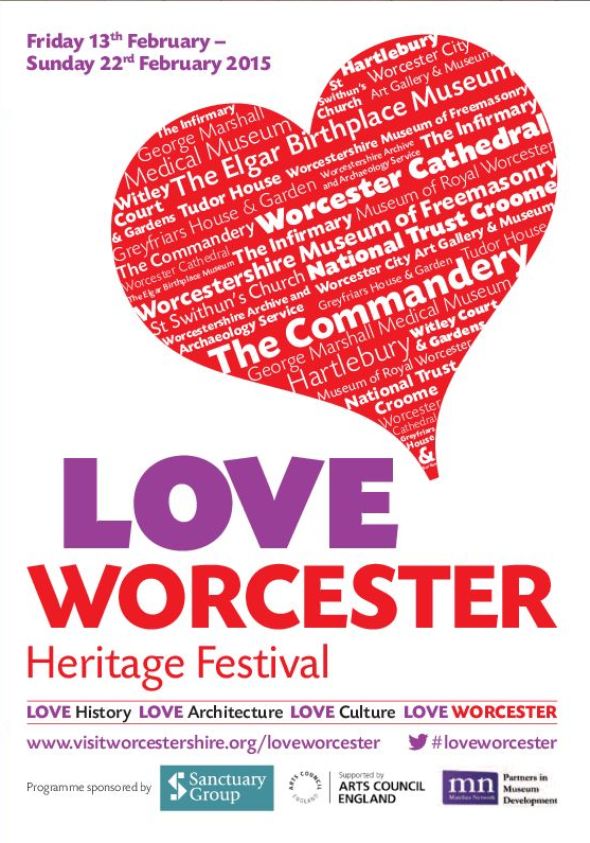
For the third year February half term in Worcester was #loveworcester. It is a festival arranged by members of the Worcester Heritage Partnership, which is a group of heritage venues in the city who meet to discuss ways to work together for mutual benefit.

It was decided that February half term was a great opportunity to badge events under a single banner, and with Valentines Day being in the period the word Love was an obvious candidate for the job.

loveworcester

Most events are ones we would be doing anyway, and the title or focus were skewed (some tenuously!) to fit the theme. There is no external money for this, apart from a little bit from the Museum Development Officer, and each partner contributed a small amount for producing a brochure. The local tourism body helped by providing support and publicising events on their website.

By all working together we were able to maximise publicity, ensuring that it was mentioned in the media, and on social media we all shared/retweeted each other and promoted heavily so people were well aware of the festival, which helped the individual events.

In our service we have run a few events. Our workshop on parish records was specifically run that week with the title ‘Love and death in the archives’, and in addition to the usual content I’d cover I made sure that stories of strange weddings are included.

We try to do children’s event too. Last year we asked them to draw their favourite Worcester building, whilst having photos from our collections to inspire them, and were pleased that The Hive (our new home) was a firm favourite with our young users. This year we have a day of archaeological activities, and a day of events around Dandy Row.

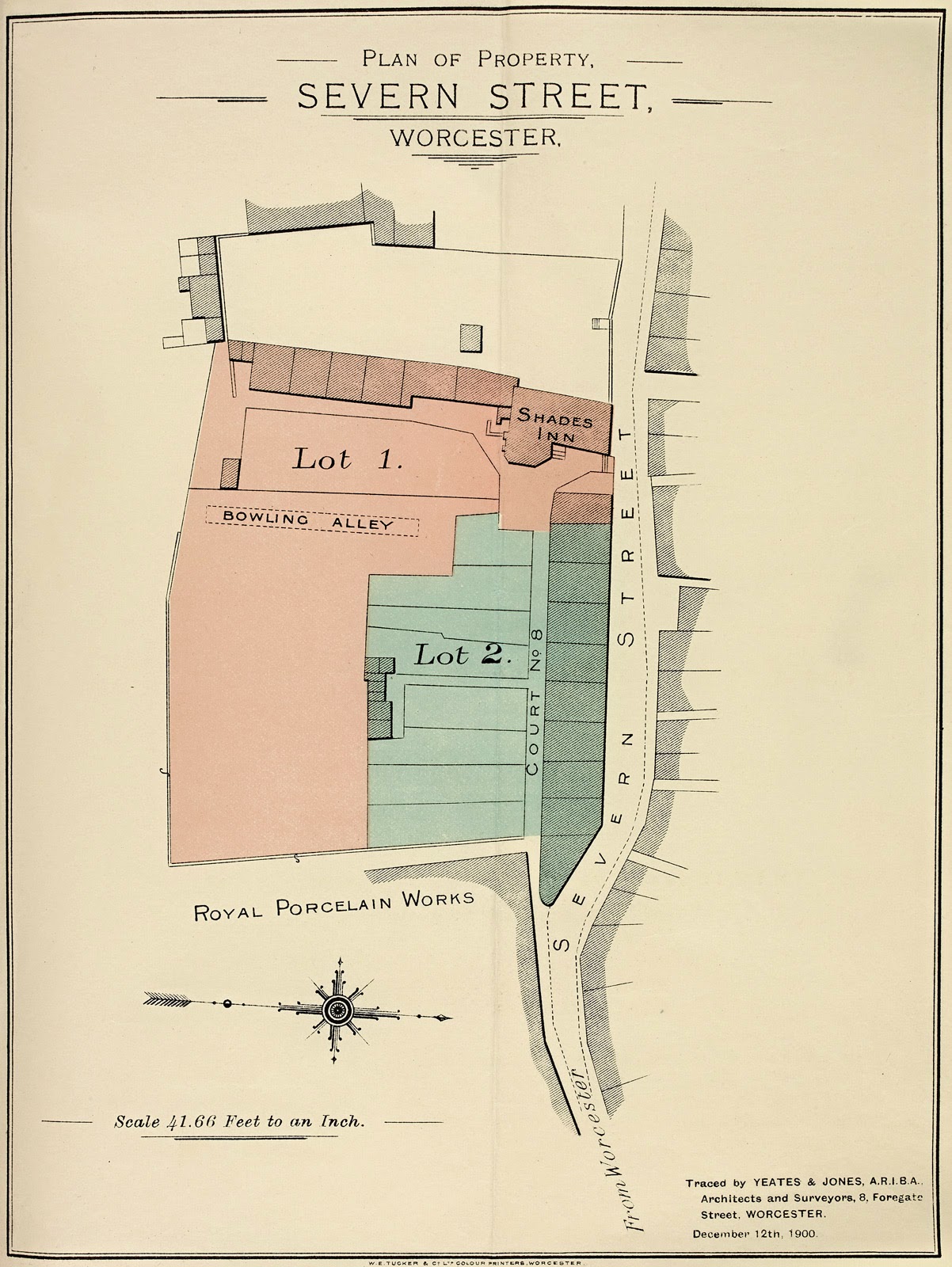
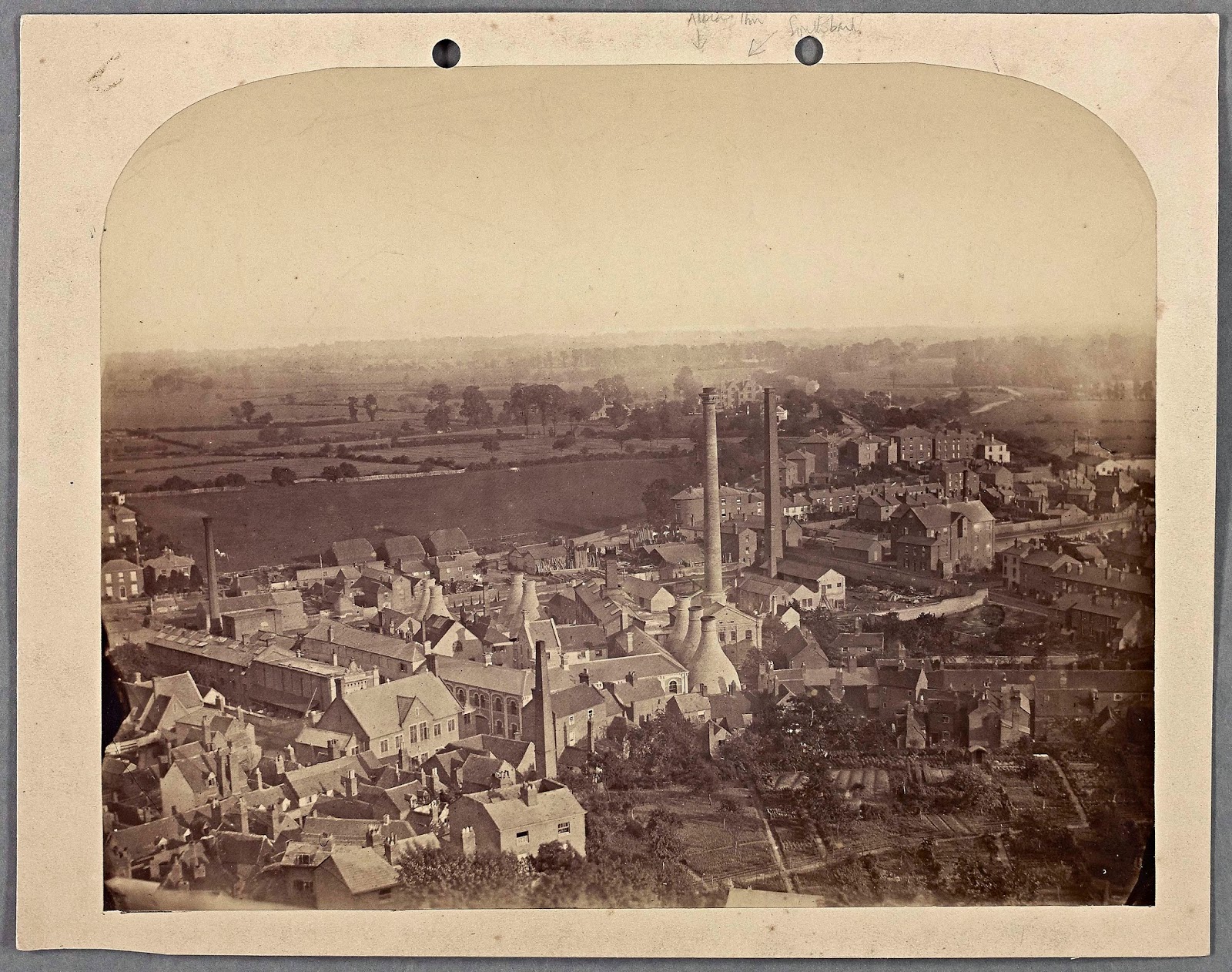
Dandy Row is a group of houses which has gripped the imagination of our staff since we discovered this fantastically named row of houses near the cathedral. Since then we have been looking out references to it and the residents within our collections. Using census, photos, newspapers, school records, wills, trade directories, maps, WWI records, and local history books we uncovered the story of residents who sounded as if they could have come straight from the pages of a Dickens novel, such as

  • Isaac Webb – Waterloo veteran & salmon fisherman of the ship Enterprise
  • Mrs Tandy – washwoman
  • John Bayliss – Royal Worcester Porcelain painter
  • Jermiah Pitt – labourer
  • Henry Martin – soldier
  • John Howell – publican

Other residents covered the main local industries of gloving, railways and porcelain, allowing us to tell those stories of Worcester’s past.

DandyRow2

We borrowed object of an appropriate age to go alongside with the information we had gathered, and someone even put some of it together for a story for the Saturday storytime in the library. The children and families loved it, and we also had older people visit who could remember the street. In many ways Dandy Row is just a random collection of houses, which could be anywhere, but it was great to be able to use the sources to bring these people to life to showcase what could be discovered here. Love Worcester was then an appropriate opportunity to share what we’d discovered and share with visitors.

DandyRow1

Blast from the past #1: promoting local studies

“You are too busy actually doing the job to waste time explaining to people who seem to be solely preoccupied with the latest managerial philosophy that can be expressed by a handy set of initials. These are, however, precisely the people you must talk to and the philosophies that should be used to your advantage”.

These words could have been written yesterday but, in fact, they come from a 1991 issue of Local Studies Librarian (Vol 10 No 1 Spring 1991 p 3 – 4) in an article  with very useful advice on promoting a local studies service by Sheila Cooke. She stressed the importance of promotion to the public, to managers and councillors and to colleagues in your own service and the profession generally, and gives a few tips on writing a newsletter which can provide ready material for all these audiences.

This article, along with other back files of the journal, can be consulted by CILIP Local Studies Group members on the LSG CILIP webpages

Newspapers as an Historical Resource – LSG event overview

A few weeks ago I attended a half-day event at CILIP HQ on the use of newspapers for historical research. The event, organised by CILIP Local Studies Group, featured two very interesting talks by Edmund King, former head of the British Library‘s newspaper library, plus a personal account by Diana Dixon of the way local newspapers have enabled her to piece together previously untold stories from her family history.

Most of the day focused specifically on digitised newspaper databases, and in particular the British Newspaper Archive which Edmund King oversaw the creation of at the British Library. Like Diana Dixon I had used the BNA for my own family history research and at the local studies library where I work, but had not previously appreciated the full range of international newspaper databases which can now be searched online. Some of these databases mentioned by Edmund King in the first of his talks included:

  • Chronicling America – Historic American newspapers from 1836-1922, sponsored jointly by the National Endowment for the Humanities and Library of Congress (free)
  • Gale News Vault – A broad selection of international newspapers and periodicals (paywall)
  • Google News Archive – Google’s discontinued newspaper scanning project, whose content is still available to search (free)
  • Ireland Old News – Transcriptions of old Irish news articles (free)
  • Newspapers.com – Database of 3,400 newspapers, mainly American (paywall)
  • Trove – The National Library of Australia’s digitised newspaper collection (free)
  • Welsh Newspapers Online – Welsh and English-language newspapers from 1804-1919, digitised by the National Library of Wales (free)

Several of the above can be cross-searched via Elephind.com, which is attempting to create a single-search interface for all the world’s online historic newspapers (they have quite a long way to go admittedly, but a noble aim nonetheless). As local studies specialists we might question how useful international databases like these are to our daily work, which tends on the whole to focus on local people and events. The truth of course is that historically these ‘local people’ often moved around considerably, especially within the Empire, and events on one side of the world would often be reported on the other due to the complex web of family and business connections which linked people across the globe. Indeed, comparing the regional and international reportage of local events can often provide unique insights into these events which local sources alone could not.

Next Diana Dixon provided a very useful overview of some of the ways local newspapers can be used by family historians. In the past I had used reports of local births, marriages and deaths as an alternative to ordering GRO certificates, but had not thought to examine the long lists of wedding guests and mourners frequently included in these same reports to put together a detailed picture of an individual’s extended family and social circle.

After tea and coffee Edmund King’s second talk focused on some of the more unusual items which can be found in the British Newspaper Archive. We would naturally expect to find reports of local events, births, marriages and deaths etc., but many of the ‘lighter’ pieces can be equally revealing. These include poetry, cartoons, celebrity portraits, ladies’ fashions, maps, literary reviews, serialised novels and items of musical interest, which can all help flesh out the world in which our ancestors lived.

All of the above were all illustrated with examples, and one of the best in my opinion was a brief mention in the Oxford Journal on the 23rd of February 1765 of a visit by:

“One Wolfgang Mozart, a German boy of about eight years old…who can play upon various Sorts of Instruments of Music, in Concert, or Solo, and can compose Music surprizingly ; so that he may be reckoned a Wonder at his Age” (p. 3, col. 1).

It is inconceivable to think this wonderful description would have been found without the BNA’s search engine, and it is worth remembering how lucky we are to have such an excellent tool at our disposal.

It was a very interesting and informative day, and a great opportunity to meet with colleagues and share experiences. If there are any historical newspapers in your library’s collections which you would like to see digitised, you can submit a request on the BNA forum.

Robert Jones, Assistant Librarian (Local Studies)
London Borough of Hillingdon
rjones1@hillingdon.gov.uk

Project management for librarians & archivists – booking now open

Those nice people at the APML have got another excellent course. This time – Introduction to Project Management for Librarians and Archivists. As it is APML, it’s going to be a top-notch course at a bargain price.

Tuesday 17th March 2015, at the Royal United Services Institute, Whitehall, London, SW1A 2ET.

Price to be confirmed, depending on numbers, but probably between £55-£75 per person – not including lunch.

Trainer: Elizabeth Oxbarrow-Cowan.

Timetable

9.30 Registration

10.00-10.15 What is a project?
Defining when something is or is not a project.

10.15-10.25 How to define success for your project
Without identifying what you want your project to achieve and how you cannot measure its
success nor say when the project has come to an end. This section will give you the tools to
identify and describe success in your project.

10.25-11.30 Identifying the stages in a project
All projects have the same basic phases. You will be introduced to these phases and see how they relate to each other.

11.30-11.45 Break

11.45-1300 The basics of planning a project
There are many tools for planning a project. In this section you will learn some of the core
techniques.

13.00-13.45 Lunch

13.45-14.30 Implementing and monitoring a project
These processes are vital to the project’s success. Implementation requires the establishment of a team with clear assignment of roles and responsibilities, clear lines of reporting and effective team working and leadership. This section will give an overview of these issues along with advice on what to monitor in a project and how.

14.30-1500 Completing the project
A project has a clearly defined end point. You will consider how to draw a project to a
successful conclusion.

15.00-15.15 Break

15.15-16.00 Skills of a good project manager
Project management skills go beyond those of normal management skills. The course will
look at how and give you an opportunity to reflect on how your own skills currently match with those needed to be a good project manager.

To book, contact Kay Walters via KAYW@hellenist.org.uk or 020 7321 5463.

LSLs & Archivist networking event in Manchester

There is a free networking event in Manchester on 8th December at 4pm Manchester Central Library which includes tours of the building and a talk by Marion Hewitt, director of the North West Film Archive – http://www.cilip.org.uk/local-studies-group/events/networking-event-librarians-and-archivists-0. A great opportunity to visit this wonderfully refurbished library and visit the Manchester Christmas Market!

Contact Julie Devonald – julie.devonald@manchester.ac.uk

Collecting Cultures – Creative Wiltshire and Swindon

Collecting Cultures is an occasional national HLF funding stream open to accredited libraries, archives and museums. Before the current round, which has just been announced, the last round was in 2008 and mainly focussed on museums. The aim of the fund is to encourage the heritage sector to think strategically about collecting, especially identifying gaps in collections. This also includes funding to purchase items (50% of a grant has to be spent on purchases), enabling a more systematic approach that avoids the mad dash when books, ephemera, archives and objects etc. come up for sale, trying to gather the money together, approaching various small grant providers and all that goes with that process. It also promotes local partnerships across the heritage sector and allows us to invest in skills training for staff and volunteers in collecting and curatorship. Unlike other HLF grants, Collecting Cultures projects can run across 5 years.

http://www.hlf.org.uk/about-us/news-features/%C2%A35million-investment-bolsters-cultural-institutions-future-collecting-plans

In this current round Creative Wiltshire and Swindon – a partnership led by Wiltshire Local Studies and including Swindon Central Library Local Studies, Wiltshire and Swindon History Centre, Wiltshire Conservation and Museum Advisory Service and Swindon Museum and Art Gallery – received £178,000 HLF Collecting Cultures grant towards a project totalling £213,550. We have been the only applicant in the South West region to receive the grant, so we have been especially delighted by our success.

So why Creative Wiltshire and Swindon? Wiltshire and Swindon has a long history of nurturing and inspiring creative industries and individuals. These might include artists, photographers, film-makers, writers, composers, architects and designers (e.g. furniture designers) and crafts people, amongst others. Although heritage collections in Wiltshire already include some local artists (mainly paintings) and writers, the broader creative industry is not well represented and therefore remains a largely hidden part of our county’s heritage.

The physical heritage will include published and manuscript materials generated by or about the creative industries, including biographical works, letters, diaries, notes, plans, sheet music, catalogues, ephemera and other such materials; photographs, prints and engravings; fine art and objects such as ceramics and textiles; furniture, models and everyday objects that are representative of the creativity community. It will cover materials that are about creative individuals and organisations that are either rooted in local communities and their history and or inspired by Wiltshire’s communities, its history and landscape. So, for example, our collecting might range from ceramics from an established pottery in a town or village; sketches and paintings from notable local artists, such as Ken White and Walter Poole; traditional textile and lace making; records and posters from the local music scene in the 1970s and 1980s, such as the band XTC in Swindon; to an Alex Moulton bicycle or a James Dyson vacuum cleaner! Where the originators of the works are still living, we will also seek to secure their stories through oral history to add a further dimension to the interpretation of collections.

Materials will be acquired by accredited museums in the county of Wiltshire and Borough of Swindon and the Wiltshire and Swindon History Centre (Wiltshire and Swindon Archives and Wiltshire Local Studies Library), with accessible copies or surrogates, where relevant, for Swindon Central Library (Local Studies collection) and non-accredited museums. Across the five-year period we hope to draw into the partnership other museums in the county and borough.

The project will enable us to develop a cohesive strategic collection policy for creative collections across the heritage sector in Wiltshire and Swindon, this includes the creation of an acquisition panel that will have an overview of what is collected. Training to develop skills for staff and volunteers, through workshops and additional one to one support as appropriate, in areas of proactive collecting, conservation, and interpretation will be provided. The Wiltshire Local Studies Library will employ two officers for a day a week each across an eighteen month period to source and catalogue local studies and archive material; assist museum colleagues and their communities in identifying creative industries and their products; and help with community learning and participating activities. Costs for our Heritage Education Officer to work with Local Schools are also included within the grant.

This is a great opportunity for the local heritage sector to engage new audiences for local studies, archives and museums through these collections. In addition to a number of local exhibitions and talks in museums, libraries and at the History Centre, we will be using current creative practitioners to work with new and existing audiences, through workshops, where audiences will be invited to respond to newly acquired material through creative writing and the arts. We will also work with schools developing a theme of ‘take one object / item’ that has been deployed successfully by the National Gallery, developing lesson plans based on a single object and to tie in with an Arts Award (a national accreditation for young people).

These are only the briefest of details. I am happy to share our activity plan with colleagues and would encourage local Studies libraries to consider any future rounds of collecting Cultures. I will also let you know how we are progressing against our aims.

Terry Bracher
Terry.Bracher@Wiltshire.gov.uk

WWI project review event at IWM – booking now open

Those great guys from the Digital Learning Network are running an interesting review seminar on WW1 events. Looks very interesting, though it is £115….

Digital Learning and the First World War

December 12, 2014 9:30 am
Imperial War Museums

Digital Learning and the First World War

Date:  Friday 12 December 2014 

Venue: Imperial War Museums, London

Digital Learning Network and Imperial War Museums are hosting this event which will explore how different organisations have developed digital content connected to the First World War.  This event will bring together practitioners who have developed content for formal and informal audiences who will be sharing information about their projects and exploring how these could be applied to wider subject matter.

Case studies include:

  • Charlie Keitch, Digital Learning Officer, Imperial War Museums: Developing Imperial War Museums online resources for schools
  • David Avery, Senior Web Content Developer, Learning Team, British Library: Uniting collections from across Europe: building the British Library’s World War One learning website
  • Simon Bendry, Centenary Battlefields Tour Programme Coordinator on what teachers want from resources on the First World War
  • Robin Clutterbuck, Project Manager, Gallipoli Association:  Gallipoli Centenary Education project
  • Gill Parkes, Principal Archivist, Durham Record Office:  Developing the Durham at War project

The event will take place at IWM London and the day will include the opportunity to visit their ground-breaking new galleries and discover how IWM has used digital technologies to help interpret the First World War.

Booking via: http://www.digitallearningnetwork.net/event/digital-learning-and-the-first-world-war

NEWSPAPERS AS AN HISTORICAL RESOURCE: bookings now open

NEWSPAPERS AS AN HISTORICAL RESOURCE
half-day event presented by CILIP Local Studies Group


Thursday, November 20th 2014, 13.00 – 17.00

CILIP HQ, 7 Ridgmount Street, London, WC1E 7AE

13.00: “Old wine in new bottles”: historic newspapers online. Edmund King, former Head of the British Library Newspaper Library.

14.00:   “Skeletons in the cupboard”: family history in local newspapers. Diana Dixon,

14.45:   Tea and coffee

15.15:   “Tales of the unexpected in the British Newspaper Archive”: Edmund King, former Head of the British Library Newspaper Library.

16.30:   Open session and concluding remarks

For more information please contact Dr Diana Dixon, Honorary Reviews Editor, CILIP Update, 7 Ridgmount Street, London, WC1E 7AE; Diana.dixon@cilip.org.uk

Newspapers as an Historical Resource booking form