Working with cultural heritage data: forthcoming training courses

There are two forthcoming training courses on working with cultural heritage data that may be of interest to local studies librarians:

The theme for the school this year is Digital Image Curation. There will be a Q&A about the school and how to apply on 25 January, 2pm GMT. Register for the zoom link.

There will be further face-to-face sessions in York and Wales before July 2023, so watch out for those if they are more convenient to get to.

Event: How to share Public Library digital collections with People’s Collection Wales

Delivering culture and heritage to audiences online has become increasingly important in 2020.

CILIP Cymru Wales (CCW), CILIP Metadata & Discovery Group (MDG), CILIP Local Studies Group and People’s Collection Wales (PCW) invite librarians across Wales to an online PCW session, which will show librarians how to share digital content, re-purpose it via the Hwb and Living memory initiatives, and measure its impact – all via the PCW site

This webinar will be followed up with bespoke training to help libraries in Wales get their collections online.

Details

Join via Zoom on Friday 20 November, 12-1pm.

The session is free and open to all. Register via the event page.

Session outline

  • About us: People’s Collection Wales
  • An introduction to uploading digital content to PCW
  • An introduction to linking content from PCW to Hwb Learning and teaching for Wales
  • An introduction to linking content from PCW with the Living Memory initiative
  • An introduction to measuring digital impact
  • Discussion: what next?

At the end of this session participants will be able to:

  • Identify materials for uploading to PCW
  • Describe materials for upload to PCW
  • Identify opportunities to develop new resources for Hwb and Living Memory
  • Identify opportunities to promote and evaluate your users’ digital activities on PCW
  • Tailor subsequent training sessions around what you need to start sharing content via PCW.

The webinar will provide a useful oversight for all library and information professionals in Wales hoping to improve user engagement with digital collections. It will be particularly useful for public library and archives staff with local studies collections.

Presenters

People’s Collection Wales: Tom Pert, Gruffydd Jones, Rheinallt Ffoster-Jones Jessica Roberts

Facilitators: Amy Staniforth (CILIP Cymru Wales), Jane Daniels (CILIP Metadata & Discovery Group)

The Value of Local Studies for Digital Engagement

We know the value and positive impact that local studies collections can have on people’s lives. Sharing and exploring together; understanding how the past has shaped a community, and the history of the places that matter to every one of us is proving, now more than ever, to be a comforting constant in an ever-changing world.

These amazing collections are being brought to the fore, and CILIP’s Local Studies Group have been looking at how local studies material is being used online https://lslibrarians.wordpress.com/2020/05/18/share-your-innovative-ideas-for-local-studies/

Here are the results!

If you know of any great online work that hasn’t been mentioned here, please let us know https://lslibrarians.wordpress.com/contact-us/

Film

  • Tower Hamlets has been digitising film collections and sharing via social media channels such as You Tube.
  • Hosting online screenings of films from Local Studies collections: Tower Hamlets is doing this via Facebook Live.
  • Creating film-shows using photographs from Local Studies collections alongside narration; such as the VE Day film show created by the Wiltshire & Swindon History Centre.
  • Local Studies for reminiscence: the Wiltshire & Swindon History Centre has been trialling the use of photographs from its collection to create film shows specifically to help those with memory loss.

Covid-19 specific projects

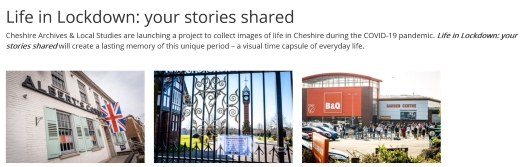
There are many libraries and archives garnering the support of their current volunteers, engaging with the public and growing their volunteer base to help document life under lockdown. Examples include Suffolk Archives, Hull History Centre and Cheshire Archives & Local Studies.

Online Outreach

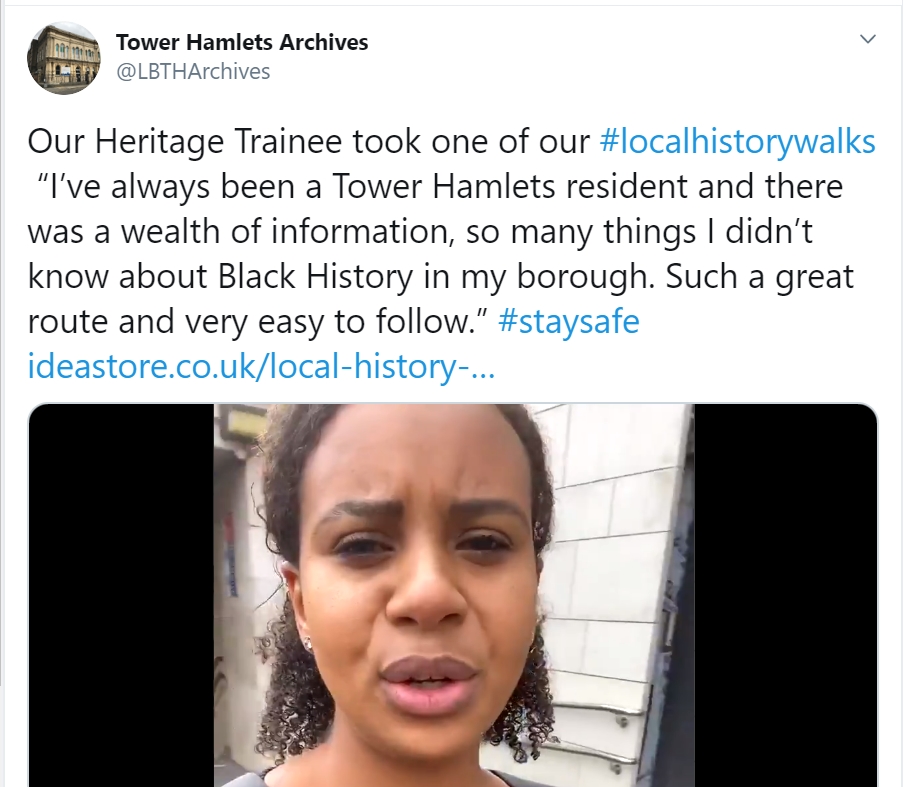
Tower Hamlets have established a number of socially-distanced local history walks, accessible via social media. They have also produced a set of online local history podcasts and continue to work on collections-led study material to support parents with the history curriculum. 

  • West Sussex Local Studies have posted interviews from their WWI project online.
  • Leicester, Leicestershire and Derbyshire have moved their Local History Café group online with a Facebook group https://www.facebook.com/groups/662528980959073/
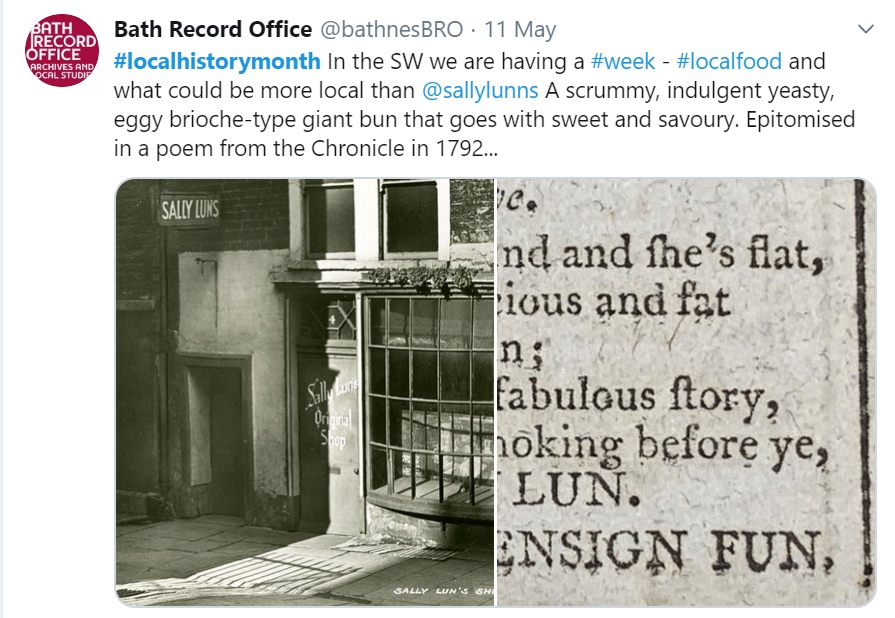
  • Members of the South West Local Studies Librarians Group took part in a joint social media outreach project for Local and Community History Month 2020 using an A to Z theme, plus hashtags such as #LocalFood, #LocalStories, #LocalBuildings, #LocalCelebrations. Somerset Archives, Poole History Centre, Wiltshire & Swindon History Centre, Devon Archives, Bristol Archives, Bath Record Office and Swindon Local Studies Library all took part.

Here at CILIP LSG we are producing a toolkit to help those working with Local Studies Collections; more information is available here: https://lslibrarians.wordpress.com/toolkit/toolkit-intro/

Feel free to join us on Twitter too @CILIP_LSG

There is a local history JISCmail list which is free to subscribe to at https://t.co/SxpP3By8u3 if you are interested in, or are working in the local history field, and would like to discuss and share information. The CILIP LSG blog is also a great platform to make the most of, and we would love to hear from anyone interested in Local Studies.

There is some amazing work happening all over the country, and certainly in my case it’s been a sharp learning curve, and a continued work in progress as my own skills improve…

We hope these examples help inspire everyone to discover more about the history of the places that matter to them in a greater variety of formats than ever before.

Julie Davis

County Local Studies Librarian, Wiltshire & Swindon History Centre & Member of CILIP LSG

Open access & local studies

Just over a year ago at the University of Leicester Library, we were looking at the download stats for our online PhD theses and noticed that a study of the village of Wrangle in the early modern period was the most downloaded item that month.

This got us thinking. Of all the open access theses and research publications in our online archive what is actually popular with users? Medicine and health related items do well, presumably from people searching for information on illnesses and conditions. The other studies that consistently attract downloads are those about a particular place. Broadly speaking these are from geography, archaeology and history.

Open access policy has been driven by the sciences and has tended to assume that freely available publications are an unproblematic ‘good thing’. It has paid less attention to what is popular, with whom and why.

Inspired by the example of Wrangle, we decided to explore creating a new resource to promote the open access local history material we had. The Centre for English Local History Theses Collection is the result. The website makes available all the PhD theses completed by students at the Centre for English Local History. The collection comprises 100 theses covering subjects from medieval moats to hunting in Northamptonshire. The full text is available to read and download in the majority of cases. Founded in 1948, the Centre pioneered local history as an academic discipline in Britain. Research students have been central to its activities, and the theses are important research publications in their own right. We hope that improved access and discovery tools make this collection a useful resource for local studies librarians, among others.

In design it is similar to the concept of an overlay journal which has been kicking around for some years. The challenge was to present the theses in an attractive and coherent way. We decided to use Omeka, a platform designed to publish digitised primary source material. However, we found it worked well for our purposes. As the pdfs were already hosted on another site, we could just point readers to the existing full text rather than uploading lots of files. This made the site much ‘lighter’ as a result. A range of plug-ins allows you to add extra features to aid discovery and interpretation, the most useful being the interactive map.

There are great free resources for local studies, but they tend to be collections of primary sources (like British History Online) or long-standing publication series (like Victoria County History). Recent research publications can be harder for the public to access, due to the cost of books and journal subscriptions. Some areas, such as archaeology, are also ‘messy’ with a large amount of grey literature and small society publication. There are journals like the Local Historian and Local Population Studies who made their archives freely available, but the discipline as a whole could have better coordination.

In principle then, the model we used could be applied more widely. Could we have a single website that allowed people to search and browse all the local studies publications in university repositories? It would need more people and resources that were used for this project, but it does seem feasible.

I would be interested to hear if others think this would be a useful resource, particularly for users of Local Studies Collections.

Dr William Farrell
Research Information Advisor
University Library,
University of Leicester

Wikipedia and blogs for local studies – Digital Study Morning at the Museum of Wigan Life, Wednesday 14 June 2017 ~ 10.00am – 1.00pm ~ Free

LSGNW presents…..

A Digital Study Morning at the Museum of Wigan Life,
Wednesday 14 June 2017 ~ 10.00am – 1.00pm
Free but limited places!

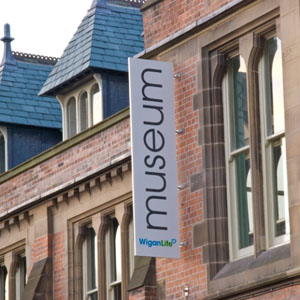
This study morning will help you to improve your digital knowledge and learn new digital skills and takes place in the Museum of Wigan Life, the home of Wigan Local Studies. Also included is an exclusive tour of the Museum of Wigan Life and their new exhibition Egyptian ‘Animal Mummies’.

Learn how to reference local studies collections or local history knowledge in Wikipedia through a practical, hands-on session with Wiki experts.

Antony Ramm and Ross Horsley from Leeds Library will present a talk on the Leeds Libraries heritage blog ‘The Secret Library’. The blog highlights local studies collections and rare books.

CILIP LSGNW will hold a short AGM following the study morning.

Detailed advice on travelling to the Museum can be found here.

To book contact Hannah Turner at archives@wigan.gov.uk.


Mobile technology and cultural heritage organisations

I’m not sure how much sense this will make without my commentary, but below is a presentation I gave recently at a meeting of the Archives & Records Association Section for Archives & Technology.

I was asked to present an overview of the findings of my dissertation on mobile technology and archives, libraries and museums. Continue reading “Mobile technology and cultural heritage organisations”