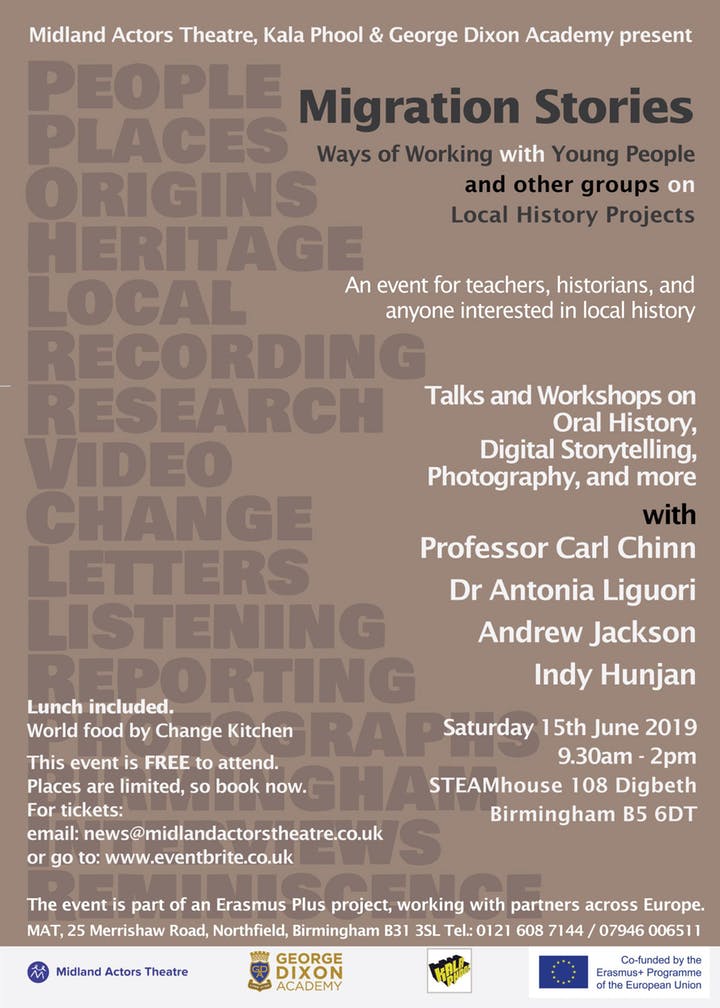
A free event in Birmingham next month for teachers, historians, and anyone interested in local history. Featuring talks and workshops on Oral History, Digital Storytelling, photography, and more. Book your place here .
May is local history month. Organisations across the country will be celebrating the history of their area, and encouraging people to get involved in local heritage. If you are on social media, follow the hashtag #localhistory19 for updates.
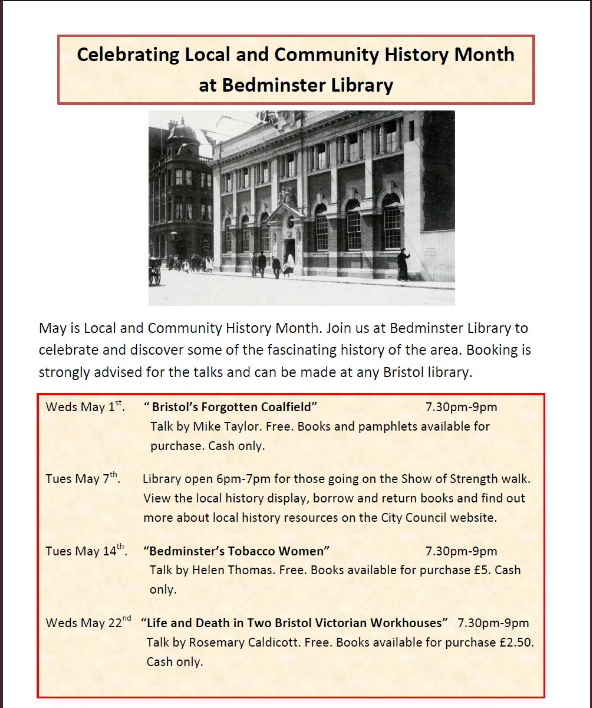
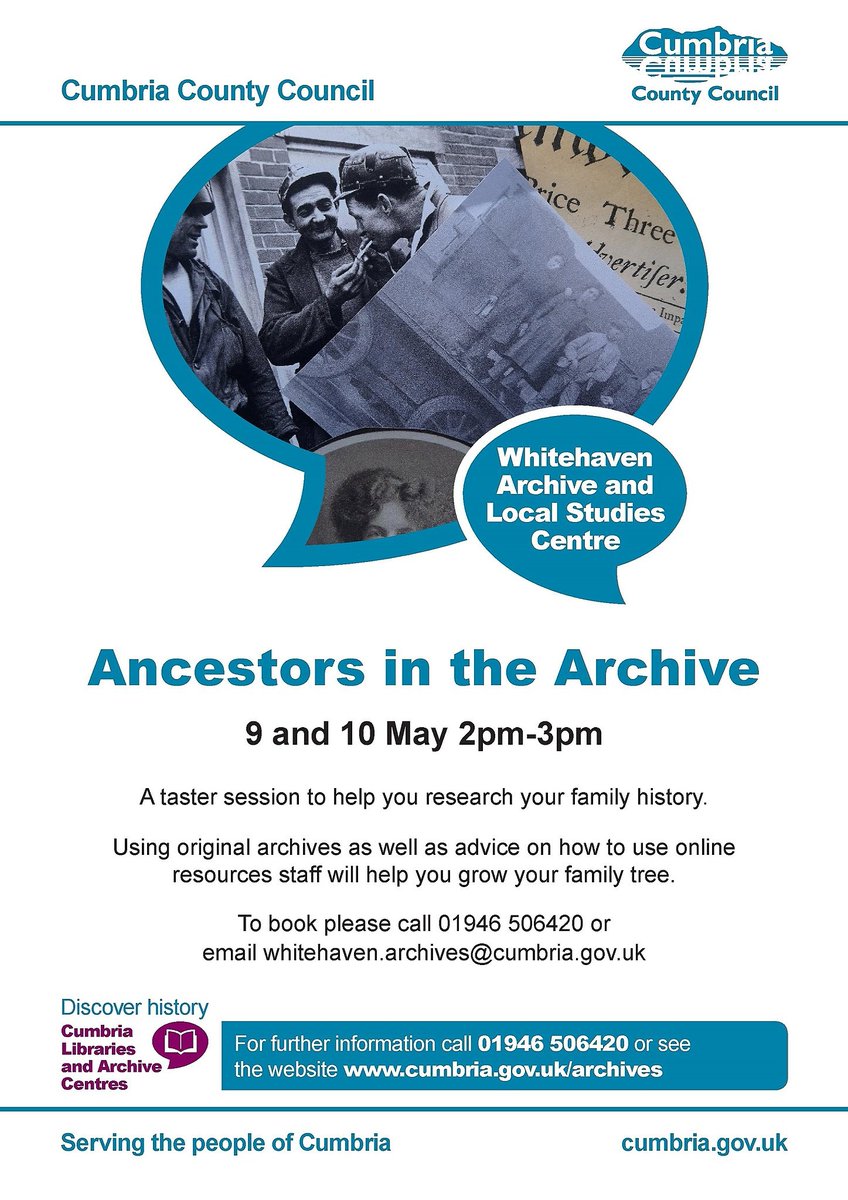
Libraries and archives will be hosting loads of public events this month, from introductions to family history to heritage walks. Here are some that caught our eye:
A date for your diaries in 2019. The ARA are holding a free event on the 29 January on how to engage diverse communities with archives. This is a topic of interest to many involved in local studies collections, and would also be an good CPD opportunity.
Speakers and topics include:
Penny Allen (The Courtyard Hereford) & Elizabeth Semper O’Keefe (Herefordshire Archives and Records Centre)
‘Who lived in a house like this: creatively engaging care home residents’
Julie Melrose (Islington Local History Centre)
‘Lost Trades of Islington: a collaborative and cross-general project’
Paul Dudman, University of East London
‘Archives, Activism and Action: Participatory Cultural Heritage and Hidden Voices – the Role of Civic Engagement in Enhancing Archives?’
Stella Wentworth reports back on History Day 2018 in London
After eight months of semi-retirement and occasional judicious use of off-peak rail transport, catching the 07:25 train on a foggy morning in late November came as a bit of a shock to the system. The friendly welcome from the reception team at Senate House when I arrived an hour and a half later with bicycle, heavy pannier bag and A3-sized portfolio case, followed shortly afterwards by a reviving tea and instant porridge from the Senate House cafe, were therefore very welcome.
CILIP LSG (and CILIP Library & Information History Group) were among the 66 organisations attending this year’s History Day at Senate House, a one-day event bringing researchers together with information professionals from libraries, archives and research organisations. In addition to the ‘history fair’, there is a series of drop-in talks throughout the day. To see this year’s talks programme and list of participants, go to https://historycollections.blogs.sas.ac.uk/history-day-archive/history-day-2018/ .
LSG’s representatives are, naturally, multi-talented. Will Farrell was also promoting the local history collections of the University of Leicester whose table we were sharing. I was quickly trained in the key message: their large specialist collection covers the historic counties of England, not just Leicestershire. If you are not already familiar with this collection, do have a look at https://le.ac.uk/english-local-history/about/collections and their various online collections https://elhleics.omeka.net/ and http://specialcollections.le.ac.uk to find out more.
Our other rep, Tony Pilmer, collected our new banner and some bookmarks from Ridgmount Street then spent the morning as an advocate for the Engineering Institutions’ Libraries before taking over on the LSG stand, allowing me to attend the series of talks on ‘Digital tools and methods’. I was interested to hear about the online, map-based history project Layers of London (www.layersoflondon.org ) and about “training” computers with Transkribus software to transcribe handwritten historical documents as part of the UCL’s Bentham project (www.ucl.ac.uk/bentham-project/ ).
Will Farrell from LSG/Leicester in action
We had fairly detailed conversations with around thirty enquirers – probably more. Recurring themes included the value of local newspapers as contemporary sources of social and historical information, and the advisability of contacting specialist local history collections in the local authorities adjacent to the area you are primarily researching as well, because of boundary changes and anomalies over the years.
To give some idea of the breadth of topics mentioned, they included:
the post-1964 diaspora from Tanzania
a “lost” Oxfordshire ancestor
women’s history and women pioneers with particular reference to Croydon
the Burma Campaign and its impact on Yorkshire
advice on routes to a career in archives management
population movement in WWII and its impact on Worcestershire
the suffragette movement in south-east London
statistics and pre-war experiences of BME communities
history of medicine
Occupations and industries: blacksmiths, knitting, the fur trade
trade union records for tin and aluminium foundry workers
navvies’ accommodation while building the Bridgewater Canal.
London-based research facilities, including the Guildhall Library and London Metropolitan Archives, were naturally well represented, but the day was a useful opportunity for LSG to promote local studies collections from further afield. We spoke to people with research interests relating to Croydon, Dorset, Ealing, Hounslow, Leicester, south east London, the Midlands, Worcestershire and Yorkshire over the course of the day.
It’s important to have a “hook” to encourage passers-by to come close enough to your stand to engage in conversation. Will had brought a range of postcards and some pencils which were invaluable in this respect, as had quite a few other stands (if the collection of postcards and bookmarks I came away with is any indication). A number of tables had tubs of sweets; one had a free quiz (to be done on the spot for a prize draw); another had a free raffle for a copy of one of their publications. The Geological Society’s Library had a “lucky dip” in a catalogue card drawer with beautifully-folded notes labelled “Discovery of Dinosaurs”, “Earth’s History” and so on, which unfolded to reveal several paragraphs of interesting facts about a scientist and their work in the appropriate geological sector. I was intrigued to learn that the most well-known historical example of an early dinosaur bone appeared in the 17th century antiquary Robert Plot’s book “The natural history of Oxfordshire”.
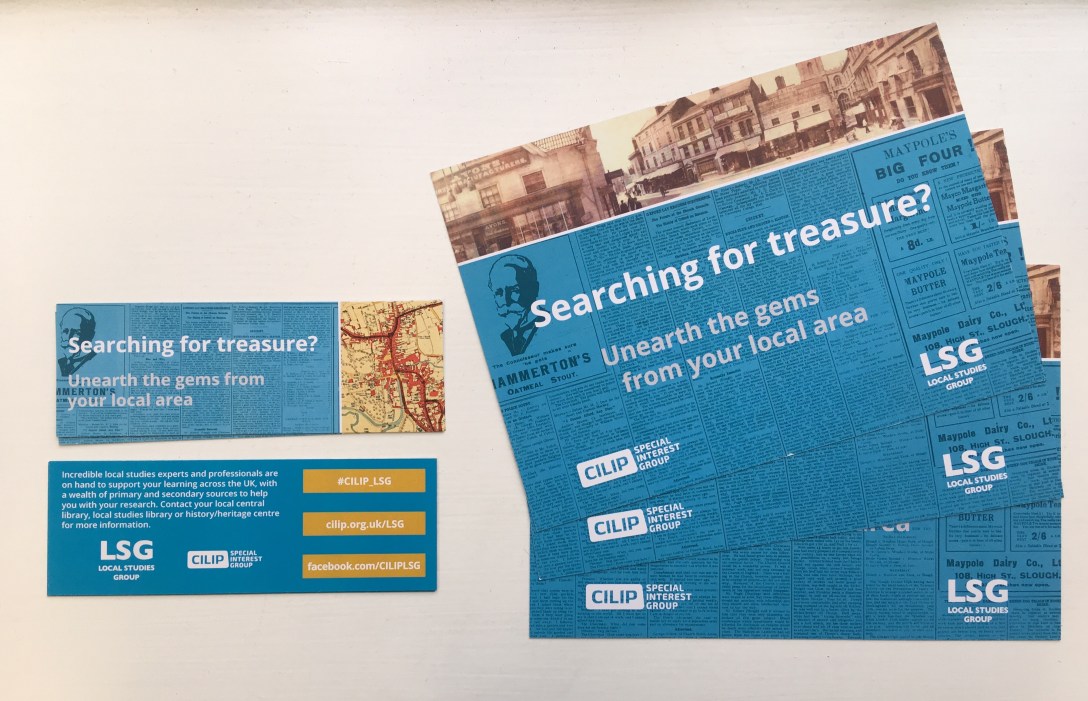
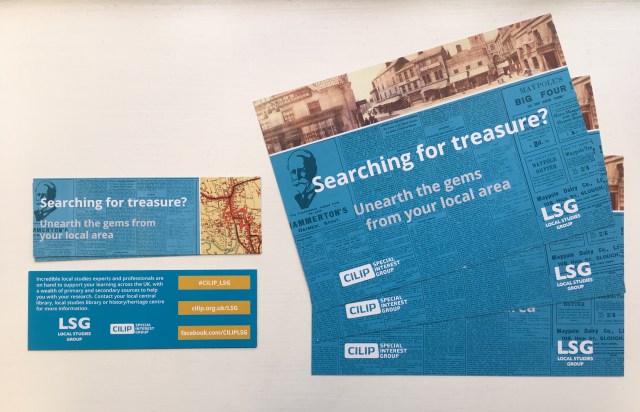
Our new bookmarks and postcards.
I had taken a selection of books and pamphlets, wondering whether they would justify the effort (weight?) of doing so, and was pleased to find that several did catch people’s eyes sufficiently for them to make a note of the titles. Most frequently commented on was Historical research using British newspapers by Denise Bates (Pen & Sword 2016, ISBN 9781473859005), but Catherine Exley’s diary: the life and times of an army wife in the Peninsular War edited by Rebecca Probert (Brandram 2014, ISBN 9780956384799) also attracted attention. Joan Grundy’s Dictionary of medical and related terms for family historians (Swansong 2006, ISBN 9780955345005) was spotted by someone who exclaimed “that’s just what I need!”.
I had also put together a portfolio of photocopies and leaflets to try to show the range of resources typically available in local studies collections. With hindsight this probably took up rather too large a share of the limited space available, and it was a serious embarrassment when the handle broke just as I was lifting it up to the luggage rack on the train home, but I did refer to items in it myself quite a few times as examples, and Tony said people were browsing through it in the afternoon.
We did not have access to electricity so my multi-way extension and numerous chargers were redundant, but I was pleased to find that my tablet connected to the wifi with no problem, the connection speed was good and the tablet’s battery held up well. I forgot to take a tablecloth (useful for concealing surplus baggage and boxes) but fortunately Will had brought one with him – an additional advantage of the table-sharing arrangement!
Hearty thanks are due to Tony for all his efforts beforehand in arranging for our new publicity material, and to the graphic design expert at CILIP who devised an attractive banner which won’t date too easily and which should help us to promote local studies libraries at this and similar events for several years to come. We also now have a supply of bookmarks and postcards with the slogan “Searching for treasure? Unearth the gems from your local area”.
They would be even more useful as outreach resources if they could cite a single gateway web address leading to a list of all the local studies collections / libraries / history centres in the country, or if there could be an obvious button on www.cilip.org.uk/LSG linking to a directory of local studies libraries etc., but that’s a whole new challenge – particularly in keeping such a list up-to-date! [Editor’s note: see a forthcoming blog post on this issue.]
I was let down by my usually-trusty bicycle which picked up a puncture on the way back to the station, but nevertheless I enjoyed the day. It was good to exchange ideas and enthusiasm both with researchers and fellow-practitioners from a wide range of institutions, and a useful opportunity to publicise local studies collections to researchers who might otherwise have overlooked their potential value.
What do an amateur mycologist, a brilliant early 19th century lecturer, dozens of British artists, a keen explorer & botanist, and a leading cricketer all have in common, apart from appearing in the Oxford Dictionary of National Biography?
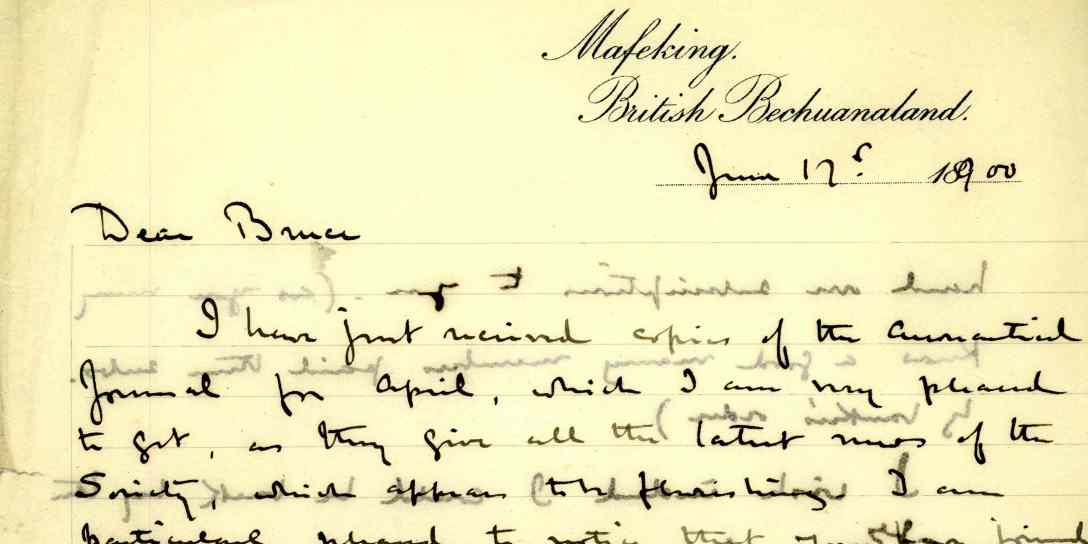
Well, they all featured in the 2018 Study Day organised by CILIP Local Studies Group South, because local studies librarians and archivists have been inspired to devise innovative ways of making their lives and times as revealed in the letters and note-books they left behind better known to a wider audience.
Through the AnnoTate project (https://anno.tate.org.uk), the diaries, letters and sketchbooks held in the Tate Archives have been digitised and are now being transcribed by volunteers so that the wealth of information they contain about the lives of these artists and their creative processes can be made more widely available.
While mycologist and botanical artist Anna Maria Hussey was on holiday in Dover in 1836 with her two small children and sister Kate, she kept a diary which she illustrated with sketches to entertain another sister, Henrietta. The diary has survived and is now in the Kent History and Library Centre. When looking through the diary to catalogue it, archivist Liz Finn quickly realised that it would appeal to a wider audience and embarked on a quest to get it published. Sad to say, her original vision of a printed publication has yet to be realised, but Kent’s library users can now borrow Botany, boats and bathing machines as an e-book. Liz also appealed successfully for an article about Anna Maria to be included in ODNB – see https://doi.org/10.1093/ref:odnb/96688. Liz’s account of her project is due to be published in the Summer 2018 edition of Local Studies Librarian.
Joseph Dalton Hooker (1817-1911) was an important but often overlooked botanist and explorer who in later life succeeded his father as Director of Kew Gardens. His personal and scientific correspondence is being conserved, digitised, transcribed and made available online by the Kew Archives and we were fortunate that one of their team was attending the Study Day and told us about this project during the Open Forum. To find out more about the Joseph Hooker Correspondence Project, visit the RBG Kew blog.
The inventor Sir Humphry Davy, who became Professor of Chemistry at the Royal Institution when he was in his early twenties, was one of the most popular lecturers of his time. Some of Davy’s chemistry lectures would probably fail H&S scrutiny today, and perhaps as a result of this, the re-creation of some of his most famous experiments for the Royal Institution’s MOOC (Massive Open Online Content) online learning course about Sir Humphry Davy has attracted over 2000 subscribers since the course was launched in Autumn 2017. The Humphry Davy MOOC is on https://www.mooc-list.com/course/humphry-davy-laughing-gas-literature-and-lamp-futurelearn ; information about the Davy Letters Project is on www.rigb.org/about/heritage-and-collections/heritage-projects/davy-letters; and the database of letters written by Sir Humphry Davy and his circle is on http://www.davy-letters.org.uk.
The Study Day concluded with two dramatic performances based on resources from the Darnley Archive 1537-1974 now held at Medway Archives. The first, Little Lord Clifton, is based on letters exchanged in 1775 between the young heir at boarding school and his parents. The second tells the story behind the origins of The Ashes, with which cricketer Ivo Bligh, eighth earl of Darnley (1859–1927) was associated. An article about this project is due to be published in the Summer 2018 edition of Local Studies Librarian.
If you have suggestions about topics or projects which might be of interest for future Study Days, do please contact the LSG South committee via the blog contact us page.
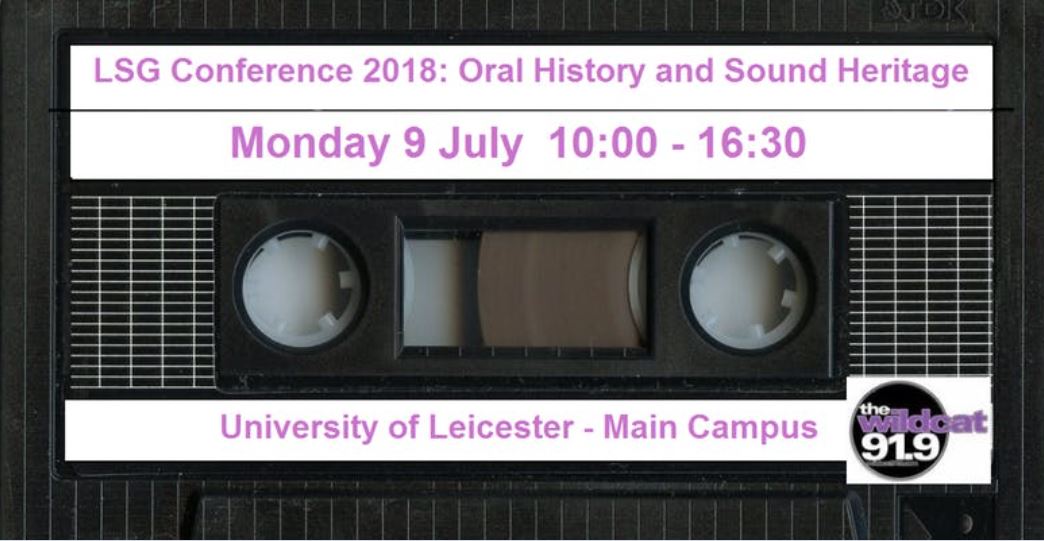
LSG Conference 2018: Oral History and Sound Heritage
Date: 9/7/2018
Time: 10:00 – 16:30
Venue: University of Leicester, University Road, Leicester, LE1 7RH
Description:
This year’s CILIP Local Studies Group conference is all about oral history. Hosted by the University of Leicester Library, our conference is for anyone involved in collecting oral history and managing collections, or who would like to work in this area in the future. The program is designed to help you keep up to date with best practice, find out about new initiatives, and meet other people in this field.
Programme:
Introducing Unlocking Our Sound Heritage – Sue Davies, British Library
Running an oral history project – Colin Hyde, East Midlands Oral History Archive
Tour of the Library’s Special Collections & Sound Heritage project facilities
Oral history and communities – Stephanie Nield, Leonard Cheshire Archive & Ahmed Iqbal Ullah Race Relations Resource Centre, University of Manchester.
Cataloguing oral history and sound collections.
As part of the event, we will be inviting interest in a local studies network for librarians, archivists and heritage professionals in the Midlands.
LSG Conference 2018: Oral History and Sound Heritage
Date: 9/7/2018
Time: 10:00 – 16:30
Venue: University of Leicester, University Road, Leicester, LE1 7RH
Description:
This year’s CILIP Local Studies Group conference is all about oral history. Hosted by the University of Leicester Library, our conference is for anyone involved in collecting oral history and managing collections, or who would like to work in this area in the future. The program is designed to help you keep up to date with best practice, find out about new initiatives, and meet other people in this field.
Programme:
Introducing Unlocking Our Sound Heritage – Sue Davies, British Library
Running an oral history project – Colin Hyde, East Midlands Oral History Archive
Tour of the Library’s Special Collections & Sound Heritage project facilities
Oral history and communities – Stephanie Nield, Leonard Cheshire Archive & Ahmed Iqbal Ullah Race Relations Resource Centre, University of Manchester.
Cataloguing oral history and sound collections.
As part of the event, we will be inviting interest in a local studies network for librarians, archivists and heritage professionals in the Midlands.
I had a room full of interested attendees for my first History Revealed day. For those of you who are familiar with our Interpretation courses at the History Centre, this is a variation on a theme. I would like to extend the scope of this type of event which to date has been reliant on the morning study session being within easy reach of the field visit in the afternoon, tying us to the Chippenham area. My grand plan is to use our wonderful public libraries as a base for the study session to allow us to explore further afield.
This was our first ‘test case’, although not much further afield I grant you! However, it did coincide with Calne Heritage week which was very fitting.
Calne Library proved a great venue for hosting the morning session where attendees enjoyed a presentation beginning with guidance on what to think about when tracing the origins of a village. I continued by explaining how to make the most of secondary sources, including material by local authors, academic works, the census, local directories and much more. Bremhill was used as a case study with examples and details highlighted to prove how much can be gleaned from these types of sources. They are a good place to start as the legwork has already been done for you!
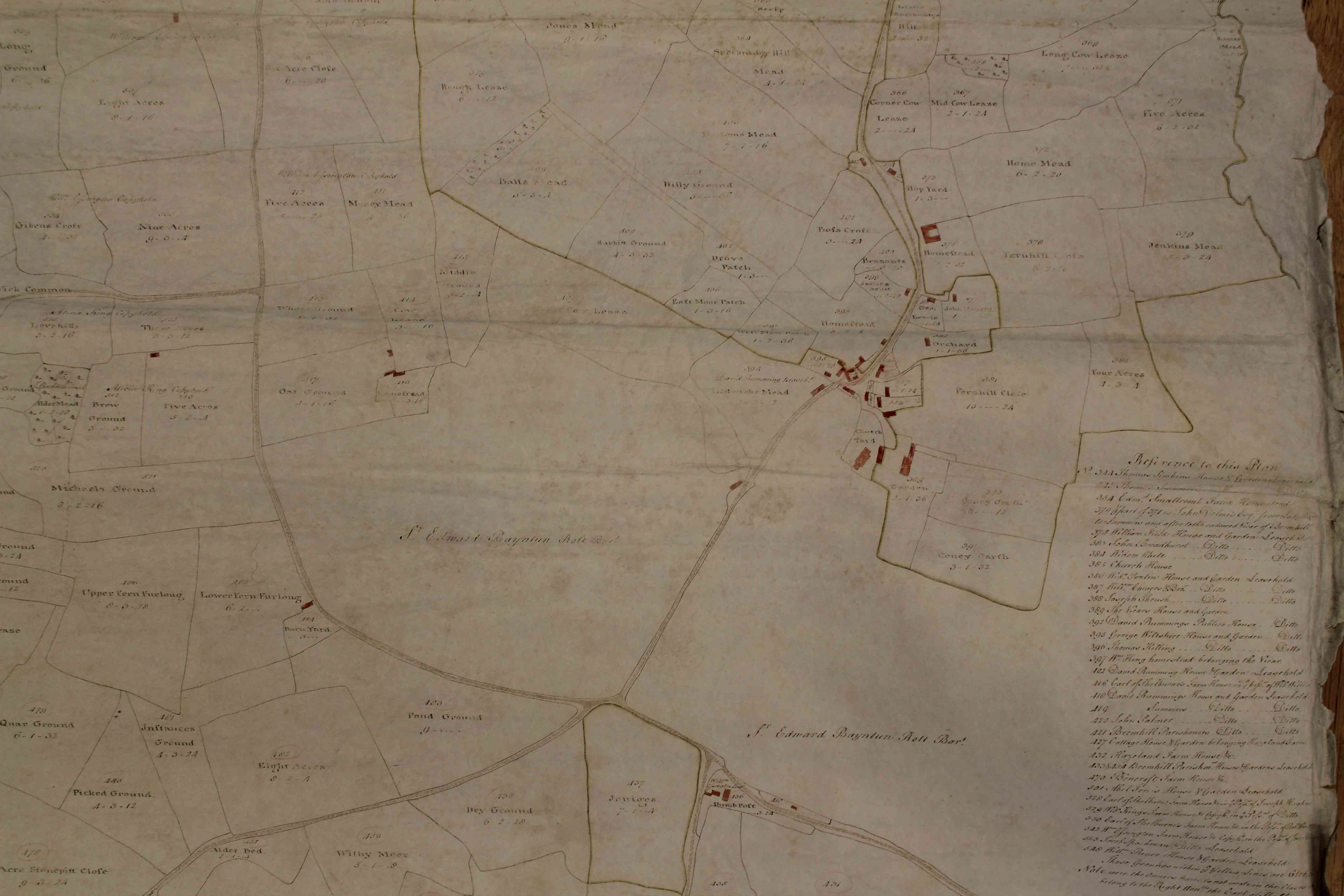
I continued with a look at maps – the enclosure award was a big hit and rightly so, the field names in particular are fascinating to look at, especially when studied in conjunction with older and more recent written and map sources.
My colleague, Archivist Ally McConnell, then shared a number of archive sources for Bremhill with the group, explaining just how they can be utilised for local history research. These included plans, school records, sales particulars and more.
We concluded the session with a look at a number of online sources which can aid research into village history and attendees got hands-on with a number of books available at Calne Library which can help with local history research in general and at Bremhill.
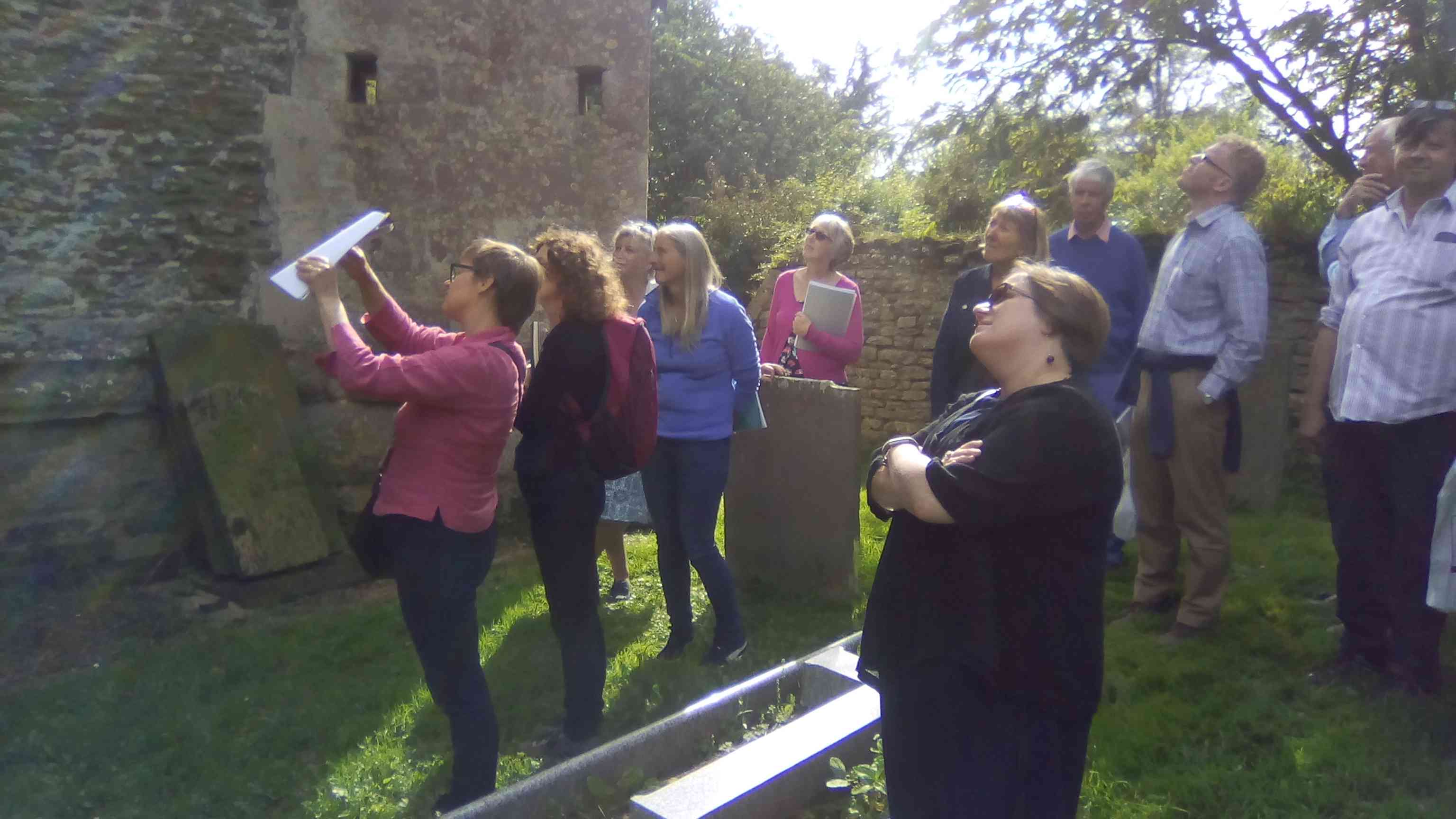
St. Martin’s Church was the site for us to reconvene and conduct our field visit in the afternoon, using the skills learnt to study the development of the village at first hand. It was a great opportunity to view the topography and see how it shaped the settlement, and to hear about the architectural history of the buildings from Dorothy Treasure of the Wiltshire Buildings record who joined us for the afternoon session.
The day was very well received with comments including “fascinating,” “very informative,” “useful guidance for future research,” with the attendees enjoying finding out about new sources that would be of use to them.
The morning session proved extremely successful, although it would have been nice to allow more time and have more space for people to view the library books and small amount original material brought over from the History Centre at the end of the presentation. The afternoon sessions always prove difficult to manage; people tend to congregate and chat in groups, but herding them along officiously doesn’t really seem appropriate! I’m not sure if there is a solution to this problem and if anyone out there has discovered one I’d love to know… However, it was a sign that everyone was enjoying the tour.
Many thanks also go to Calne’s Community Library Manager Jo Smith who helped organise the venue.
I hope to run two further History Revealed days next year in the spring and autumn but I haven’t yet planned which will be my next location – what do you think?
Julie Davis
County Local Studies Librarian
Wiltshire & Swindon History Centre




 CILIP Local Studies Group