
What do an amateur mycologist, a brilliant early 19th century lecturer, dozens of British artists, a keen explorer & botanist, and a leading cricketer all have in common, apart from appearing in the Oxford Dictionary of National Biography?
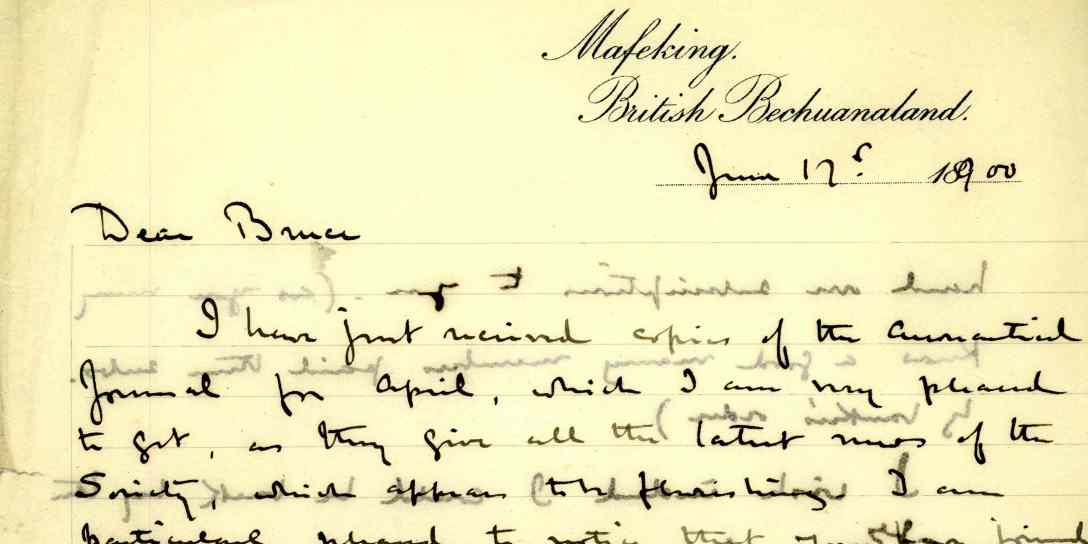
Well, they all featured in the 2018 Study Day organised by CILIP Local Studies Group South, because local studies librarians and archivists have been inspired to devise innovative ways of making their lives and times as revealed in the letters and note-books they left behind better known to a wider audience.
Through the AnnoTate project (https://anno.tate.org.uk), the diaries, letters and sketchbooks held in the Tate Archives have been digitised and are now being transcribed by volunteers so that the wealth of information they contain about the lives of these artists and their creative processes can be made more widely available.
While mycologist and botanical artist Anna Maria Hussey was on holiday in Dover in 1836 with her two small children and sister Kate, she kept a diary which she illustrated with sketches to entertain another sister, Henrietta. The diary has survived and is now in the Kent History and Library Centre. When looking through the diary to catalogue it, archivist Liz Finn quickly realised that it would appeal to a wider audience and embarked on a quest to get it published. Sad to say, her original vision of a printed publication has yet to be realised, but Kent’s library users can now borrow Botany, boats and bathing machines as an e-book. Liz also appealed successfully for an article about Anna Maria to be included in ODNB – see https://doi.org/10.1093/ref:odnb/96688. Liz’s account of her project is due to be published in the Summer 2018 edition of Local Studies Librarian.
Joseph Dalton Hooker (1817-1911) was an important but often overlooked botanist and explorer who in later life succeeded his father as Director of Kew Gardens. His personal and scientific correspondence is being conserved, digitised, transcribed and made available online by the Kew Archives and we were fortunate that one of their team was attending the Study Day and told us about this project during the Open Forum. To find out more about the Joseph Hooker Correspondence Project, visit the RBG Kew blog.
The inventor Sir Humphry Davy, who became Professor of Chemistry at the Royal Institution when he was in his early twenties, was one of the most popular lecturers of his time. Some of Davy’s chemistry lectures would probably fail H&S scrutiny today, and perhaps as a result of this, the re-creation of some of his most famous experiments for the Royal Institution’s MOOC (Massive Open Online Content) online learning course about Sir Humphry Davy has attracted over 2000 subscribers since the course was launched in Autumn 2017. The Humphry Davy MOOC is on https://www.mooc-list.com/course/humphry-davy-laughing-gas-literature-and-lamp-futurelearn ; information about the Davy Letters Project is on www.rigb.org/about/heritage-and-collections/heritage-projects/davy-letters; and the database of letters written by Sir Humphry Davy and his circle is on http://www.davy-letters.org.uk.
The Study Day concluded with two dramatic performances based on resources from the Darnley Archive 1537-1974 now held at Medway Archives. The first, Little Lord Clifton, is based on letters exchanged in 1775 between the young heir at boarding school and his parents. The second tells the story behind the origins of The Ashes, with which cricketer Ivo Bligh, eighth earl of Darnley (1859–1927) was associated. An article about this project is due to be published in the Summer 2018 edition of Local Studies Librarian.
If you have suggestions about topics or projects which might be of interest for future Study Days, do please contact the LSG South committee via the blog contact us page.
Want to find out more about the LSG South Study Day? View the speakers’ slides online or read the Report on CILIP LSG Sth Study Day 2018.
Stella Wentworth
July 2018
 CILIP Local Studies Group