Count Dracula walks into a bar and orders a whisky … It sounds like the start of bad joke, but in 1951, if you were drinking in a certain bar in the East Midlands, you would have got the fright of your life. That year, Bela Lugosi was reprising his most famous film role in a performance of Dracula at the Theatre Royal Nottingham. After the Monday night performance, he walked straight out of the stage door and, in full costume, headed for the Flying Horse Hotel in need of refreshment. Mr. Stokes, the Night Porter, remembered the shock of the regulars for many years afterwards. (You can see a copy of the original program on the Theatre Royal online archive.)
This anecdote is one of the highlights of Nottingham’s oral history collections. The Unlocking Our Sound Heritage (UOSH) project has been spent the last four years digitising oral history and sound collections from around the Midlands. This is part of a national project run by the British Library to preserve at-risk collections and improve public access, where possible.
Over on their blog, UOSH give overviews of the work they have been doing with Nottingham Local Studies and Nottingham University Special Collections. The former post includes a clip of the Bela Lugosi anecdote. Major collections that have been digitised by the project include:
Making Ends Meet: Earning a Living in Nottinghamshire 1900-1950
Last month CILIP Wales, CILIP LSG and CILIP MDG organised a successful webinar exploring how public library, archives and community group collections can be shared online with Peoples’ Collection Wales. We heard how this growing platform supports Welsh Government education and health initiatives, as well as recording the rich cultural heritage of Wales.
The recording is now available for viewing via the MDG YouTube channel:
Although targeted at public librarians working in Wales, the principles of digitising, describing and sharing metadata covered in the webinar are relevant to all working with local studies collections.
Maps in Derby Local Studies Library featured recently on an episode of Free Thinking on Radio 3. Mark Young, Librarian at Derby Local Studies Library talks about a series of world maps by the 18th-century cartographer Hermann Moll held in the collections.
Delivering culture and heritage to audiences online has become increasingly important in 2020.
CILIP Cymru Wales (CCW), CILIP Metadata & Discovery Group (MDG), CILIP Local Studies Group and People’s Collection Wales (PCW) invite librarians across Wales to an online PCW session, which will show librarians how to share digital content, re-purpose it via the Hwb and Living memory initiatives, and measure its impact – all via the PCW site.
This webinar will be followed up with bespoke training to help libraries in Wales get their collections online.
Details
Join via Zoom on Friday 20 November, 12-1pm.
The session is free and open to all. Register via the event page.
Session outline
About us: People’s Collection Wales
An introduction to uploading digital content to PCW
An introduction to linking content from PCW to Hwb Learning and teaching for Wales
An introduction to linking content from PCW with the Living Memory initiative
An introduction to measuring digital impact
Discussion: what next?
At the end of this session participants will be able to:
Identify materials for uploading to PCW
Describe materials for upload to PCW
Identify opportunities to develop new resources for Hwb and Living Memory
Identify opportunities to promote and evaluate your users’ digital activities on PCW
Tailor subsequent training sessions around what you need to start sharing content via PCW.
The webinar will provide a useful oversight for all library and information professionals in Wales hoping to improve user engagement with digital collections. It will be particularly useful for public library and archives staff with local studies collections.
Presenters
People’s Collection Wales: Tom Pert, Gruffydd Jones, Rheinallt Ffoster-Jones Jessica Roberts
Facilitators: Amy Staniforth (CILIP Cymru Wales), Jane Daniels (CILIP Metadata & Discovery Group)
We know the value and positive impact that local studies collections can have on people’s lives. Sharing and exploring together; understanding how the past has shaped a community, and the history of the places that matter to every one of us is proving, now more than ever, to be a comforting constant in an ever-changing world.
Tower Hamlets has been digitising film collections and sharing via social media channels such as You Tube.
Hosting online screenings of films from Local Studies collections: Tower Hamlets is doing this via Facebook Live.
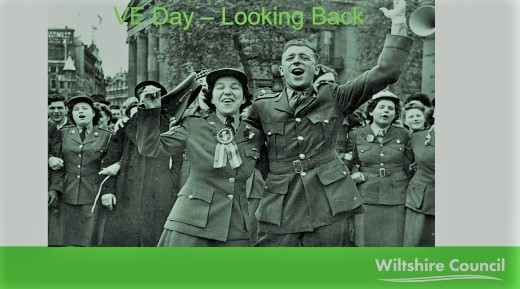
Creating film-shows using photographs from Local Studies collections alongside narration; such as the VE Day film show created by the Wiltshire & Swindon History Centre.
Local Studies for reminiscence: the Wiltshire & Swindon History Centre has been trialling the use of photographs from its collection to create film shows specifically to help those with memory loss.
Covid-19 specific projects
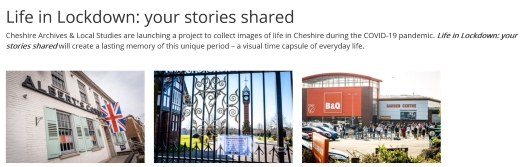
There are many libraries and archives garnering the support of their current volunteers, engaging with the public and growing their volunteer base to help document life under lockdown. Examples include Suffolk Archives, Hull History Centre and Cheshire Archives & Local Studies.
Online Outreach
Many are making recent exhibitions available online and offering fee virtual talks, plus the promotion of free online heritage resources. Examples include Poole History Centre and the Wiltshire & Swindon History Centre.
The Wiltshire & Swindon History Centre have produced an online version of their Memory Box Reading Group sessions which focus on Wiltshire’s local history.
Solihull Local Studies Library have created an e-book from people’s memories of wartime Solihull.
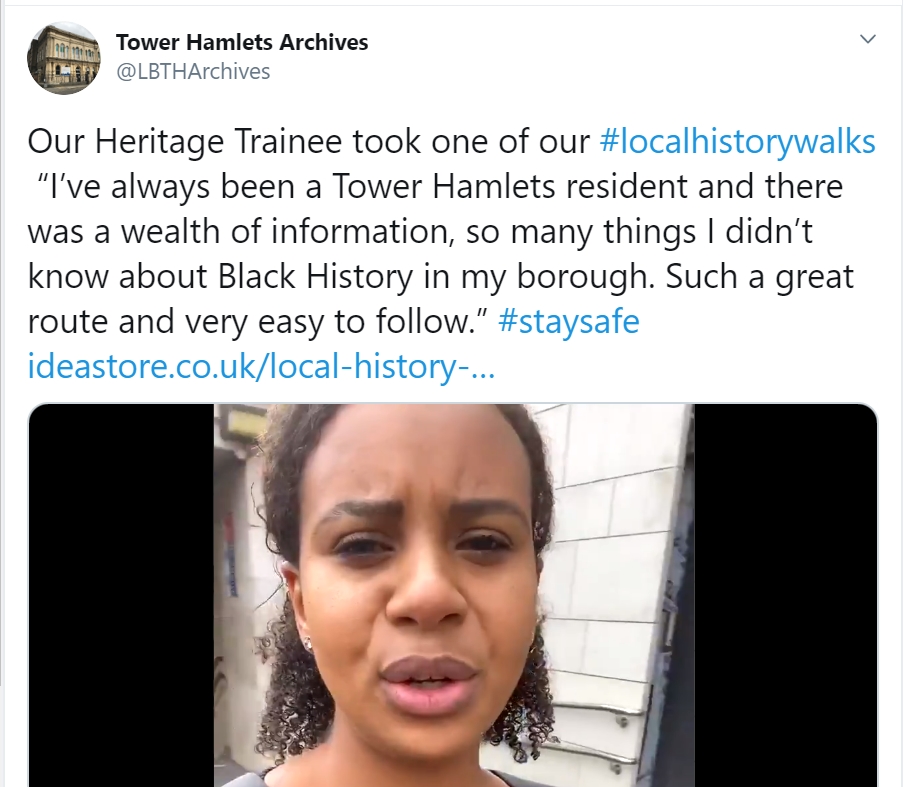
Tower Hamlets have established a number of socially-distanced local history walks, accessible via social media. They have also produced a set of online local history podcasts and continue to work on collections-led study material to support parents with the history curriculum.
West Sussex Local Studies have posted interviews from their WWI project online.
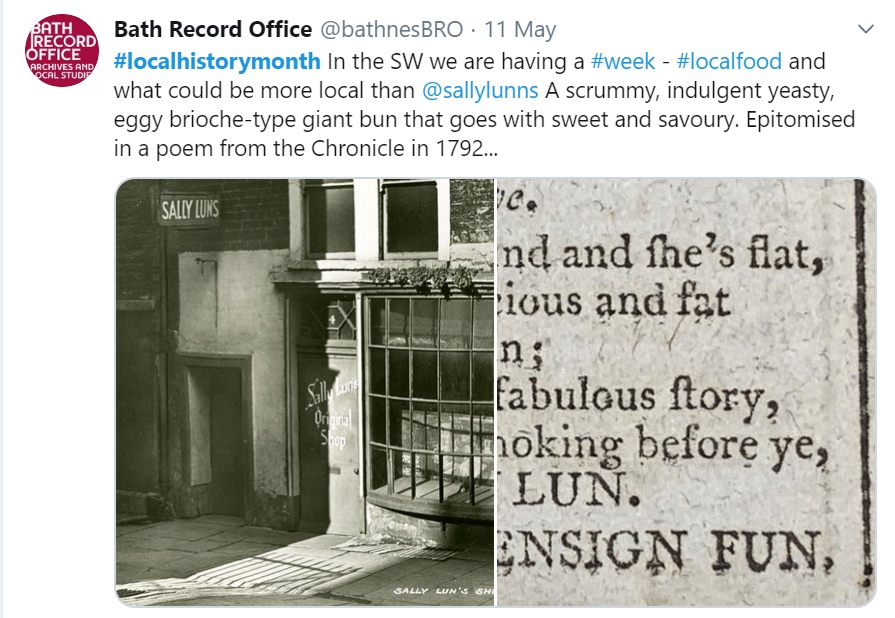
Members of the South West Local Studies Librarians Group took part in a joint social media outreach project for Local and Community History Month 2020 using an A to Z theme, plus hashtags such as #LocalFood, #LocalStories, #LocalBuildings, #LocalCelebrations. Somerset Archives, Poole History Centre, Wiltshire & Swindon History Centre, Devon Archives, Bristol Archives, Bath Record Office and Swindon Local Studies Library all took part.
There is a local history JISCmail list which is free to subscribe to at https://t.co/SxpP3By8u3 if you are interested in, or are working in the local history field, and would like to discuss and share information. The CILIP LSG blog is also a great platform to make the most of, and we would love to hear from anyone interested in Local Studies.
There is some amazing work happening all over the country, and certainly in my case it’s been a sharp learning curve, and a continued work in progress as my own skills improve…
We hope these examples help inspire everyone to discover more about the history of the places that matter to them in a greater variety of formats than ever before.
Julie Davis
County Local Studies Librarian, Wiltshire & Swindon History Centre & Member of CILIP LSG
Do you work in the information, library or heritage sector? Do you work with local collections?
Then I want to hear from you!
I’m an MA student at University College London, and I’m researching how local collections are managed across different institutions and sectors for my dissertation. In addition, I hope I may be able to share some of my highlight findings either through an article or presentation.
There is little recent academic research in this area, so your responses to this survey will be especially valuable. I very much appreciate any time you can give. All of the questions are optional. You can complete the survey and remain anonymous.
Do you work with local studies collections? Are you and your colleagues working in innovative ways to share those collections?
If yes, then we would love to hear from you. We are looking for great examples of how local studies materials are being used to support communities and individuals in accessing information and improving their mental health and wellbeing. We are especially interested in online delivery, whether it was developed before or after the arrival of Covid-19 and lockdown, but are welcoming any contributions.
Working with local studies material, we know the value and positive impact our collections have on people’s lives. Now we want to demonstrate those benefits, great and small, to a wider audience.
The aim is to collate all the good things happening throughout the country and share the results via the CILIP Local Studies website https://lslibrarians.wordpress.com/ and social media pages @CILIP_LSG
If you have any experiences or stories to share, please email the County Local Studies Librarian at the Wiltshire & Swindon History Centre julie.davis@wiltshire.gov.uk
Thank you for your time and we look forward to receiving your replies.
A post by Julie Davis, County Local Studies Librarian, Wiltshire & Swindon History Centre
I’d like to share with you a fascinating story that enfolded in the Wiltshire Local Studies Library recently. It begins with an email sent by a kind gentleman from Ontario, Canada, last year who had a book he felt might be of interest to Wiltshire Local Studies in terms of its local connection. He wished to donate the item to the library if we were agreeable, and we most certainly were!
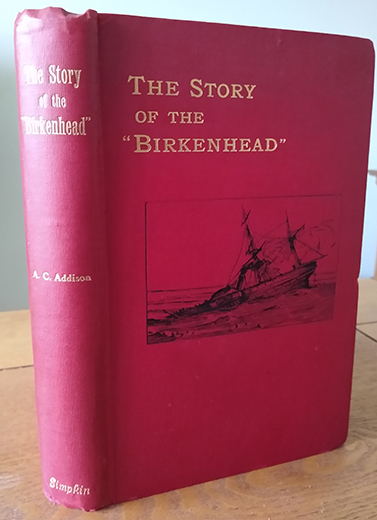
The book was entitled ‘The Story of the “Birkenhead”: A Record of British Heroism in Two Parts’ by A. Christopher Addison. It included an illustration of a shipwreck on the front cover and was published in 1902. Inside was a handwritten dedication:
I’d like to share with you a fascinating story that enfolded in the Wiltshire Local Studies Library recently. It begins with an email sent by a kind gentleman from Ontario, Canada, last year who had a book he felt might be of interest to Wiltshire Local Studies in terms of its local connection. He wished to donate the item to the library if we were agreeable, and we most certainly were!
Lady Madeleine Tonge
With Catn Bond Sheltons .x.
Kind regards
25th Decm 1903”
A modern biro note underneath, made by Raymond Antony Addington (6th Viscount Sidmouth) contained the words:
X one of the survivors.”
A. Christopher Addison, ‘The Story of the “Birkenhead”: A Record of British Heroism in Two Parts’ (London: Simpkin, Marshall, Hamilton, Kent & Co., Unwin Brothers, 1902).
Time to investigate further…
Captain Bond Shelton was the son of a large landed proprietor in County Armagh, who also held property in Wiltshire, and who had first-hand knowledge of this story. The objective of Addison’s book was to ‘tell the truth, the whole truth, about the Birkenhead which has long been neglected’. The event itself had occurred some time ago, with a magazine article covering the events, but it did not give the all the facts or circumstances, or the testimony of the survivors. Addison wanted to fill that gap and introduce the reader to those ‘gallant men who survived 50 years after the disaster, so that, within the covers of this book, he may make their personal acquaintance and come to know and understand both them and their story’. At this point in time, the event remained a national legacy ‘of which we are all proud!’ but I had never heard of the story; I don’t know about you…
So, what did happen?
In January 1852, Britain was fighting the Eighth Xhosa War in South Africa, and reinforcements were being sent out to aid Sir Harry Smith at the Cape of Good Hope.
The Birkenhead was a ‘fine paddle-wheel steamer’, reported to be one of the best of her type in the Royal Navy, being used as a troop ship. She set out from Cork and called at Queenstown, leaving on 7 January. On board were men from the 2nd Queens Foot, the 6th Regiment, 12th (Royal) Lancers, 12th Regiment, 43rd Light Infantry, 45th Regiment, 60th Rifles (2nd Battalion), 73rd Regiment, 7th Regiment, 91st Regiment, plus staff and 56 women and children, totalling 551 souls on board.
They reached Simon’s Bay on 3 February with three women having died of child birth and one of consumption. Three children were born. 35 women and children disembarked here, plus some sick troops with the voyage resuming on 25 February. The troops were in high spirits; the weather was favourable.
By midnight the Commander and Master were below deck and look-outs were on duty. At two o’clock disaster struck. ‘Suddenly, and without the least warning of the presence of such a danger, she crashed on the rocks and there remained.’ She was ‘hopelessly doomed’ and water was rushing in through the torn hull. Many troops drowned in their berths; others hurried up on deck. Sixty men were told to go to the chain pumps and another sixty to haul on the tackles of the paddle boat boxes. The ‘terror stricken’ women and children had been collected under the awning. It is noted that the men faced the situation bravely and rockets were fired but no help was at hand.
Only three small boats could be lowered; the large boat at the centre of the ship could not be retrieved at all. The men found rotten tackle. Pins and bolts had rusted from sheer neglect. As a gig of the starboard side was being lowered one of the ropes broke and the boat was swamped, drowning most of the men who were aboard her.
The women and children were saved, but with much difficulty, as the ship was rolling heavily. Women with babies embraced their husbands for the last time. The horses were brought on deck and thrown overboard to give them a chance, the men risking their lives in the process.
Lieutenant Girardot called for all hands to go aft. The ship was sinking by the head, and was breaking apart in the middle. When the stern reached high into the air, the Commander called out, “All those that can swim, jump overboard, and make for the boats,” a short distance away. Captain Wright and Lieutenant Girardot begged the men not to do this; the boats would be swamped. In response, the men ‘almost to a man “stood fast”.’ To ‘their honour’, not more than three jumped. The ship went down with those on board struggling in the water.
The Birkenhead took 25 minutes to sink. Even if the men could reach the shore, it was covered in ‘deadly kelpweed’. The men also knew that sharks patrolled the waters. Some of the men managed to cling to flotsam, and Cornet Bond of the 12th Lancers was able to swim to the shore with the help of his lifebelt. Five horses also managed to swim to safety. Captain Wright, of the 91st was among those who made it to shore, afterwards doing great deeds to help is fellow-survivors. Lieutenant Giardot also survived.
Cornet Bond, later to become Captain Bond-Shelton, worked hard with his Lancers after the ship became stricken. They helped get the horses above deck and Cornet Bond risked his own life to carry up two young children from the saloon cabin when they’d been left behind in the panic. Amazingly, when Cornet managed to struggle ashore, his horse was one of those who’d made it too and was ‘standing on the beach to welcome him!’
The Lioness schooner came to the assistance of some fifty men who had initially clung to the mast; some of these had not managed to maintain their grip due to the cold and exhaustion. The first two boats were also rescued by the schooner, but the third went adrift, finally reaching Port D’Urban with exhausted men. Of those on board the Birkenhead, only 193 were saved. 445 lives were lost.
The event became known as the originator for the “women and children first” code of conduct.
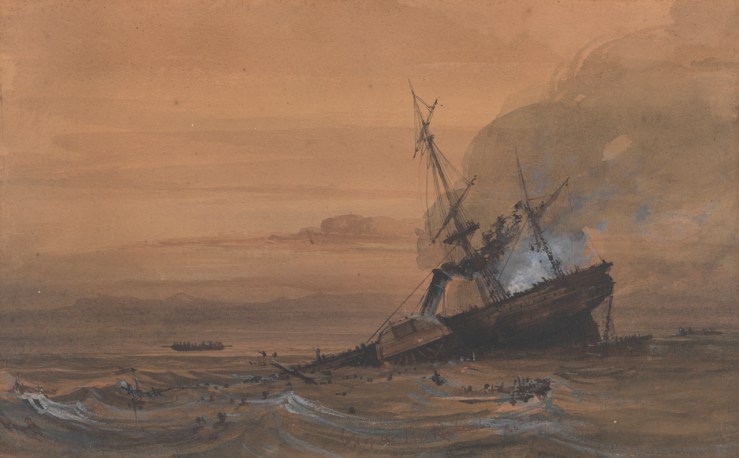
Captain Bond-Shelton’s artistic representation of the loss of the Birkenhead came from his recollection of events. The picture was shown in 1890 and 1891 at the Military and Naval Exhibitions in London where the Captain, of the Royal Lancers, gained diplomas for his work.
The Duke of Wellington gave tribute to the men of the Birkenhead, paid at the annual banquet of the Royal Academy at rooms in Trafalgar Square on 1 May 1852.
The author, Addison, notes with regret that only the services of Captain Wright, the last surviving senior officer, were officially recognised with a promotion, the C. B. and a small service pension. Captain Wright was indeed deserving, but so too were the ‘other surviving officers’ (and I’d suggest probably the ratings too).
A ‘Relief Fund’ was set up to support the families of those who had perished. Beneficiaries included Miss F. Salmond, the eldest child of the Commander of the Birkenhead, who was nominated for admission into the Royal Naval Female School.
The ‘Birkenhead Monument’, a memorial to honour those who perished was erected in the colonnade at Chelsea Hospital.
If you would like to discover more about the steamer, statements from the survivors (including Captain Bond-Shelton), the events of the court-martial of the Naval survivors, the ‘popular’ version of the story and the later lives of the surviving officers, please feel free to take a look at the book which can be found at the Wiltshire & Swindon History Centre, ref LAT.922.
We now know more of this terrible tragedy but must still go full-circle. Lady Tonge (born in Scotland in 1859) was the wife of Francis H. Tonge of Highway near Calne, and Captain Ralph MacGeough Bond-Shelton (1832-1916) had an estate 20 miles away at Water Eaton in Latton. The family connection may have been naval.
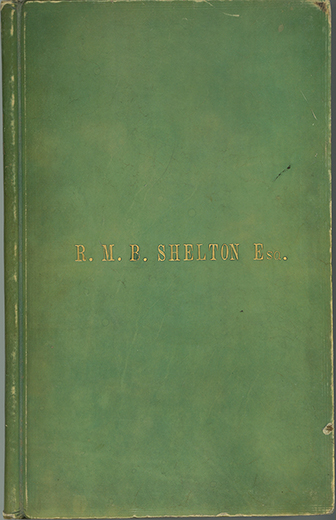
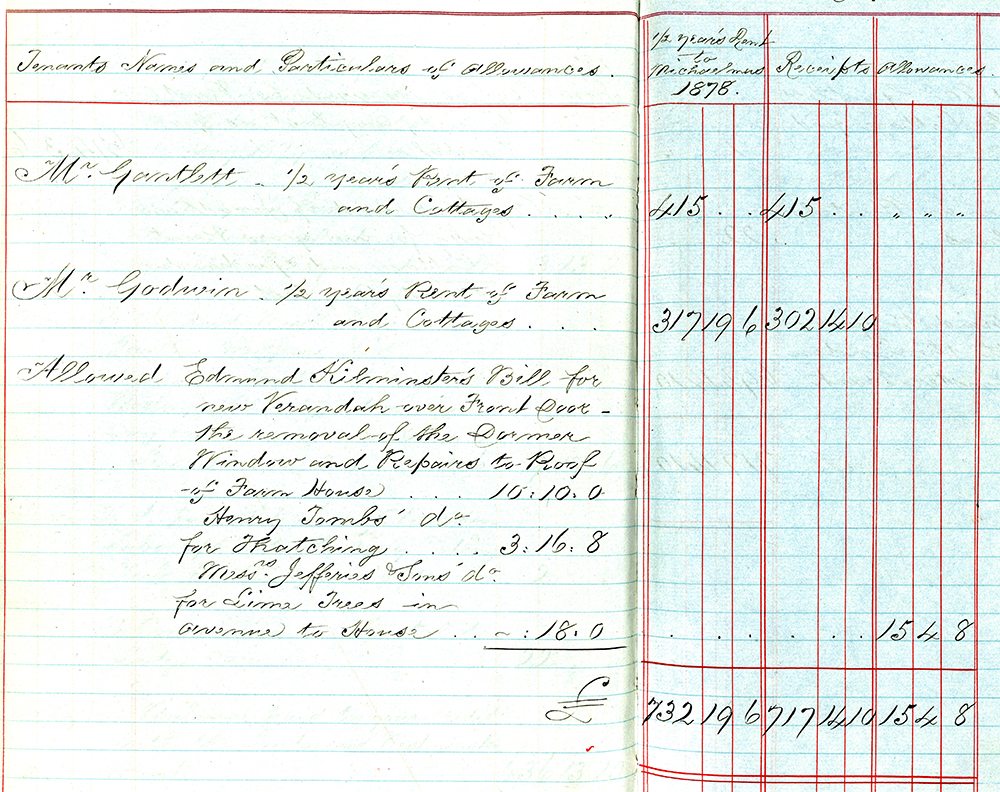
The Water Eaton estate accounts of Capt RM Bond Shelton, 1877-1905 held at WSHC (Ref: 374/250). The right hand image shows the contents of the estate book for 1878 including the rent of a farm and cottage, and the bill for building a new veranda.
The depositor of our book also had another amazing donation to offer us; the India General Service Medal of Louis Charles Henry Tonge. It appears that Louis was aboard HMS Inconstant in 1838 and moved to HMS Excellent in 1840. He became a Lieutenant RN in 1845. The Wiltshire and Swindon History Centre is an archive and library, unable to accept these kinds of items but the medal has received a warm welcome and a safe home at the Calne Heritage Centre where it will be well cared for.
As for Captain Bond-Shelton, he was buried in the crypt of St. Patrick’s Cathedral, Armagh, after his death in 1916. The Belfast Evening Telegraph printed his obituary on Monday, 13 March, as ‘The last of [a] heroic band’. The Lord Primate’s funeral address contained these words:
” Surely no other words were needed before they committed the body to the grave, earth to earth, ashes to ashes; but to-day they might well make an exception for a few minutes from the general rule, for they were about to lay in its last resting-place the body of a man who has helped to lay the foundation stones of our Empire, for Captain Bond-Shelton was the last survivor of that most gallant band whose deeds had helped to make England great, and whose daring lay at the basis of our national character and conduct. Did he say national character? The present Provost of Trinity College, who knew Germany better than most men, told him a few days ago that for many long years the story of the wreck of the Birkenhead was read in Germany to the cadets of the army and navy before they left college.”
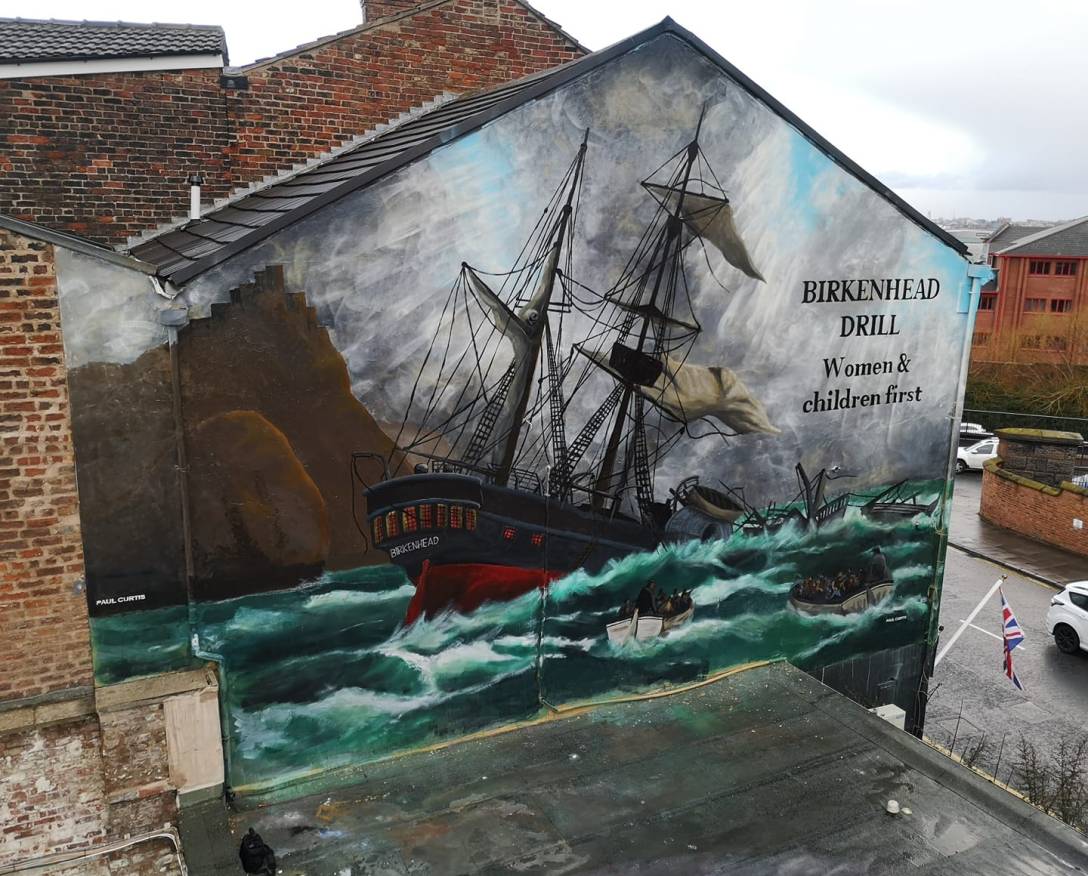
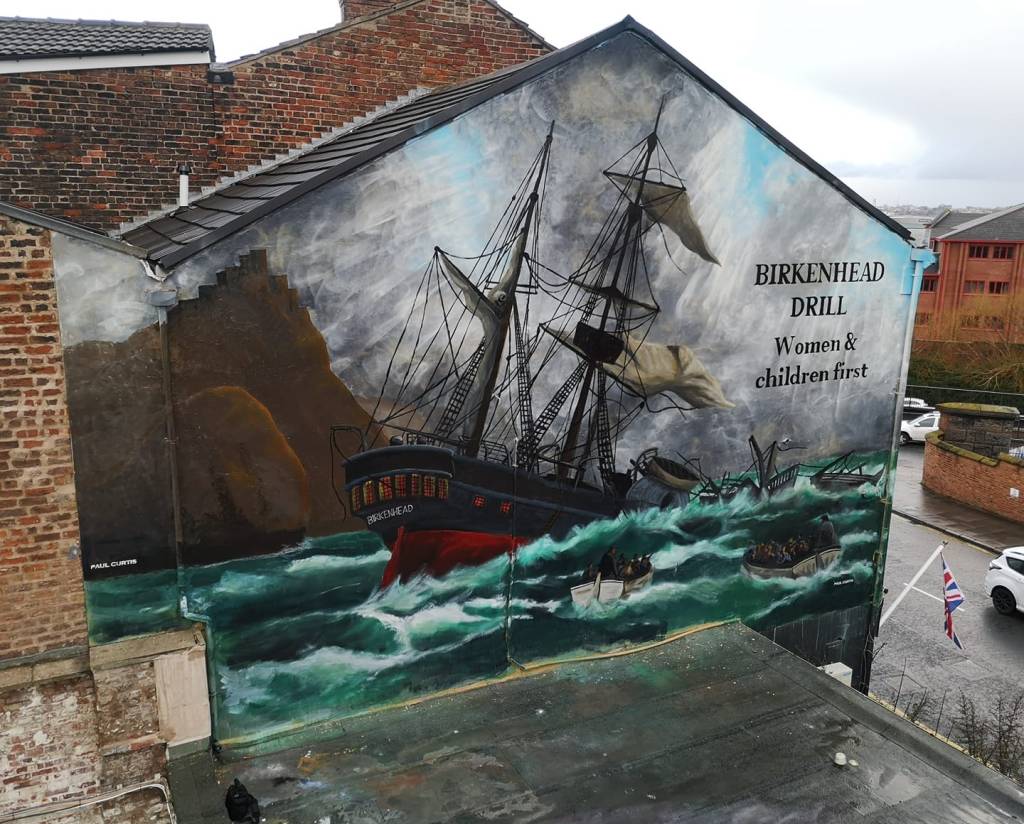
The artist Paul Curtis completed his latest work on 25 February 2020. It is a mural entitled ‘The Birkenhead Drill’ after the term coined by Rudyard Kipling in an 1893 poem to describe the courageous behaviour of those on board the HMS Birkenhead as it sank in 1852. The mural was painted onto the side of Gallagher’s Traditional Pub in Birkenhead, Merseyside, which contains lots of naval and military memorabilia. The mural pays tribute to a time when Birkenhead was at the heart of the shipbuilding industry.
Julie Davis
County Local Studies Librarian, Wiltshire & Swindon History Centre
The collection is the largest freely available digitised collection of trade and street directories. The collection contains 689 directories, with at least one directory for every English and Welsh county for the 1850s, 1890s and 1910s. Searchable by name, place and occupation this is an essential tool for local, urban and family history.
In 2019/20, we have:
Restored the background pages, originally written by Andrew Hann
Finally, a reminder that if you want to access the image and text files from the original digitisation, they are available via the UK Data Service https://www.ukdataservice.ac.uk/ . Search: “Digital Library of Historical Directories”.


 CILIP Local Studies Group
