Toolkit: Measuring impact

Return to Toolkit homepage

It’s easy to claim that local studies libraries are contributing to broad service priorities, such as increasing the visitor economy. However, making a claim that can’t be backed up by strong evidence runs the risk of undermining the credibility of the service with decision-makers within the authority.

Although activities often have some sort of evaluation or feedback, this may not always be designed in such a way as to collect evidence that can be used to demonstrate how this has helped the local studies service to contribute to strategic priorities.

It is often easier to measure outputs rather than outcomes, which is why outputs are often used as evidence. The drawback with this approach is that outputs don’t demonstrate impact and don’t necessarily resonate with stakeholders.

Outputs are defined as what was produced or delivered (e.g. the number of family history courses run) whilst outcomes are the differences made and the benefits that customers receive as a result of the outputs (e.g. a person using the knowledge they gained on the course to find lost family and feel a sense of identity that they hadn’t felt before). Whilst outputs are the “what”, outcomes are the “why.”

Outcomes may best be measured through stories rather than statistics, so it can be useful to try to capture stories from participants in any activity.

The Inspiring Learning for All (ILFA) framework was launched by the Museums, Libraries & Archives Council (MLA) in 2008 as a way for museums, libraries and archives to develop their learning offer. 

The framework transferred with other MLA functions to the Arts Council in 2011 and was refreshed in 2014. 

The ILFA framework includes the use of Generic Learning Outcomes (GLOs) and Generic Social Outcomes (GSOs) to provide evidence of the benefits people gain by interacting with arts and cultural organisations. 

The Arts Council website give useful tips for capturing impact as well as other resources and templates relating to the GLOs and GSOs.

Got something to add?

Do you have any comments, suggestions or updates for this page? Add a comment below or contact us. This toolkit is only as good as you make it.

Return to Toolkit homepage
Toolkit: Archives

Return to Toolkit homepage

Local authorities have discretionary powers under the Local Government (Records) Act 1962 (LGRA 1962) to provide archive services. Most councils have taken up these powers and provide public archive services at either a county or city/town level. Since the 1980s/1990s, the tendency has been for archives services to operate jointly with local studies services, particularly in unitary authorities.

Some smaller unitary authorities have not taken up the discretionary powers to provide archive services themselves, in which case there may be an agreement with a neighbouring authority to provide archive services. The library service may hold some types of archives as part of its local studies service. 

Archive collections

Libraries are empowered to hold archives under the Public Libraries and Museums Act 1964, provided that this does not become their dominant function. Typically, archive collections held by libraries include personal papers, records of local organisations, and records of the council such as minutes of meetings. 

Libraries may also create “artificial collections” of material. These collections comprise items that have deliberately been collected according to format or subject rather than records that have accumulated as a result of particular functions or processes. Examples of “artificial collections” often collected by library staff include photographs, newspaper cuttings or maps. In many cases, these items have lost details of any provenance and original order so care should be taken by library staff in adding to these artificial collections. Archival integrity should be a paramount consideration.

Archival integrity

Archival integrity means that records are identified and maintained according to their provenance, not intermingled with records from other creators, and maintained in their original order (this is known as the principle of “respect des fonds”). Ideally, there should be documented evidence of an unbroken chain of custody. 

Public records

Unless the library service has been appointed a place of deposit, any archives held by libraries must not include records such as public records or most manorial courts records. These are covered by specific legislation.

Public records are records created in central government departments or agencies, the courts and the National Health Service. Where these are administered locally or regionally – e.g. hospitals, courts, coroner’s service – it may be that the National Archives has authorised local record offices as places of deposit for these records.

The Keeper of Public Records has responsibility for the day-to-day management of public records, which may only be held by The National Archives or by a place of deposit appointed under the Public Records Act 1958. 

Where local authorities have not taken up discretionary powers to provide archive services and/or have not been appointed a Place of Deposit, responsibility for relevant public records, including those created locally, is retained by the Keeper of Public Records. 

The Archive Service Accreditation Scheme is used to ensure appropriate standards are maintained by Places of Deposit. 

Further information on public records, including a list of Places of Deposit, is available on The National Archives website: 

http://www.nationalarchives.gov.uk/archives-sector/legislation/approved-places-of-deposit/

Archival Description

Staff in libraries holding any archive collections should be particularly mindful of archival principles of provenance and arrangement by original order. Archival collections must not be catalogued or classified as if they were library materials. The usual terminology is that archives are listed or described, rather than being catalogued.

Library cataloguing typically treats materials as individual items and classifies them according to subject, regardless of where they originated.  By contrast, an archive collection needs to be listed as a whole, with its provenance and custodial history recorded, and the arrangement of items reflecting the context and hierarchy of the collection. 

The General International Standard for Archival Description (ISAD(G)) defines the elements that should be included in any archive listing. Encoded Archival Description (EAD) is closely mapped to ISAD(G) and uses mark-ups or tags to distinguish elements of archive descriptions in a way that can be interpreted and processed by computer systems. ISAD(G) is a structure standard, not a content standard, so it defines which fields should be included, not what the content of those fields should be.

There is no archival equivalent of a library classification scheme because archives are arranged as far as possible in the order by which the creator kept the records, rather than having an arrangement imposed by an archivist. As each individual creator of records is likely to have a different way of organising records, it is not possible or desirable to have a standard scheme of arrangement by archives. 

In practice, many archive collections may arrive as unstructured piles of documents in boxes or bags, but the principle remains that the arrangement should not be imposed by an archivist but should reflect the organisation, functions and processes that produced the records.

The closest to a standard scheme of arrangement is the Local Government Functional Classification Scheme (LGFCS), which was developed by the Information & Records Management Society in February 2019 to replace the previous Local Government Classification Scheme (LGSS). This is often used by records management staff in local authorities as the basis on which to organise current council records. In this case, the LGFCS may be a useful starting point. Check with your authority’s Records Manager if you find yourself in a position of having custody of local authority records. The  2019 version of LDFCS is available to IRMS members only, but the 2006 version of the LGSS is freely available:

https://irms.org.uk/resource/collection/1F3924BE-78BA-49E2-906B-1E5B672687A2/lgcsword2.03.doc

Most library management systems are unable to cope adequately with archive collections and attempting to include archives in a standard LMS should be avoided. The National Archives has a list of suppliers of collections management systems (CMS) and digital asset management systems (DAMS) that are suitable for listing archives and storing/managing digital assets:

https://www.nationalarchives.gov.uk/archives-sector/advice-and-guidance/managing-your-collection/cataloguing/cataloguing-and-archives-networks/

If you are a librarian responsible for looking after archives and do not have access to a professionally qualified archivist, then it would be advisable to consider undertaking a basic archives awareness course. Training courses and other events are often advertised on the Archives-NRA mailing list.

The Community Archives and Heritage Group has developed a set of guidelines for community archives, which have been designed to meet the minimum standard for archival description whilst being straightforward and accessible.

Got something to add?

Do you have any comments, suggestions or updates for this page? Add a comment below or contact us. This toolkit is only as good as you make it.

Return to Toolkit homepage
Toolkit: Copyright

Return to Toolkit homepage

Intellectual property

Local studies librarians must be aware of the implications of copyright and other intellectual property rights relating to the material held in local studies collections.

Intellectual property rights include trademarks, patents and copyright. In practice, it is usually copyright that has the most impact on local studies materials and it is important for local studies staff to have a sound understanding of copyright in order to be able to manage the use of materials and the supply of copies.

Copyright

The principle behind copyright legislation is to protect works of the mind for a certain period of time. During the time that these works are protected, only the copyright owner has the exclusive right to copy the work, distribute it to the public, rent or lend it to the public, broadcast it or send it via electronic transmission.

The aim of copyright legislation is to balance the moral and economic rights of creators of intellectual works with the needs of users to access and copy material. The guiding principle is that the legitimate rights of copyright owners should not be unduly prejudiced by works being copied in whole or in part without their permission.

What does copyright cover?

The Government website has a simple guide to what’s covered by copyright.

For something to be protected by copyright, it has to be original and must be fixed in some way, e.g. by being written down or recorded. An idea in itself is not protected by copyright.

Copyright is an automatic right so there is no formal registration process.

How long does copyright last?

The main legislation governing copyright in England & Wales is the Copyright, Designs and Patents Act 1988 (as amended).

Copyright always expires at midnight on 31st December in any given year.

A work may have multiple copyrights that each expire at different times. For example, the rights holders of a published book may include the author(s) of the words, the artist(s) who created the illustrations, and the photographer(s) of any images. In addition, the publisher also has copyright in the typographical layout of the book.

Standard copyright terms are:

  • Literary, Artistic and Dramatic works are in copyright for the lifetime of the author, plus 70 years after the author’s death
  • Typographical arrangement is in copyright for 25 years from the end of the year of publication
  • Sound recordings are in copyright for 50 years from creation (or when first released to the public if within 50 years of creation). Note that this relates to the recording only, not the work itself which may have its own separate copyright.

There are a number of exceptions to these standard terms, particularly for works created before 1957, or between 1957 and 1969, or works that were unpublished by 1st August 1989.

The duration of copyright in these cases depends on whether the name of the creator is known, when the work was first made available to the public, and when the creator died in relation to when the work was published.

Many works, including some that are more than 100 years old, are in copyright until 31st December 2039 because they were unpublished by 1989. Prior to the 1988 Act, unpublished works were in perpetual copyright. When published, they then received copyright protection for 50 years from publication date. The 1988 Act stated that any unpublished works were deemed published on 1st August 1989 (the date the Act came into force) meaning that copyright will expire after 31st December 2039.

Many documents that are held by local history libraries and archives were unpublished by 1989 and are therefore in copyright until 2039.

The National Archives has produced a really useful copyright flow chart that enables you to work out whether or not copyright in a particular work is likely to have expired.

The duration of copyright in a work is not affected by who owns the copyright (e.g. the right could be owned by an employer rather than an individual employee).

Who owns the copyright?

The first copyright owner would normally be the person who created the work, unless it was created by an employee during the course of their employment, in which case the employer will own the copyright.

For photographs taken between 1st July 1912 and 31st July 1989, the first copyright owner was the person who owned the negative at the time the picture was taken.

The present copyright owner may be a direct descendant of the first copyright owner but copyright may also have been assigned to a third party or have been bequeathed to someone in a will. It could also be gifted or sold by the originator and local studies collections should normally seek to be gifted the copyright if they accept a donation of non-published material. If the copyright is owned by a company and the company has been dissolved, then copyright may be bona vacantia unless separate provision has been made.

Tracing the present copyright owner may be very difficult – see the section “If a copyright owner can’t be found”.

The National Archives guide to copyright includes more details of the first owners of copyright as well as information on Crown Copyright.

When is copying permitted?

If you want to copy something and you are not the copyright owner, you first need to establish whether it’s still in copyright and, if so, whether copying the amount you want for the purpose you intend falls within an existing copyright exception.

The National Archives has a really useful copyright flow chart that should enable you to check whether or not something is in copyright.

If it is in copyright, and there is no Creative Commons licence or other permission already assigned to it, then you either need to:

  • ask the copyright owner for permission to use it (which may involve paying a licence fee)
  • check whether the copying you want to do falls within an existing exception to copyright (this includes limited copying for ‘fair dealing’ for non-commercial research or private study, as well as copying for teaching). Librarians and archivists in some institutions also have additional permissions to make copies for particular purposes under the ‘library regulations’ or ‘library privilege’ (SI 1989:1212).

Libraries and other cultural heritage institutions also have permission under Orphan Works legislation. The Government’s guide to their replacement to the EU’s Orphan Works directive can be found here: https://www.gov.uk/guidance/copyright-orphan-works. The scheme allows a diligent search which finds no know copyright owner of an item to be checked and registered by the Intellectual Property Office and the fees for non-commercial applications are modest, but some have questioned how much use registering a diligent search would be.

Guidance on the changes to copyright exceptions in 2014 for particular types of users (e.g. researchers, teachers, librarians and archivists) is at:
https://www.gov.uk/government/publications/changes-to-copyright-law

The Copyright Licensing Agency offers licences to copy that are tailored for businesses, charities, educational institutions, and public sector organisations.

LACA and CILIP have produced free posters for libraries to display near self-service copiers to explain what copying may be permitted.

Infringing copies

If you copy something that is in copyright without permission from the rights owner, and it’s not covered by a copyright exception or licence, then it is an infringing copy and you are at risk of potential legal action.

The Intellectual Property Office has a list of offences and potential punishments for infringement of intellectual property law, including copyright.

Photographs and other artistic works

In practice, it’s usually images that cause the most difficulties as these are often the items that people most want to copy and reuse.

Artistic works were not included in the fair dealing provisions of the original 1988 Act, but were included in regulations that came into force in October 2014.

It would be unwise to assume that images on the internet have been lawfully copied and are automatically available for reuse. There is a cautionary tale from a blogger who had thought that the widespread reuse of images online meant that there was no problem in using images from other sites on her blog provided that credit was given and images were taken down promptly if requested. This proved not to be the case.

DACS (the Design and Artists Copyright Society) has a section of their advice portal relating to exemptions for the reuse of artistic works: https://www.dacs.org.uk/advice/articles/copyright-infringement/permitted-uses.

If the copyright owner can’t be found

If it’s known that something is in copyright but the current copyright owner isn’t known or can’t be found, then the work is deemed to be an “orphan work.”

Copying an orphan work without the permission of the rights holder would be a copyright infringement (unless covered by an existing exemption). However, the Copyright and Rights in Performances (Licensing of Orphan Works) Regulations 2014 introduced a UK government licensing scheme that enables orphan works to be used without permission from the rights holder, provided that a diligent search is carried out and a licence is issued by the government.

Further information on the scheme is at: https://www.gov.uk/government/collections/orphan-works-guidance

Assessing copyright risk

The National Library of Scotland and the National Library of Wales have developed and adopted a Copyright Assessment Framework for Libraries. This is designed to be a practical tool to assist in assessing copyright risk and making decisions relating to the copying of literary, dramatic and artistic works. It does not cover sound recordings, films, broadcasts or database rights.

It is likely to be of particular use for libraries and collecting organisations undertaking mass digitisation projects.

Further details are available by emailing the National Library of Scotland – copyright@nls.uk

Right of access charge

Libraries may levy a fee for use of material from library stock by authors, publishers, broadcasters, compilers of educational packages and other commercial interests.

This should be regarded as a ‘right of access’ fee and should not be confused with copyright payments. It would be advisable for the wording of any acknowledgement to be “images courtesy of x library” rather than any wording that suggests the library holds the copyright if it does not do so.

‘Right of access’ may not be granted in this way to items still held in unexpired copyright by external agencies or individuals, unless the library has written permission from the copyright holder. Some libraries also derive income from copyright fees for media use of material from library staff as part of local surveys, and other items for which the library holds full copyright.

Further Reading

Got something to add?

Do you have any comments, suggestions or updates for this page? Add a comment below or contact us. This toolkit is only as good as you make it.

Return to Toolkit homepage
e

Toolkit: Linking with local authority priorities

Return to Toolkit homepage

Business or service plans

Every local authority is likely to produce a Council Plan that sets out its vision and strategy for the next two to ten years.     

Common priorities, which local studies services may be able to link with, include:

  • Promoting stronger, safer and healthier communities
  • Increasing educational attainment and skills development
  • Developing the visitor economy
  • Celebrating diversity
  • Encouraging sustainable economic growth and regeneration
  • Protecting and enhancing the environment
  • Reducing economic, educational and health inequality and improving the lives of the most vulnerable
  • Increasing organisational efficiency 

Increasingly, as financial pressures continue, there may be a focus on collaboration and partnerships as many councils aim to reduce direct delivery of services and, instead, to use their resources to enable, influence and facilitate delivery by others.

The Council Plan should form the basis of the library service’s strategic plan and trickle down to inform objectives for teams and individual staff. In this way, it shouldn’t be too difficult for local studies services to align their services with council aims.

However, this shouldn’t be a tick-box exercise but should involve real alignment and be backed up by evidence including measurable outputs and outcomes. 

It may be advisable to concentrate on one or two target areas and demonstrate real impact, rather than making broad claims that are not backed up by robust and specific evidence.

Learning, wellbeing and community

Particular themes where local studies has the potential to make a real difference include learning (formal and informal, across all age groups), health and wellbeing, and supporting the development of stronger communities through helping to foster a sense of place and the strengthening of community networks.

Learning though using local studies resources isn’t only a matter of acquiring local or family history knowledge. It’s unlikely that anyone will be motivated to increase their IT skills in order to access official government information. However, learning how to research family history may motivate the digitally diffident to use a computer, thereby also enabling them to be more confident in using government services that are increasingly digital by design.

To have the most impact, a joined-up approach to activities and events is likely to be most effective. For example, a library service may run family history courses as a means of income generation. The income target could be met and the learners could all go their separate ways at the end of the course. The library service may achieve its income target and it could be considered that the activity was a success on this basis.

However, added value could be created by aligning the activity to priorities relating to wellbeing and stronger communities. For example, the family course participants could be encouraged to stay in touch with the library service and to join or form a self-organised family history group that continues to meet in the library once the course ends. This creates an ongoing relationship between the library and the learners, in a way that’s not likely to happen if the course were run in a more traditional education setting. 

Over time, members of the group are likely to develop friendships and the group then becomes a source of emotional support for its members in addition to being a means of staying motivated to continue learning. 

The group may also become a source of support and a resource for the library service – for example, members may be willing to assist with family history drop-in events or focus groups, encouraging more take-up of the family history courses and becoming advocates for the library service in general.

An activity that started out as a means of income generation can thus develop into a virtuous circle that may be life-changing for participants, by increasing IT skills, reducing isolation through developing community networks, and sharing their skills and knowledge to help others to learn.

Measuring impact

It’s easy to claim that local studies libraries are contributing to broad service priorities, such as increasing the visitor economy. However, making a claim that can’t be backed up by strong evidence runs the risk of undermining the credibility of the service with decision-makers within the authority.

More information on this topic can be found in the measuring your impact section of the toolkit.

Useful tips

  • Keep a list of potential projects
    Most local studies librarians have more ideas for projects and initiatives than they have capacity to implement them. It can be handy to have a note of these so that if the opportunity arises – e.g. for an external funding bid, or to meet a corporate requirement – they can be tweaked to fit the funding criteria or relevant requirement. 
  • Be aware of forthcoming anniversaries or awareness days/months
    Many local studies libraries keep lists of local anniversaries or significant dates which may be of use for community engagement activities. Awareness days/months – e.g. Black History Month – may be an opportunity for the library service to make an important contribution to council activities marking the event.
  • Case studies and inspiration
    The CILIP Local Studies Group blog and Twitter feed aim to feature news and ideas that may provide inspiration for activities and events. The UK Web Archive also includes an archive of case studies from the old CILIP LSG website. 

Further reading

Case study from the Greater Manchester Archives & Local Studies Partnership, 2015

Got something to add?

Do you have any comments, suggestions or updates for this page? Add a comment below or contact us. This toolkit is only as good as you make it.

Return to Toolkit homepage

Toolkit: Subscription websites

Return to Toolkit homepage

Many public libraries have subscriptions to websites such as Ancestry, Find My Past, The Genealogist, and the British Newspaper Archive.

Sometimes, library subscriptions are part of a contract between the website and the library or archives service as part of an agreement to digitise name-rich records. Alternatively, libraries may subscribe by paying an annual fee directly to the company or via a licensing agent. 

All of the sites apart from The Genealogist offer a pricing module for unlimited concurrent access. The Genealogist’s pricing module is on a “per seat” basis so is limited to a particular number of concurrent logins. 

Access is usually via IP address (networked computers and WiFi) rather than logging on via a user name and password. 

Ancestry, Find My Past and The Genealogist all have birth, marriage and death indexes and UK census records. If you have to choose one site, it may be sensible to select the one that has the best coverage of parish registers for your local area.

Ancestry Library Edition

Probably the best known of the family history subscription sites, Ancestry was founded in 1996 and has its headquarters in the United States.

Individual personal subscribers to Ancestry have different subscription levels available – Essentials (Key UK records), Premium (All UK & Ireland records), Worldwide, and All Access (includes external sites Fold3 (military records) and Newspapers.com). 

Libraries are able to subscribe to Ancestry Library Edition, which is similar to a personal Worldwide subscription, but gives read-only access to family trees (it’s not possible to contact other users) and it’s not possible to submit corrections of transcribed data.

New military records are being indexed on Ancestry but transcriptions and images are only available on the separate Fold3 website, which is not included with Ancestry Library Edition.

Its particular strength is the number of databases, including its wide geographic coverage. It has different search functionality from Find My Past, notably allowing more search options for co-resident family member on census returns. Unlike Find My Past, it doesn’t have a separate address search for census returns, but it does have a census browse feature which also includes the enumerator’s sheet at the beginning of each enumeration district (unlike the census images on Find My Past).

Ancestry provides various resources, including posters and online training guides – LibGuides – on its Resources page.

How to subscribe? 

Ancestry Library Edition is exclusively available via subscription agent ProQuest and a free trial is available before purchase. 

Find My Past Community Edition 

Find My Past (FMP) is a UK-based site and is owned by DC Thompson.

Individual personal subscribers to Find My Past (FMP) have the options of three different subscriptions – Starter (basis records such as birth, marriage and death indexes and census returns), Plus (all GB records) and Pro (worldwide records, plus the British Newspaper Archive, searchable only from within FMP).

The Community Edition available to libraries is offered as UK only (excluding Irish records) or Worldwide. Neither of the options includes the British Newspaper Archive (BNA), although a discount to the BNA is usually available for subscribers to the Community Edition of FMP.

Find My Past has greater search functionality for the 1939 Register, including a map/address search, and also allows address search for census records. It also has some of the revised GRO birth and death indexes, which include additional information such as middle names rather than initials, mother’s maiden name before 1911 and age at death before 1866. Find My Past also includes the GRO overseas indexes.

New record sets are announced each week as Find My Past Fridays on the Find My Past blog. 

Find My Past will have exclusive access to the 1921 census when it becomes available in January 2022. However, if previous pricing models are followed, it is likely that this will not be included in any subscription packages to begin with and that all users, even individual personal subscribers, will have to pay to view records.

How to subscribe?

Find My Past offers two levels of Community Edition – UK records (excluding Ireland) or Worldwide (including Ireland, USA, Canada and Australia).

Library subscriptions are via JCS Online: email info@jcsonlineresources.org or phone: 01865 987211

British Newspaper Archive Community Edition

Find My Past is a sister site to the British Newspaper Archive (BNA) and a discount to the BNA may be available to library subscribers of Find My Past.

Unlike all of the other sites, library customers have to have register with the BNA and log in with their own account, even when connected to the library’s computer network. 

Although this may be irritating for some customers, it does mean that customers can log into the site from home, search the site and bookmark any articles that look useful. Then, on their next visit to the library, customers can log into their BNA account and then view their bookmarked articles.

Library subscriptions are via JCS Online: email info@jcsonlineresources.org or phone: 01865 987211

The Genealogist

The Genealogist is run by Genealogy Supplies (Jersey) Ltd, which is part of Wiltshire-based S&N Genealogy Supplies. The company was founded in 1992 and became a publisher of family history data on CD. The Genealogist was established in 2006 as a subscription site.

Individual personal subscribers may choose from three levels of subscription – Starter, Gold, and Diamond, with the first two being available as a six- or 12-month subscription, but the Diamond subscription is only available as a 12-month subscription. 

Libraries may opt for a Gold or Diamond subscription, with the latter being the one most likely to include databases not available on other sites, notably tithe records, map explorer. The site also has a range of wills and non-conformist records.

Library subscriptions are available by contacting The Genealogist directly: https://www.thegenealogist.co.uk/contact/

A month’s free trial is available to public libraries and archives.

FamilySearch

Although not a subscription site, as such, FamilySearch offers additional functionality to researchers accessing the site at a Family Search Affiliate Library. 

FamilySearch is part of the genealogical arm of the Church of Jesus Christ of Latter-day Saints (LDS), often called the Mormon church. The church has been microfilming and, more recently, digitising name-rich records from around the world and making them available to researchers. Most of the records are searchable on www.familysearch.org.

Individual researchers need to have their own free account with FamilySearch and may search transcribed and indexed records free of charge from any location. However, when searching at a FamilySearch Affiliate Library, researchers have access to many (though not all) digitised records as well as the searchable indexes and transcripts. These images are otherwise only accessible at one of the church’s Family History Centres.

Affiliate Libraries used to have the facility of ordering copies of LDS microfilms, but this ordering service was withdrawn in 2017. Since this date, Affiliate Libraries have been able to access digitised images on FamilySearch, provided that the custodian of the original records has not restricted access to Family History Centres only.

Public libraries may become FamilySearch Affiliate Libraries free of charge on completion of  a signed contract and giving details of a static IP address to FamilySearch. Further details are at https://www.familysearch.org/blog/en/familysearch-affiliate-libraries/

A list of FamilySearch Affiliate Libraries is at https://www.familysearch.org/wiki/en/FamilySearch_Affiliate_Libraries

Other useful subscription websites

Your authority’s online reference libraries may also subscribe to subscription services that will help with family and local history research. These include national newspapers, such as the Times Digital Archive and the Illustrated London News, the Oxford Dictionary of National Biography, the Oxford Dictionary of Family Names in Britain and Ireland, Who’s Who, and Who Was Who, many of which will can be accessed from home.

Got something to add?

Do you have any comments, suggestions or updates for this page? Add a comment below or contact us. This toolkit is only as good as you make it.

Return to Toolkit homepage
Toolkit: Exhibitions

Return to Toolkit homepage

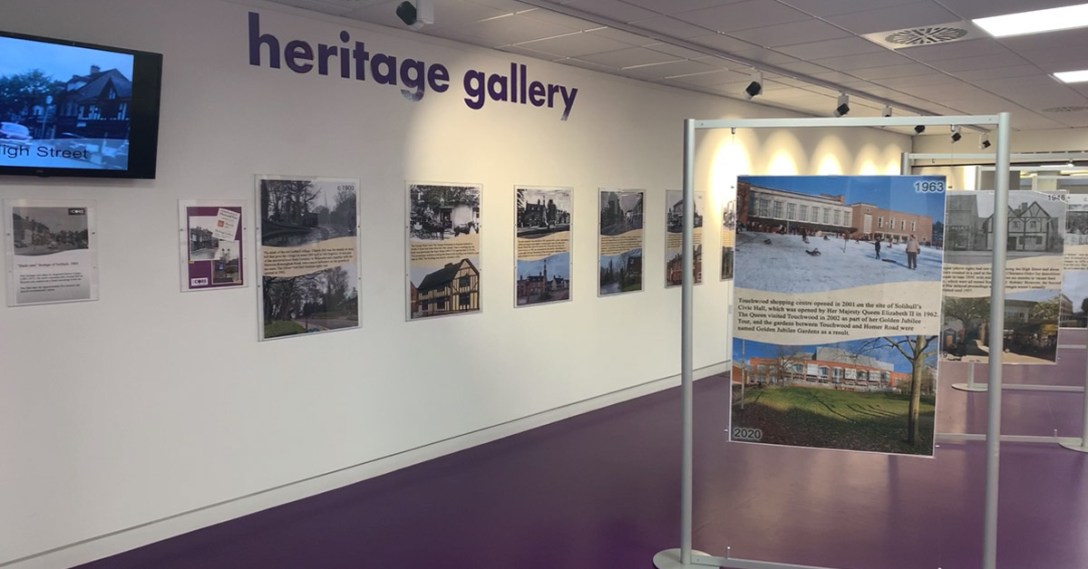
Exhibitions within the library building may be a useful way of promoting services and collections, especially if exhibitions integrate with wider cross-platform promotional campaigns.

In practice, library staff often have to create exhibitions with limited display equipment, few financial resources, and limited time. Fortunately, much can be achieved even with these constraints.

Collaboration with local historians or groups may be an effective use of resources, but make sure everyone involved has a clear understanding of the exhibition aims, content and budget.

Choosing a topic

It’s often useful to tie in an exhibition with an anniversary, whether this is the anniversary of a local, national, or international event. By doing this, media coverage may be greatly increased and it can also raise the library service’s profile within the overall organisation, particularly if it helps the organisation to do something to mark an event.

Local anniversaries, or a local connection with a national anniversary or event, may be the most likely to achieve publicity and engagement.

National awareness days/weeks/months (e.g. Black History Month in October, LGBTQ+ History Month in February, Local & Community History Month in May) may also be a useful theme for exhibitions. Libraries Connected produces an annual calendar with relevant awareness campaigns that may inspire events and activities in libraries linked to the universal offers: https://www.librariesconnected.org.uk/resources

Other ideas that could be useful to inspire exhibitions are:

  • The launch of a new local book
  • The promotion of new service/resource/collection
  • Supporting a new tourism initiative – e.g. guided walks
  • A seasonal tie-in – e.g. Christmas, summer holidays

It’s as well to be mindful of the wider context of your exhibition. What may seem to be fairly innocuous can turn out to be controversial if there is a local or political sensitivity about the topic.  It may be advisable to check with your organisation’s press office or communications team to make sure there are no issues with the topic you are proposing.

Arranging content

Images attract more attention than text so, depending on the theme of your exhibition, it may be worth considering large images and small amounts of text.

As most photographs held by local studies services are likely to be smaller than would ideally be required for an exhibition, it may be worth considering copying the image and then printing it as a larger photograph or print (copyright permitting). As well as having greater impact, this also creates a surrogate that means the original image is protected from any damage during display.

If you are doing a display on traditional display boards, try not to cram too much onto the boards. Small images with lots of small text may only engage those who are already engaged, rather than having the eye-catching appeal to attract wider interest. It may be more effective to have fewer, but larger, images, or to use graphic software to create content the same size as each exhibition board. If you have the facility to print larger than A3, you can then print this as one sheet. If not, then, depending on your software, it may be possible to print the content as tiled sheets that may then be stuck together.

Copyright

In terms of copyright, the Intellectual Property Office issued a copyright notice (copyright notice 5/2015) aimed at museums, galleries, libraries, archives and other institutions that may wish to exhibit copyright works. The notice stated that: 

“In the UK, public exhibition is not an act restricted by copyright. This means that it is not an infringement of copyright to put a literary, dramatic, musical or artistic work on public display (for example, in a display cabinet in a museum or gallery).” This relates to original documents and artefacts, and would not in itself permit the making of a copy for exhibition purposes.

Moving images

Moving images also attract interest and it is possible to create short videos from still images, with or without audio. If you have a TV screen available in your exhibition space, it should be possible to produce short video clips to play on a loop, as well as to upload to video-sharing sites and social media platforms.

Whilst Adobe Premiere Pro is the full-featured industry standard, much can be achieved with the more budget-friendly Adobe Premiere Elements. There are also free alternatives, such as DaVinci Resolve, Kdenlive and Lightworks. 

Be aware that, according to the Intellectual Property Office (notice 2015/5) “playing or showing a sound recording, film or broadcast in a public place [without permission from the rights holder(s)] would usually be an infringement of copyright.”

Writing content

Simply exhibiting documents or artefacts is unlikely to engage casual interest. Generally, it is stories that engage people, so exhibitions should be planned with a particular theme, and content should be selected or created so that it contributes to a coherent narrative. 

Ask yourself what is the unique story that your exhibition will tell. It may be useful to outline your narrative e.g. as bullet points, on post-it notes or as a mind map, and then select relevant resources from your collection.

Original documents and artefacts should be accompanied by explanatory captions. Captions need to convey a key message rather than be a description of the item. They must be short – ideally 14-21 words – and they need to communicate something to readers, rather than just describe what visitors can see for themselves.

People generally don’t read large blocks of text. Their eyes are drawn to images, headings, sub-headings, bulleted lists, and short captions. Any blocks of text may only be skimmed, so be mindful of this when writing content.

William Strunk, in his guide The Elements of Style in 1918, wrote:

Vigorous writing is concise. A sentence should contain no unnecessary words, a paragraph no unnecessary sentences, for the same reason that a drawing should have no unnecessary lines and a machine no unnecessary parts. This requires not that the writer make all his sentences short, or that he avoid all detail and treat his subjects only in outline, but that he make every word tell.

Write in a natural way that will resonate with your audience. Clear and precise language is usually more effective than flowery prose, which tends to distract from the exhibition content. Take care with typing, grammar and spelling. If possible, ask a colleague to proof read any content you create. Alternatively, printing proof copy and slowly reading it aloud to yourself may help you to spot any errors.

Remember the well-known design principle “KISS” – Keep It Simple, Stupid!

Environment and security

The safety and security of exhibition materials should be a paramount consideration when planning an exhibition of original documents or artefacts.

Original items should not normally be displayed without appropriate security – e.g. locked in a display cabinet – to protect against theft or damage, whether wilful or accidental.

The other main threat to display materials is the risk of damage as a result of inappropriate conditions in the display environment. In particular, the potential damage from light, heat, and humidity should be assessed before original sources are displayed.

British Standard 4971:2017 (Conservation and care of archive and library collections) offers guidance on exhibiting original items. It recommends that:

  • Objects should not be placed on permanent display
  • The duration of a display should be calculated with an understanding of the impact of the display environment on the objects
  • The display period calculated should be based on a safe level of light exposure of the material displayed, depending on the sensitivity of the materials. Background lighting in the display area should also be assessed.
  • The temperature should not exceed 24 degrees
  • Relative humidity levels should be within recommended levels (see section 5.1.3 of BS 4971)
  • Exhibition light sources either emit no UV or UV radiation emitted should be removed by the use of filters

It would be advisable to carry out a condition survey before exhibiting original items.

Borrowing artefacts

It may be worth considering asking to borrow artefacts or documents from other museums or repositories, if this is appropriate for the theme of your exhibition. Depending on the items, this may only be possible if you have secure exhibition facilities that meet the environmental conditions recommended in BS 4971. 

Some museums offer loan services to schools and cultural institutions, so it is worth checking with the relevant museum. Be aware that if you are borrowing original items, you are likely to have to:

  • Ensure that you have sufficient insurance cover for an agreed minimum amount
  • Comply with security, display and handling requirements of the loaning institution
  • Pay a loan and administration fee
  • Pay for a condition survey and any pre-loan conservation of the items
  • Arrange for suitable secure transport for the items

Publicity

Be mindful of copyright, especially in images. Make sure that you know the copyright status of any items you are using, particularly images, and ensure that you have assessed the risk of using the material for the purposes you wish. This is essential if you don’t have written permission from the rights holder(s) or a licence to use an orphan work.

Use your existing publicity channels to good effect, and try to include images that can be issued with press releases as this will make them more attractive to media organisations. If you have a blog, it can be useful to create a blog post that tells the story in more detail, and includes images of the exhibition.

If you have social media channels, rather than posting a standard poster, you are likely to have more impact by creating properly-sized images for each channel. 

  • Twitter
    The size of inline images on Twitter in 2020 should be in a ratio of 16:9 so the suggested optimum size is 1200 x 675 pixels. Any images taller than this 16:9 proportion will be cropped on mobile and desktop feeds.
  • Facebook
    The recommended size for shared images on Facebook is 1200 x 630 pixels
  • Instagram
    The recommended size is of images for Instagram is a square 1080 x 1080 pixels.

It may be worth considering events that link with the exhibition, for example, a formal launch with an opening by the Mayor, and/or a brief introduction or lecture about the topic. 

Demonstrating impact

If your exhibition is part of a grant-funded project, you may have a requirement to collect evidence to justify the use of external funding. Even if your exhibition is not grant-funded, it may still be useful to collect evidence of impact so that you can use this, if needed.

More formal evaluation can include the Generic Learning Outcomes (GLOs) and/or Generic Social Outcomes (GSOs) which were developed to provide practitioners, government and funders with a meaningful way of reporting on the impact of engagement with visitors to museums, libraries and archives. Find out more at www.artscouncil.org.uk/measuring-outcomes/generic-learning-outcomes

At the very least, try to capture comments from visitors and any engagements on social media.

The CILIP Marketing & Communications Group (formerly Publicity & Public Relations Group (PPRG)) has an annual Marketing Excellence Award. If your exhibition has met or exceeded your aims and objectives, and includes marketing approaches that you want to share with other organisations, it may be worth entering the annual awards.

Useful tips

  • If your organisation needs to print large-format documents such as architects’ plans or maps, then it is worth finding out whether there is a large-format plotter within the organisation.
    Depending on your setup, it may be possible to print directly to this if it is networked, or a colleague may be willing to send through prints on your behalf. Even if there is an internal recharge to your budget, this is likely to be significantly cheaper than using a commercial printer, and will give much more professional results than sticking multiple smaller sheets together.
  • Microsoft OneNote is usually included in the Microsoft Office software suite and seems to be a much overlooked and under-used programme. It is the electronic equivalent of a tabbed paper notebook and is very useful for gathering together ideas and drafting content. It may be a useful tool for collaboration, as a notebook can be shared with others.
  • Consider learning to use graphic design software such as Adobe Photoshop CC (or the more budget-friendly Adobe Photoshop Elements or Corel Paintshop Pro) or an open source free alternative such as GIMP. Even if you have no artistic or drawing skills, you can create professional-looking exhibitions using graphic design software.
  • Bear in mind the diverse needs of customers when creating an exhibition – text size, colour, height of displays, language, physical accessibility – should all be considered with your potential audience in mind.

Suppliers

Return to Toolkit homepage

Got something to add?

Do you have any comments, suggestions or updates for this page? Add a comment below or contact us. This toolkit is only as good as you make it.

Return to Toolkit homepage

34 ways to use potatoes…other than as vegetables – The Big Friday Find

Although I like mashed potatoes and treacle, I have never thought of combining them in a pudding!

joannembailey's avatar

Thirty-four ways of using potatoes...other than as vegetables (Front)

For this week’s Friday find we thought we would share one of our long standing favourite finds. This Ministry of Food leaflet, from WWI, was included with our collection of wartime posters. Many of these posters encourage people to eat less bread because of grain shortages.

Save the Wheat and Help the Fleet
According to this leaflet during WWI we had an “unprecedented surplus of potatoes – over 2,000,000 tons”. The Government were understandably keen to encourage people to make the most of this “farinaceous food stuff” including cooking and using potatoes in their skins.

Our favourite recipe from this collection is the Treacle Potato Pudding, which is made using the following recipe:

1 lb. mashed potatoes, 1 egg, half an ounce of sugar, 1 ounce of ground rice, 1 ounce of cooking fat, flavouring essence or other flavouring, 3 tablespoons full treacle, 1/2 teaspoon full of baking powder.

Coat a plain charlotte mould whilst warm with a…

View original post 93 more words