

Just enough time to put your project forward for the Alan Ball Award for Local History publishing. Though you could get a courier to submit you book and entry entry form, it is much easier to nominate your e-project. Just complete this entry form.
The award is open to all heritage and community organisations involved with some aspect of Local History and who receive or have received public funding for the publication. This year, the project need to be launched between July 2016 and June 2017.. This also includes lottery funding, e.g. Heritage Lottery Fund and Awards for All. In addition to local authority libraries, archives, museum and archaeology services; it includes small local museums, heritage centres and community history projects.
Want some inspiration for your next project- read about last year’s nominations for the e-prize:
Wigan and Leigh Archives Online
Wigan Archives and Local Studies.
http://archives.wigan.gov.uk/
The first local history collections to go live on the site were First World War documents and research. Local newspapers, military tribunal records, record of inquests and diaries are just some of the local First World War artefacts that have been digitised and put onto the website. The research was conducted by volunteers and we recorded that over 1000 hours of volunteer time was spent researching the soldiers who died during the war. Names from local war memorials have been transcribed and added to the website.
Since the launch, more collections have been added and it is now possible for users to explore the heritage of their borough through newspapers, manuscripts, estate papers, photographs, maps and museum objects. The focus of the website is not solely on the First World War. Over periods have now been added allowing users to explore different periods of their local history digitally. For example, selections of the Anderton papers from the English Civil War are now available online and Egyptology artefacts once collected by local people are now also available to view.
The website has also been used as a platform for other projects. The Civic Histories project has recently been added. This project aims to explore and capture the names and biographies of past mayors and chairs of the different townships of the Wigan Borough. Even though this is a relatively new project, around 50 biographies have already been added to the website. We have also been able to add a local history trail.
Collections and research provided by staff, volunteers and residents are added to Wigan and Leigh Archives Online almost everyday thereby allowing local people to tell their local history.
Essex Record Office Blog
http://www.essexrecordofficeblog.co.uk/ Essex Record Office has been using the blog to share highlights from its collections and advice for researchers, and to encourage people to use and enjoy our collections, both online and in person. The blog is a real team effort with colleagues across the organisation contributing. It provides good quality, engaging content and is very popular with thousands of page views.
Derbyshire & Nottinghamshire Medieval Graffiti Survey
http://www.dnmgs.wordpress.com This web platform serves as a volunteer HUB, dissemination tool and point of reference for researchers. It is designed to operate like a website, but allows blog posts, research content, news on upcoming events/training workshops/public activities and the ability to upload digital images from our survey work. The project itself seeks to explore, identify, survey and record examples of Medieval and Post-Medieval graffiti in churches and other buildings across the two counties, and provide training and support for the local community to be involved. This is groundbreaking survey work that is identifying and recording historical data that has never been done before in either of the two counties, all done by the local communities. It feeds into the National Database of Medieval Graffiti, and allows national and international researchers to compare localised data on a much wider scale. The Survey Results page – https://dnmgs.wordpress.com/survey-results-2/ – gives a full write-up of the graffiti discovered at each site surveyed so far, with a selection of annotated images from each venue.
The Nunney Hoard
http://www.visitnunney.com/index.php/nunney-hoard/ The Nunney Hoard is an article on the visit Nunney website written by Adrie van der Luijt. The Nunney coin hoard was discovered in 1860 and was considered to be one of the most interesting discovery of ancient British coins placed on record. It consisted of 249 Roman coins dating back to the reign of Emperor Claudius, 41-54AD, discovered at West Down Farm in Nunney, Somerset. The article explores the history of the hoard; its discovery and excavation, and what happened to the coins thereafter
Bradford Local Studies Blog
https://bradfordlocalstudies.wordpress.com/
The blog hopes to bring insights into the history of Bradford, a behind the scenes look at the Local Studies Library, showcasing resources and providing highlights from its special collections, including rare books hiding in the stacks. The blog also shares highlights from collections in other libraries, including Keighley Library. Articles are written by staff and volunteers.
St Helens Through The Lens
http://sthelenslens.wordpress.com St Helens Through The Lens was a 10 month Heritage Lottery Fund supported project, exploring the George Street Photography Collection through community events and creative workshops. The collection includes over 3000 glass plate negatives that were originally discovered in a former photography studio in St Helens in 1984. The images include weddings, portraits, sporting occasions, events, hospitals, factories, buildings, community celebrations and more. A real snapshot of local life in mid 1950s St Helens. 3000 glass plate negatives from the collection have been digitised; while a team of 6 local volunteers who have been trained by the project archivist sorted, described and catalogued the collection, which will be available online by the end of the project. A project blog is constantly being updated and the website includes downloadable resource packs for schools, interactive worksheets and downloadable walks. The St Helens Thorough The Lens project is physically based in the Local History & Archives area of St Helens Central Library, however having an online hub has helped the project reach a wider, global community with visitors from all over the world. A real buzz has developed around the project, with many people visiting the library because of the blog, and to see more images from the collection. Visits included a women from Devon who was a key performer in the St Helens ‘Pilkington Players’ in the 1950s. She had seen images of herself from a performance featured on the St Helens Through The Lens blog (https://sthelenslens.wordpress.com/2016/10/06/performances-by-the-pilkington-players/), and she visited the library to offer stories and memories of her experiences. The online blog has not only reached new users, but has also encouraged these users to visit the library and engage with other areas of local history and heritage.
Memories Shared (North Somerset)
For further information contact Frances Tout frances.tout@n-somerset.gov.uk Memories Shared is a digital reminiscence project where historic images of North Somerset, from library local studies collections, have been digitised and stored on tablets. The tablets are then used with older people and those living with dementia. Reminiscence activities can contribute to improve the wellbeing of people with dementia. The photographs used for the project are of towns and villages across North Somerset and are photographs that have been taken between the 1930s and 1980s, so they are within people’s living memories. The tablets can be used in a variety of ways, including:
By staff and volunteers taking the tablets into lunch clubs, memory cafés and group settings for use in reminiscence sessions with older people.
By partners such as AgeUK befriending volunteers and lunch clubs.
By staff and volunteers running reminiscence sessions in libraries, using the tablets with community groups.
Loaned to care homes. The project aims to digitise historic images from library collections and develop a series of eBooks, stored on tablets and used in reminiscence sessions with older people and those living with dementia. Its objective is to encourage interaction and increase self-esteem by enabling older people and those living with dementia to share memories about the local area.; break down barriers to ICT and build confidence in using technology by stimulating interest through reminiscence; expand access to local studies resources held in North Somerset Libraries through digitisation. It also hopes to reach older people and groups in the community who may not usually use the library and have a positive impact on the health and wellbeing of older people. At the time of submission to the Alan Ball Award library staff and volunteers had delivered 20 reminiscence sessions to groups in community settings. Reminiscence sessions use the Memories Shared tablets and Books on Prescription (Dementia Offer) Pictures to Share books. All library staff are Dementia Friends trained. Groups and partners visited include: • AgeUK • The Stroke Association • Memory cafés (Nailsea and Portishead) • Residential care homes • Church groups • Lunch clubs • Retirement groups Some of the participants have said:
“Looking at photos from my childhood as a visitor to Weston – realising that my memory had not all gone” “Brilliant – shared memories! I managed a shop in Hill Road, Clevedon!” “I haven’t talked so much, for ages!” Jan Macmillan – Library Assistant after delivering a Memories Shared session said: “What a brilliant day I had today: It started with holding a Memories shared session with some very feisty Octogenarians at the Stroke survivor’s club in Nailsea. They were wonderfully enthusiastic and really participated with using the tablets. We had some great conversations from reminiscing about the shops on Hill Road, Clevedon to chatting about the different sorts of Bridal bouquets the ladies had for their wedding. One couple had been married for 61 years and first met in the Music Room at Shirehampton Library! The library really does offer such a lot to all ages and ours is such a rewarding job.” The project has achieved: 469 historic images from collections digitised 10 eBooks produced 30 tablets procured for project 25 reminiscence sessions held with older people 365 older people attended reminiscence sessions Increased interest and awareness of local studies collections 13 library staff received tablet training – cascade to others All 80 library staff trained as Dementia Friends Increased community engagement Feedback from sessions overwhelmingly positive, improving staff morale Staff gained skills and confidence Project now embedded as part of the library service Memories Shared was funded by two internal North Somerset Council teams. £5k from Early Intervention and Prevention Manager for a tablet project with older people and £4.75k from People and Communities Directorate project funding. The project was developed and produced during 2015 by Frances Tout, Community Librarian for Outreach, and Sarah Bowen, Community Librarian for Information and Local Studies.


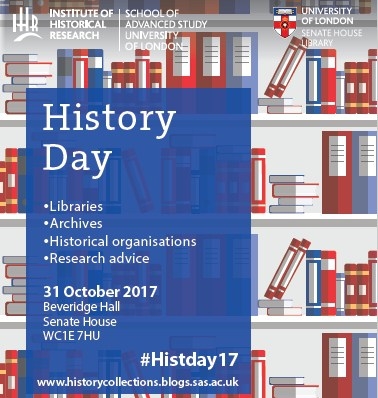
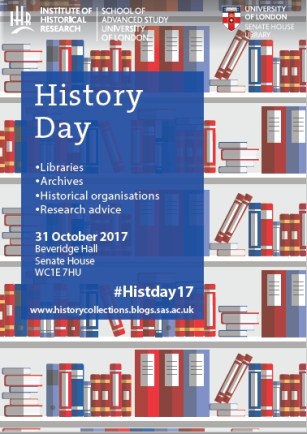 Institute of Historical Research and Senate House Library host an annual History Day. This year’s event is on 31 October 2017 at Senate House. The day is a way for libraries and archives to promote their collections and for students and researchers to find out about a range of historical collections in one place. Throughout the year we share blog posts about collections on the related History Collections website. A special theme this year given the date of History Day is ‘Magic and the supernatural’, but blog posts on any subject are welcome.


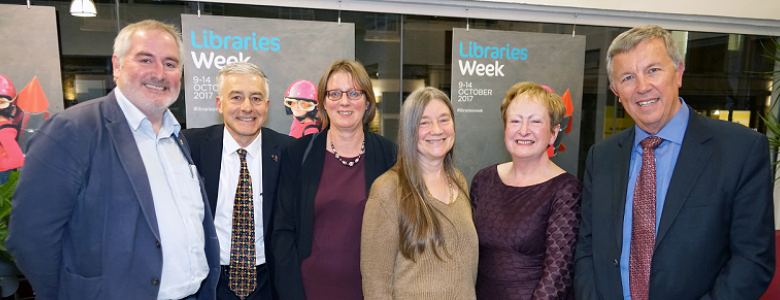
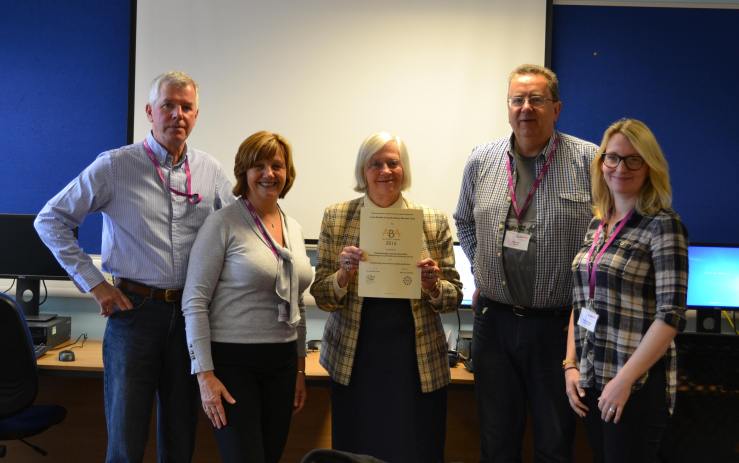 Despite keen competition this was clearly the winner and Diana pointed out how impressed she had been initially with looking at a changing display on Peterborough Station which highlighted service personnel visiting the tearoom on their way to battle. In talking to the volunteers it was evident just how much painstaking research had gone into tracing the people included in the visitors’ books to the tea room at Peterborough East station during the first World War and making the project so interesting.
 CILIP Local Studies Group