Working with heritage material in North West England? Make a difference by getting involved with LSGNW

The Local Studies Group North West (LSGNW), one of the regional sub groups of the national Local Studies Group, has been organising visits, day schools and learning events and advocating for local history and local studies for over 30 years.

The present committee is looking for people with an interest in this vital area of library and cultural services practice to become involved with the work of the committee. The committee has several members who are retired, or working and studying outside the profession and it is important for the continuance of the group that we have people on the committee who are currently working in some shape or form in the local studies field.

We are well aware that we have seen many specialist posts removed from library services and that this has contributed to the reduction in number of members of the LSGNW. However, many library staff, whilst not having designated job titles, will still work with local studies material and can benefit enormously from training opportunities and networking with colleagues. Whilst some of the regional sub groups have struggled in the last few years we are very encouraged by the re-emergence of the Yorkshire and Humberside group and are hopeful that the same enthusiasm is present in the North West.

If you have an interest in becoming involved, then please get in touch with me at the e mail address below.

Best regards

Andrew Walmsley

Chair, LSGNW

andrewwalmsley2007@gmail.com.

Oral History and Sound Heritage – LSG Conference 2018 – tickets still available!

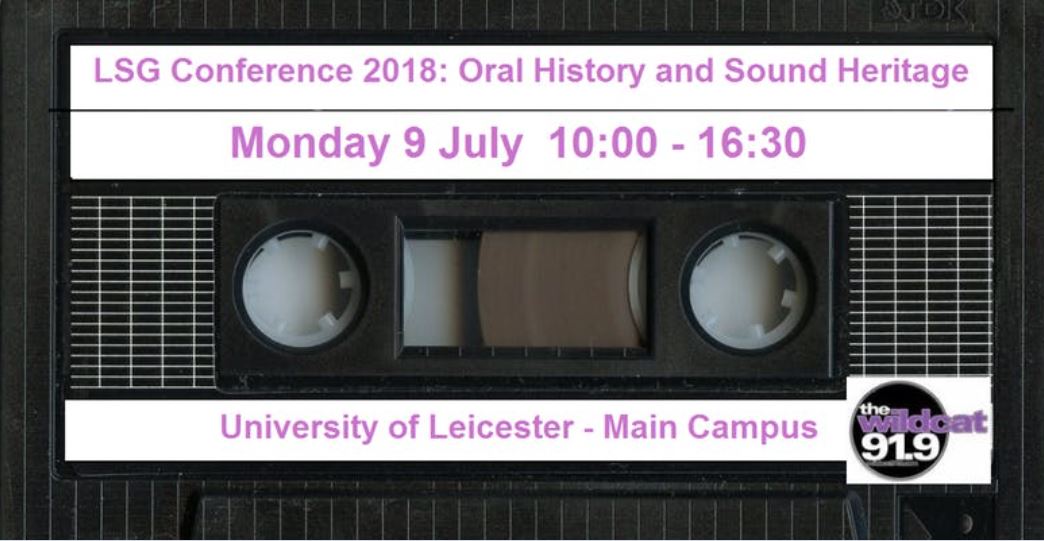
LSG Conference 2018: Oral History and Sound Heritage

Date: 9/7/2018

Time: 10:00 – 16:30

Venue: University of Leicester, University Road, Leicester, LE1 7RH

Description:

This year’s CILIP Local Studies Group conference is all about oral history. Hosted by the University of Leicester Library, our conference is for anyone involved in collecting oral history and managing collections, or who would like to work in this area in the future. The program is designed to help you keep up to date with best practice, find out about new initiatives, and meet other people in this field.

Programme:

  • Introducing Unlocking Our Sound Heritage – Sue Davies, British Library
  • Running an oral history project – Colin Hyde, East Midlands Oral History Archive
  • Tour of the Library’s Special Collections & Sound Heritage project facilities
  • Oral history and communities – Stephanie Nield, Leonard Cheshire Archive & Ahmed Iqbal Ullah Race Relations Resource Centre, University of Manchester.
  • Cataloguing oral history and sound collections.

As part of the event, we will be inviting interest in a local studies network for librarians, archivists and heritage professionals in the Midlands.

To book tickets, please go to: https://www.eventbrite.co.uk/e/lsg-conference-2018-oral-history-and-sound-heritage-tickets-44260327832

For further information, please email William Farrell: wjbf1@le.ac.uk

We want to write a Local Studies Toolkit & we need your help.

Looking for advice or inspiration for your work? In recent years LSG has helped by organising training and propagating material through our journal, blog posts and tweets, but now we want to do more by putting together a local studies toolkit. Our aim is to….

To produce a freely accessible online resource that could guide and inspire local studies professionals  and para-professionals to provide an excellent local studies service within their authority.

Enough of the management talk I hear you cry, what will it look like in practice? Well, at the end of the day we would like to produce a mixture of the old local guidelines and signposts to the best online advice on local studies subjects. So if you were thinking about doing an oral history project, we’d have something like…

  • lots of links to the excellent material on the Oral History Society website,
  • examples of some projects from local studies collections across the country
  • papers printed in the Local Studies Librarian
  • blog posts
  • some reports, templates and advice from those who have done similar projects in the past.

We’d also have sections on the bread and butter of local studies work, such managing map or newspaper collections.

So what can you do to help? Well, we need your recommendations on what is hot and what is not.

  • What resources can you not do without?
  • What projects have been inspirational?
  • Can you share templates or policies?

Let us know by completing this survey:

[You can also visit the survey via this link: https://goo.gl/forms/BpE0Whsdv0HTjoQB3]

Have a bit more time and what to help a bit more? We want to have a look at each authority website in the UK and find the best projects to highlight. So we have split up the country and are looking for volunteers to spend a couple of hours going through websites and recording what they find. Interested? Send us a message via the LSG blog.

Fancy a free ticket to CILIP Conference 2018???

Never been to the CILIP Conference and always fancied having a look? If you are a CILIP LSG member, why not apply for our Bursary place as this year’s conference in sunny Brighton, 4-5th July? If you are not a CILIP LSG member, why not join. It is free for CILIP members!

The CILIP Conference is a great to place to hear about what is going on in the wider profession and to borrow some of the best ideas from the top people in their part of our world. Plus, if it is anything like the 2016 conference, the food is excellent, especially the Fish & Chips!

So what do you get in exchange for a free ticket to both days of the conference, lunch, refreshments and access to all sessions? All we ask is for the lucky winner to promote the conference on social media and to write a report for our journal, Local Studies Librarian.

If you are interested please submit up to 200 words on why the place would benefit you to Alice Lock (alicelocalstudies@outlook.com) before 13 April 2018.

Booking now open for LSG Conference 2018: Oral History and Sound Heritage

LSG Conference 2018: Oral History and Sound Heritage

Date: 9/7/2018

Time: 10:00 – 16:30

Venue: University of Leicester, University Road, Leicester, LE1 7RH

Description:

This year’s CILIP Local Studies Group conference is all about oral history. Hosted by the University of Leicester Library, our conference is for anyone involved in collecting oral history and managing collections, or who would like to work in this area in the future. The program is designed to help you keep up to date with best practice, find out about new initiatives, and meet other people in this field.

Programme:

  • Introducing Unlocking Our Sound Heritage – Sue Davies, British Library
  • Running an oral history project – Colin Hyde, East Midlands Oral History Archive
  • Tour of the Library’s Special Collections & Sound Heritage project facilities
  • Oral history and communities – Stephanie Nield, Leonard Cheshire Archive & Ahmed Iqbal Ullah Race Relations Resource Centre, University of Manchester.
  • Cataloguing oral history and sound collections.

As part of the event, we will be inviting interest in a local studies network for librarians, archivists and heritage professionals in the Midlands.

To book tickets, please go to: https://www.eventbrite.co.uk/e/lsg-conference-2018-oral-history-and-sound-heritage-tickets-44260327832

For further information, please email William Farrell: wjbf1@le.ac.uk

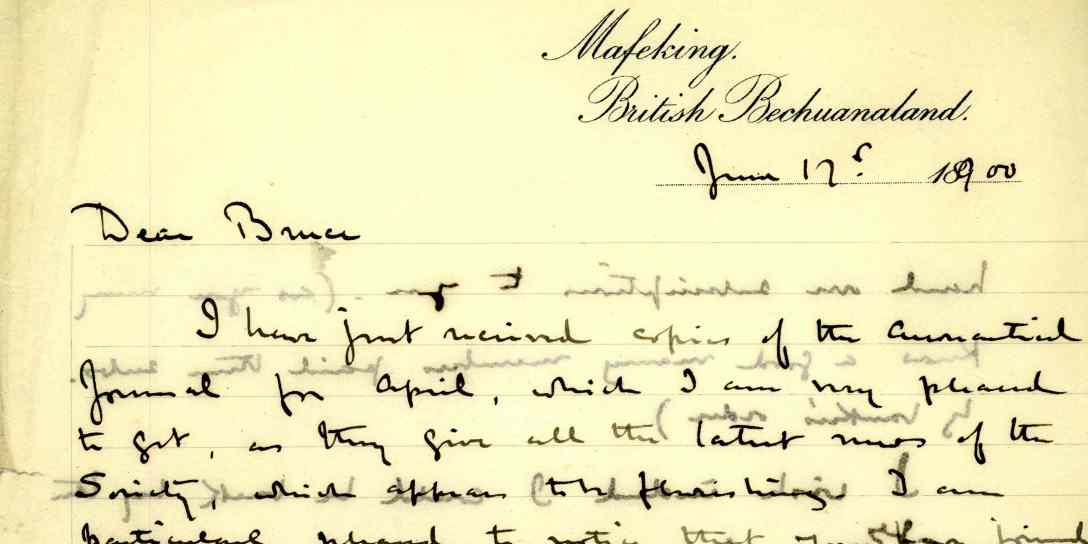
To whom it may concern: letters and log books, diaries and dispatches. LSG South Study Day, Wednesday 21 March

Join us for the CILIP Local Studies Group South Study Day 2018, which shows how fellow library, archive & heritage professionals have used innovative ways to highlight letters and log books, diaries and dispatches within their collections.

Date: Wednesday 21 March, 10.30am – 4.30pm

Cost: £40.00 + VAT  CILIP members; £50.00 +VAT non members

Buffet lunch and refreshments included.

Location: CILIP, the library and information association, 7 Ridgmount Street, London WC1E 7AE

Book now via Eventbrite.


Speakers/participants:

Jane Bramwell: Increasing access to Tate Archive: AnnoTate – A tool for crowdsourcing transcriptions

Frank James, Royal Institution, MOOCing Humphry Davy and editing his correspondence

Liz Finn, Kent Archives Service: Anna Maria Hussey; mycological illustrator: a project to transcribe and publish an e-book of a little-known diary of a holiday in Dover in 1836.

Norma Crowe, Medway Archives Office.  Insights into the Darnley family of Cobham Hall through their letters. Dramatised readings presented by Norma Crowe, Jean Lear and Christoph Bull.

Plus a break-out session on your projects, problems and solutions & the LSG South AGM


To book your place visit our via Eventbrite.

For more information contact Tony Pilmer via tony.pilmer@aerosociety.com.

Open access & local studies

Just over a year ago at the University of Leicester Library, we were looking at the download stats for our online PhD theses and noticed that a study of the village of Wrangle in the early modern period was the most downloaded item that month.

This got us thinking. Of all the open access theses and research publications in our online archive what is actually popular with users? Medicine and health related items do well, presumably from people searching for information on illnesses and conditions. The other studies that consistently attract downloads are those about a particular place. Broadly speaking these are from geography, archaeology and history.

Open access policy has been driven by the sciences and has tended to assume that freely available publications are an unproblematic ‘good thing’. It has paid less attention to what is popular, with whom and why.

Inspired by the example of Wrangle, we decided to explore creating a new resource to promote the open access local history material we had. The Centre for English Local History Theses Collection is the result. The website makes available all the PhD theses completed by students at the Centre for English Local History. The collection comprises 100 theses covering subjects from medieval moats to hunting in Northamptonshire. The full text is available to read and download in the majority of cases. Founded in 1948, the Centre pioneered local history as an academic discipline in Britain. Research students have been central to its activities, and the theses are important research publications in their own right. We hope that improved access and discovery tools make this collection a useful resource for local studies librarians, among others.

In design it is similar to the concept of an overlay journal which has been kicking around for some years. The challenge was to present the theses in an attractive and coherent way. We decided to use Omeka, a platform designed to publish digitised primary source material. However, we found it worked well for our purposes. As the pdfs were already hosted on another site, we could just point readers to the existing full text rather than uploading lots of files. This made the site much ‘lighter’ as a result. A range of plug-ins allows you to add extra features to aid discovery and interpretation, the most useful being the interactive map.

There are great free resources for local studies, but they tend to be collections of primary sources (like British History Online) or long-standing publication series (like Victoria County History). Recent research publications can be harder for the public to access, due to the cost of books and journal subscriptions. Some areas, such as archaeology, are also ‘messy’ with a large amount of grey literature and small society publication. There are journals like the Local Historian and Local Population Studies who made their archives freely available, but the discipline as a whole could have better coordination.

In principle then, the model we used could be applied more widely. Could we have a single website that allowed people to search and browse all the local studies publications in university repositories? It would need more people and resources that were used for this project, but it does seem feasible.

I would be interested to hear if others think this would be a useful resource, particularly for users of Local Studies Collections.

Dr William Farrell
Research Information Advisor
University Library,
University of Leicester

History is Revealed… at Bremhill

I had a room full of interested attendees for my first History Revealed day. For those of you who are familiar with our Interpretation courses at the History Centre, this is a variation on a theme. I would like to extend the scope of this type of event which to date has been reliant on the morning study session being within easy reach of the field visit in the afternoon, tying us to the Chippenham area. My grand plan is to use our wonderful public libraries as a base for the study session to allow us to explore further afield.
This was our first ‘test case’, although not much further afield I grant you! However, it did coincide with Calne Heritage week which was very fitting.

Calne Library proved a great venue for hosting the morning session where attendees enjoyed a presentation beginning with guidance on what to think about when tracing the origins of a village. I continued by explaining how to make the most of secondary sources, including material by local authors, academic works, the census, local directories and much more. Bremhill was used as a case study with examples and details highlighted to prove how much can be gleaned from these types of sources. They are a good place to start as the legwork has already been done for you!

I continued with a look at maps – the enclosure award was a big hit and rightly so, the field names in particular are fascinating to look at, especially when studied in conjunction with older and more recent written and map sources.

Bremhill Enclosure Award - small

My colleague, Archivist Ally McConnell, then shared a number of archive sources for Bremhill with the group, explaining just how they can be utilised for local history research. These included plans, school records, sales particulars and more.

We concluded the session with a look at a number of online sources which can aid research into village history and attendees got hands-on with a number of books available at Calne Library which can help with local history research in general and at Bremhill.

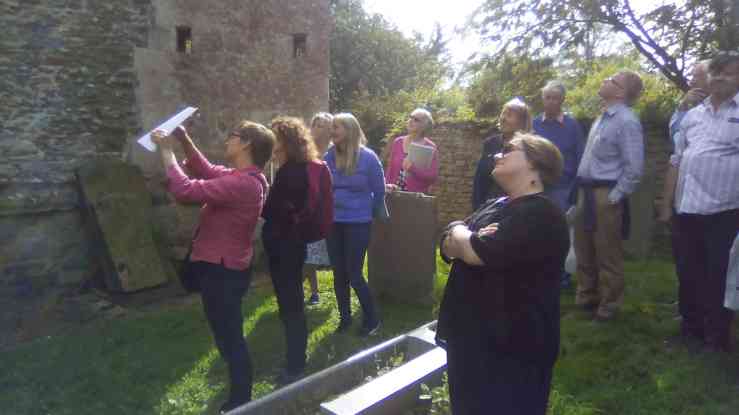
St. Martin’s Church was the site for us to reconvene and conduct our field visit in the afternoon, using the skills learnt to study the development of the village at first hand. It was a great opportunity to view the topography and see how it shaped the settlement, and to hear about the architectural history of the buildings from Dorothy Treasure of the Wiltshire Buildings record who joined us for the afternoon session.

IMG_20170906_150101 -small
The day was very well received with comments including “fascinating,” “very informative,” “useful guidance for future research,” with the attendees enjoying finding out about new sources that would be of use to them.

The morning session proved extremely successful, although it would have been nice to allow more time and have more space for people to view the library books and small amount original material brought over from the History Centre at the end of the presentation. The afternoon sessions always prove difficult to manage; people tend to congregate and chat in groups, but herding them along officiously doesn’t really seem appropriate! I’m not sure if there is a solution to this problem and if anyone out there has discovered one I’d love to know… However, it was a sign that everyone was enjoying the tour.

Many thanks also go to Calne’s Community Library Manager Jo Smith who helped organise the venue.

I hope to run two further History Revealed days next year in the spring and autumn but I haven’t yet planned which will be my next location – what do you think?

Julie Davis
County Local Studies Librarian
Wiltshire & Swindon History Centre

Designing e-learning packages on local history topics – advice needed

Just had this request for info from Julie Davis from Wiltshire…..

I am currently working with Wiltshire Libraries to design e-learning packages on local history topics such as finding maps and online resources to help refresh and train library staff. Have you or anyone you know tried to develop e-learning for local history? If so what were the pitfalls and where the courses useful?

Share your thoughts via the comments below, via Twitter, or contact Julie directly via @LibLocalStudies or Julie.Davis@wiltshire.gov.uk.

Alan Ball Awards 2016 book nominations

In the last three blog post on the 2016 Alan Ball Award nominees, LSG Chair Terry Bracher outlines the other excellent entries for the 2016 printed book awards.

Nomination for the 2017 awards closed a few weeks ago, so look out for more info on the 2017 winners and nominees in future posts.


Lambeth Architecture 1965-99; Edmund Bird and Fiona Price, with photographs by John East; -Lambeth Archives (London Borough of Lambeth) and Lambeth local History forum; 2015; ISBN 978-0-9926695-3-9

This is the fourth volume in a series on the architectural history of Lambeth. This publication records 260 notable buildings erected in the borough between1965 and 1999. The buildings are grouped by themes including public buildings, health, culture, transport, housing, commercial, ecclesiastical, public art, lost buildings and un-built post-war Lambeth. An introduction provides a sweeping context for the buildings; while entries include short histories, contemporary and modern photographs, architectural designs and models. The book is comprehensive guide to the building of this period that contributed to Lambeth’s rich and varied built heritage.


Redbridge and the First World War; Richard Greene; Redbridge Musuem; 2015;

A beautifully designed and illustrated book that uncovers some of the impacts of the First World War in Ilford, Wanstead and Woodford, in what is now the London Borough of Redbridge. It is based on research by the Redbridge Musuem, using local archives, photographs and family papers; and explores how the war affected local life, the international nature of the conflict, family histories of local residents and how people coped with the transition to peace. The book also follows the lives of local soldiers, but also provides space to consider the home front. It includes the local airfield used in the defence of London against Zeppelin raids, factories involved in the war effort, hospitals that treated wounded soldiers and the residents who provided homes for Belgian refugees; and insights into how the war affected the roles of women and the lives of children.

There is also an accompanying website www.rebridgefirstworldwar.org.uk which explores in greater depth different aspects of the war. This includes information on war memorials, local soldiers and the collections of archives, objects and photographs at Redbridge Museum.


Making Cars at Longbridge, 1905 to the Present Day; Gillian Bardsley and Colin Corker, British Motor Industry Heritage Trust; History Press; 2016; ISBN: 978-0-7509-6529-3

This book was originally published in 2005, but it was re-written, reshaped and updated in 2016. The factory was a major employer and an integral part of the community since Herbert Austin founded the Austin motor Company at Longbridge, near Birmingham, in 1905. It was subsequently the home to the British Motor company, British Leyland, Rover Group and MG Rover. The book focuses on the people that worked at Longbridge, their contribution to the factory and the factory’s role in shaping their working and social lives. It also charts the regeneration of the area since the closure of the factory in 2005, the rebuilding of both the community and economy. This publication contains many unique images from the official company archive.


From Riga to Rock Street and Other Journeys: A history of the Oldham Jewish community; Hilary Thomas in partnership with Oldham Local Studies and Archives; 2016.

This is the third in a series of publications about the Jewish community in the North West. In this book Hilary Thomas uncovers the hidden history of Oldham’s Jewish community form around 1870 to the present day. It presents histories and biographies of Jewish families and individuals connected to the local synagogue, businesses and professions, wartime and refugees; detailing their contribution to Oldham’s rich and diverse economic and social history.


The Accessibles; Manchester City Council and the Greater Manchester Coalition of Disabled People; 2015.

In the summer of 2015, Greater Manchester Coalition of Disabled People were approached by Manchester City council in partnership with Manchester Central Library to create a piece of work to celebrate UK Disability History Month. It focused on working with the young Disables People Taking Action Group, who decided to produce a comic that would look at disabled people’s contribution to Manchester and explore how disabled people are represented in the media. Working with local artist Jim Medway, members of the group portrayed themselves as characters in the book and used the notion of time travel to observe key events and visit people who had contributed to the understanding and portrayal of disability today. The result is a creative and engaging format that provides an introduction to the history of disability in the city.

One participant said “We’ve leant all about disability history, stories we didn’t know before. I liked research on where disability has come from, how it used to be viewed 100 years ago,” while others added “The team spirit has been great, and good how the comic book story has reflected our personalities and ideas … I’ve leant so much” and “I find history fascinating, so I’ve really enjoyed the research, especially the Victorian era and its use of language to describe disability. So different form today which is good.”


A History of Harrison, McGregor and Guest of Leigh; Tony Ashcroft and Becky Farmer; Wigan Archives Service; 2015

Leigh in the county of Lancashire became known for its coalmining, cotton production industries and agricultural machinery. The most recognised agricultural engineering business was Harrison, McGregor and Company, founded, in 1872, based at the Albion works. The company achieved a worldwide reputation for manufacturing mowing machines and other farm machinery.

This book was produced using company’s archive, held by the Wigan Archive Service, and gives insight into how Harrison and McGregor’s successful business was established and how it evolved in making the company a success – from directors to employees – and gives an overview of the types of machinery produced by the business. Although nothing remains of the Albion works today, this book ensures that Harrison, McGregor and Company’s contribution to the economy and heritage of Leigh is documented for future researchers.

The book was created by Tony Ashcroft (former Leigh Local Studies Officer) and Becky Farmer, Wigan Archive’s Skills for the Future Digital Archives Trainee.