Nominations for Local Studies book and e-publication Awards close on Saturday!

Just enough time to put your project forward for the Alan Ball Award for Local History publishing. Once again there are categories for the best printed and the best digital publications released, this time published between July 2018 and June 2019.

The award is open to all heritage and community organisations involved with some aspect of Local History and who receive or have received public funding for the publication. This also includes lottery funding, e.g. Heritage Lottery Fund and Awards for All. In addition to local authority libraries, archives, museum and archaeology services; it includes small local museums, heritage centres and community history projects.

For the hard print prize, we would like a hard copy of any printed item you submit together with a paper entry form to: Terry Bracher (Chairman of CILIP LSG) c/o Wiltshire and Swindon History Centre, Cocklebury Road, Chippenham. SN15 3QN. Don’t worry if the post won’t get it there in time, we’ll accept nominations posted by the end of the month.

For online resources, please complete this e-form, or send any CDs or DVDs together with a paper entry form to Terry Bracher (Chairman of CILIP LSG) c/o Wiltshire and Swindon History Centre, Cocklebury Road, Chippenham. SN15 3QN.

Oral History and Sound Heritage Conference – Philippa Lewis

We thought we would do a report on our conference, but then we found Philippa from ARA did if for us:

josephhettrick's avatarThe New Archivist

At the beginning of July I attended the ‘Oral History and Sound Heritage Conference’ hosted by University of Leicester Library.

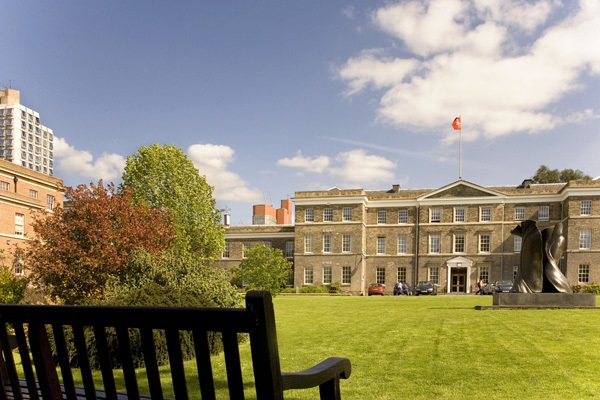
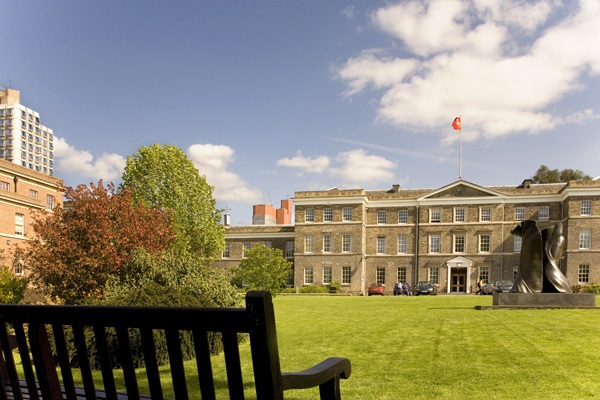
University of Leicester campus - (copyright University of Leicester) University of Leicester (image courtesy of University of Leicester).

Although presented by CILIP (Chartered Institute of Library and Information Professionals) Local Studies Group, the conference was intended as an opportunity for those working with oral history and sound collections across libraries, museums and archives to get together and share their experience.

I was keen to attend this conference having conducted a number of oral history interviews as part of my role as Project Archivist for the ‘Working Together’ project based at the National Co-operative Archive in Manchester. This project aims to capture and preserve the heritage of the workers’ co-operative movement 1970s-1990s, with a key part of this focusing on recording the memories and experiences of individuals involved in the movement. As this was my first time working…

View original post 590 more words

Local Studies toolkit

There has not been any published guidelines for delivering and developing Local Studies collections and services since the late 1990s. The Local Studies Group of CILIP, which is an active Special Interest Group, is now looking to create an online toolkit for Local Studies Librarians and other colleagues who work with Local Studies Collections.

We are hoping to create guidance and signposting for a variety of Local Studies Sources, including digital outputs; as well as case studies of Local Studies activities that engage a wide range of audiences both in the community and digitally, sharing knowledge and good practice. The toolkit will be available through the CILIP website.

As this will effectively be the first such toolkit and guidance published for 20 years this would also be an excellent career development and CPD opportunity for CILIP members working in Local Studies. We are looking for 3 to 4 colleagues to help us and we will look to build the toolkit gradually. The time commitment will mostly be deskbound with email or Skype correspondence between group members, with very occasional meetings. If you would like to be involved or want some more info, please contact Terry Bracher – terry.bracher@wiltshire.gov.uk or Tony Pilmer. We would love to hear from you.

The Joy of Ephemera

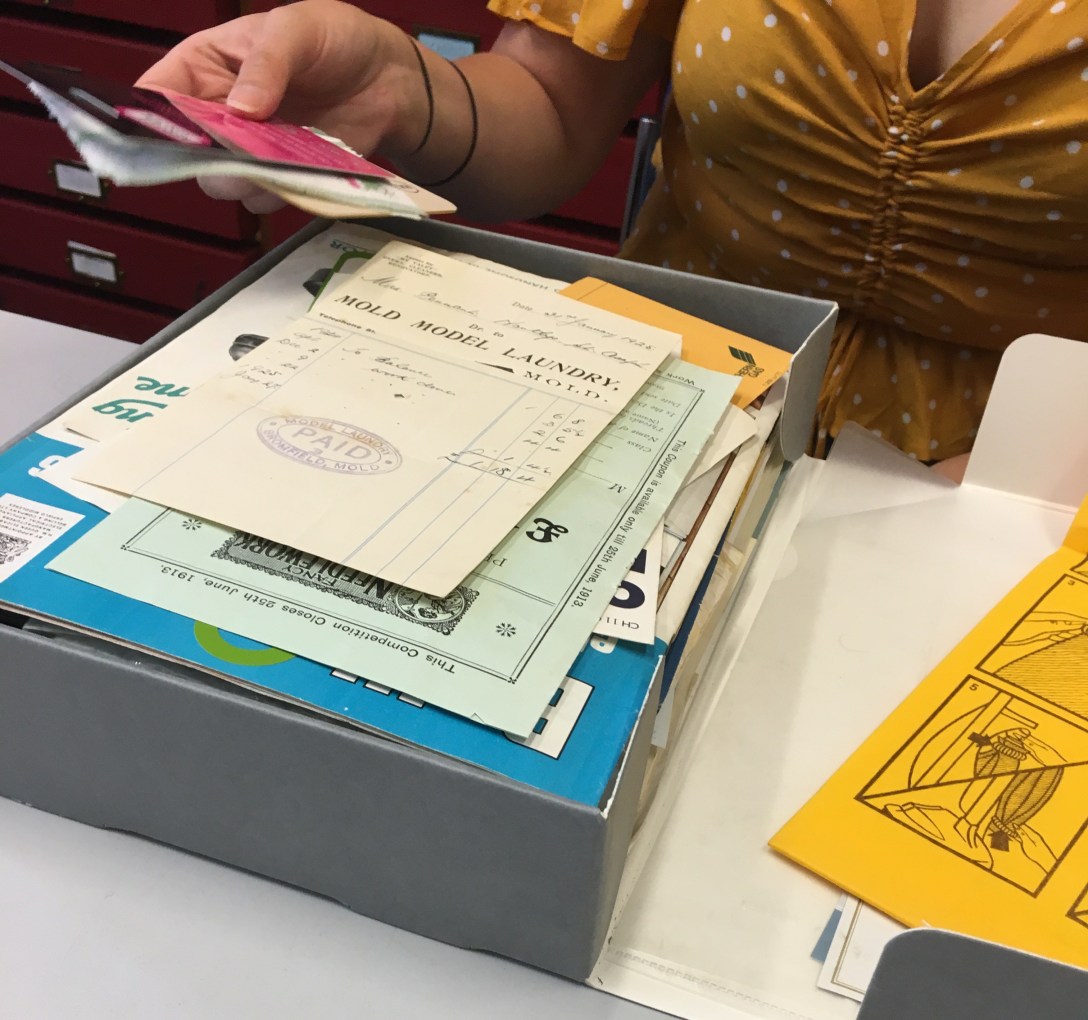
I and two colleagues from the History Centre and Salisbury Library were lucky enough to pay a visit to the welcoming staff and volunteers at the Centre for Ephemera Studies at the University of Reading recently. I’d like to help spread the word about this wonderful collection!

Housed in the Typography and Communications department, the Centre originated with the work of Maurice Rickards, a great collector of ephemeral material until his death in 1998. Maurice was determined to demonstrate the diversity of ephemera and its potential for study. He collected 20,000 items for use by researchers and students at the University. The Centre was inaugurated by Lord Briggs in May 1993. Asa Briggs, the distinguished social and cultural historian, had long been an advocate of the study of ephemera and agreed to become the Centre’s first Patron.

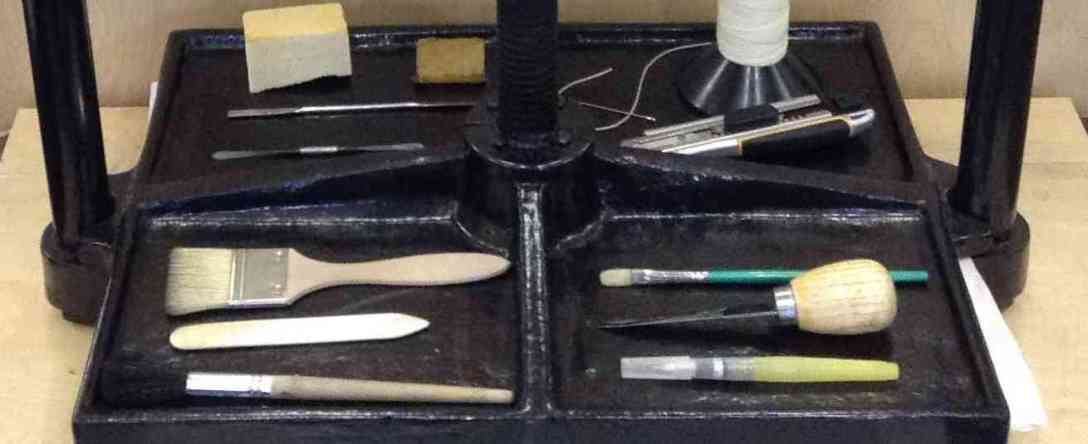
Our visit began, perhaps as it should, at the very beginning of the printing process, viewing the department’s current exhibition on the history of printing including its very own replica handmade traditional wooden printing press similar to the one that was used in Europe by Gutenberg in the 15th century, built by a researcher. Experiments had been done using this press with inks and paper to recreate a page from the early printed bible and other texts. We were also shown later letterpress, intaglio and lithography presses which the Typography and Communications students are allowed to use to great effect for their research projects. I can tell you that the smell from the ink and those metal machines was wonderful!

We moved on to meet the Centre’s Director Michael Twyman and long-term volunteer Amoret Tanner who talked us through the history of the collection, which has expanded massively since its early days; how the collection is managed and arranged. The material is sorted first before being categorised on ephemera database sheets and moved to its permanent housing in flat archival storage boxes. Items are grouped according to topic and are mounted on boards using archivally approved materials to protect them as they are often single bits of paper which can be quite fragile.

A thesaurus of ephemera types is used to ensure consistency, and the team are working with the Bodleian Library and European partners towards ensuring consistently over Europe in future years. The Centre proactively looks at current trends and new topics to add to the collection.

The collection is proving to be of huge value to students, researchers; even an interior designer has found a wealth of material as inspiration for their designs. English literature, history and social history are all represented here. The team at Reading are also involved with the Ephemera Society (www.ephemera-society.org.uk), internationally recognised as the leading authority in this field and concerned with the collection, conservation, study and educational use of printed and hand-written ephemera.
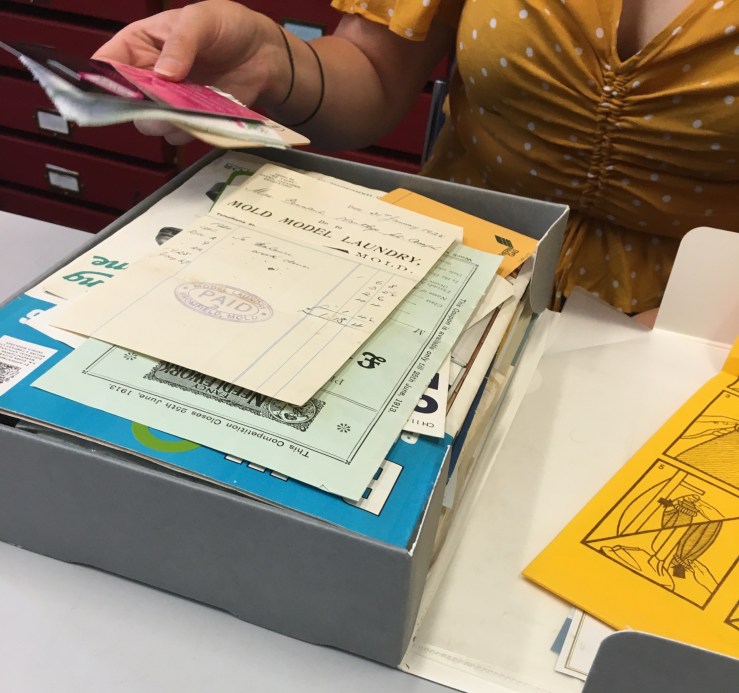
image00034.jpeg

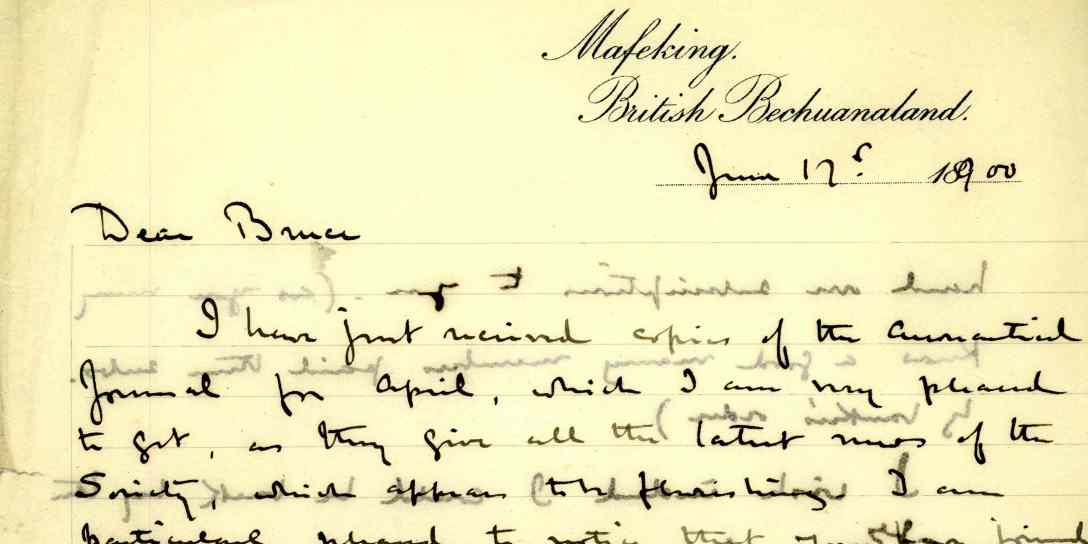
Rickards himself noted that ephemera is ‘the minor transient documents of everyday life’. It is material that is often thought of as inconsequential, easily forgotten and thrown away, but in fact it can prove to be a fascinating source of treasures which help to chart the history of who we are. It is the aim of the Centre that visitors are able to feel at ease with the collection, to make a connection with the material of all shapes and sizes in order to bring history alive, as it most certainly did for us.

The sheer variety of items ranging from beer mats, dance cards and greetings cards, invitations, bills, letters, posters, public notices and even an envelope with a feather marking the advent of ‘express delivery’ was breathtaking. It was exciting and rewarding for us to have the opportunity to connect with others and share the joy and wonderment that is ephemera in all its glory. Many thanks go to Laura Weill the Assistant Curator for giving us the opportunity to visit and find out more. We will certainly be looking to expand our collections at The Wiltshire & Swindon History Centre and at Salisbury Library, and to show others just how fascinating they truly are!

The Centre has an online exhibition showcasing the different types of ephemera at http://a-z-ephemera.org/

You can visit the Centre for Ephemera at Reading by appointment, contact ephemera@reading.ac.uk for further details.

Julie Davis
County Local Studies Librarian
Wiltshire & Swindon History Centre

Visit the Catalyst Science Discovery Centre, Widnes. An event from CILIP Local Studies Group North West. 20 September 2018, 10.30 – 13.00.

This free event from LSG NW provides a chance to visit this exciting venue and its newly-opened Science Discovery Centre. It includes a talk from Dr Diana Leitchwill on the history of the chemical industry and a viewing of archive material with Archivist Judith Wilde. There will be a short AGM for LSG NW members following the visit.

The visit free but places are limited! For more information on Catalyst including location details visit http://www.catalyst.org.uk.

Booking is essential. To book and for more information please contact Andrew Walmsley.

To whom it may concern: letters, log-books, diaries and dispatches, a report from the 2018 LSG South Study Day

What do an amateur mycologist, a brilliant early 19th century lecturer, dozens of British artists, a keen explorer & botanist, and a leading cricketer all have in common, apart from appearing in the Oxford Dictionary of National Biography?

Well, they all featured in the 2018 Study Day organised by CILIP Local Studies Group South, because local studies librarians and archivists have been inspired to devise innovative ways of making their lives and times as revealed in the letters and note-books they left behind better known to a wider audience.

Through the AnnoTate project (https://anno.tate.org.uk), the diaries, letters and sketchbooks held in the Tate Archives have been digitised and are now being transcribed by volunteers so that the wealth of information they contain about the lives of these artists and their creative processes can be made more widely available.

While mycologist and botanical artist Anna Maria Hussey was on holiday in Dover in 1836 with her two small children and sister Kate, she kept a diary which she illustrated with sketches to entertain another sister, Henrietta. The diary has survived and is now in the Kent History and Library Centre. When looking through the diary to catalogue it, archivist Liz Finn quickly realised that it would appeal to a wider audience and embarked on a quest to get it published. Sad to say, her original vision of a printed publication has yet to be realised, but Kent’s library users can now borrow Botany, boats and bathing machines as an e-book. Liz also appealed successfully for an article about Anna Maria to be included in ODNB – see https://doi.org/10.1093/ref:odnb/96688. Liz’s account of her project is due to be published in the Summer 2018 edition of Local Studies Librarian.

Joseph Dalton Hooker (1817-1911) was an important but often overlooked botanist and explorer who in later life succeeded his father as Director of Kew Gardens. His personal and scientific correspondence is being conserved, digitised, transcribed and made available online by the Kew Archives and we were fortunate that one of their team was attending the Study Day and told us about this project during the Open Forum. To find out more about the Joseph Hooker Correspondence Project, visit the RBG Kew blog.

The inventor Sir Humphry Davy, who became Professor of Chemistry at the Royal Institution when he was in his early twenties, was one of the most popular lecturers of his time. Some of Davy’s chemistry lectures would probably fail H&S scrutiny today, and perhaps as a result of this, the re-creation of some of his most famous experiments for the Royal Institution’s MOOC (Massive Open Online Content) online learning course about Sir Humphry Davy has attracted over 2000 subscribers since the course was launched in Autumn 2017. The Humphry Davy MOOC is on https://www.mooc-list.com/course/humphry-davy-laughing-gas-literature-and-lamp-futurelearn ; information about the Davy Letters Project is on www.rigb.org/about/heritage-and-collections/heritage-projects/davy-letters; and the database of letters written by Sir Humphry Davy and his circle is on http://www.davy-letters.org.uk.

The Study Day concluded with two dramatic performances based on resources from the Darnley Archive 1537-1974 now held at Medway Archives. The first, Little Lord Clifton, is based on letters exchanged in 1775 between the young heir at boarding school and his parents. The second tells the story behind the origins of The Ashes, with which cricketer Ivo Bligh, eighth earl of Darnley (1859–1927) was associated. An article about this project is due to be published in the Summer 2018 edition of Local Studies Librarian.

If you have suggestions about topics or projects which might be of interest for future Study Days, do please contact the LSG South committee via the blog contact us page.

Want to find out more about the LSG South Study Day? View the speakers’ slides online or read the Report on CILIP LSG Sth Study Day 2018.

Stella Wentworth

July 2018

Local Studies Librarian of the Year Award – nominations open now!

Do you know a Local Studies Librarian that has gone the extra mile? Have they pioneered an amazing project or given a career of excellent service to their community?

If you do, nominate them for the 2018 McCulla Prize, the annual Local Studies Librarian of the Year Award.

We welcome nominations from colleagues, local historians, family historians and anyone who knows a local studies professional who has made a difference.

To nominate, please complete form below.

Any questions? Please contact Alice Lock via alicelocalstudies@outlook.com

Nominations close on 28th September 2018 and nominations received after this date will be considered for the 2019 award.

Go back

Your message has been sent

Warning
Warning
Warning
Warning
Warning
Warning
Warning
Warning

Warning.