
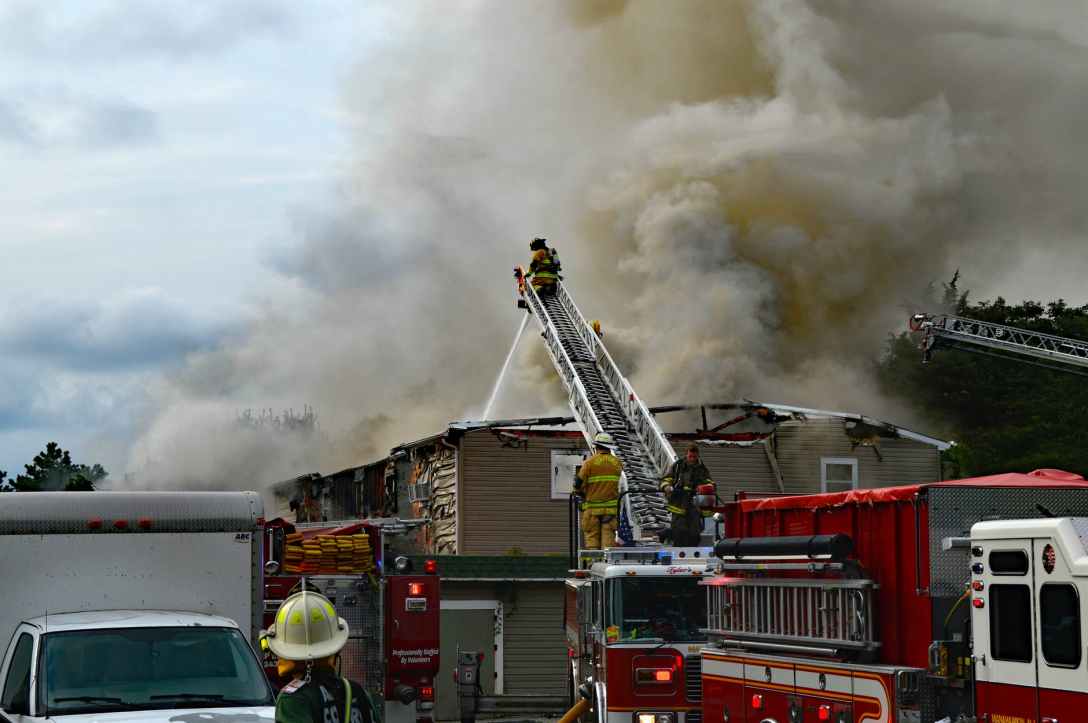
An emergency plan can be deployed alongside a business continuity plan and in some areas they will overlap. But whereas the business continuity plan should enable you to maintain your service during a period of disruption in a range of situations; an emergency is defined as any incident which cannot be contained, or which threatens any part of the Local Studies building / space or its holdings. Your emergency plan will most likely relate specifically to your collections and building, but it could be part of a wider organisational response, especially if the Local Studies library is housed within a building that delivers other services e.g. a central library or local government offices. But is essential that Local Studies collections and archives are recognised as requiring specific responses during an emergency.
The Emergency Plan should have the following objectives.
- Increase staff awareness of potential hazards and the circumstances in which an emergency arising from them might occur.
- Procedures set out in the Plan are intended to minimise the damage to the collections, should an emergency arise.
The Plan should be based on the essential aspects of emergency control: response, management and recovery. The two major emergencies are fire and flood. Security implications must also be taken into consideration.
The Plan should consider the firefighting equipment and emergency exits of your building. Is your building is fitted with automatic fire detection and intruder alarm equipment? How is the fire brigade contacted? Note that some fire brigade services no longer respond to automated calls during office hours. Do you have fire extinguishers – to suit a variety of different types of fires available in every room or area? The safety of the staff and public is a paramount consideration. Staff should be instructed to only fight a fire when they are certain that it can be put out straight away. (NB you should incorporate your own organisation’s guidelines within this)
Flood prevention is of equally vital importance to fire prevention. Water is the most common source of damage to the holdings of libraries, archives and museums. Most water damage occurs from burst pipes or the aftermath of a fire. Unless your building is fitted with a flood alarm, flooding is much more difficult to detect than fire, and could wreak havoc for hours or even days without detection.
Priority Recovery Plans for Local Studies Services and collections should be drawn up that prioritise material for recovery. Ideally copies should be supplied to the fire brigade, any conservation services you may use, senior managers and duty managers.
Consider subscriptions to specialist salvage and conservation companies, including out of hours emergency cover and bulk freeze drying.
Quick steps for creating an emergency plan
Divide your plan into two parts: 1) Immediate Action and 2) Prevention
Immediate Action:
- Emergency facilities – note the locations of emergency systems – main utility controls (e.g. water mains stop tap, electricity and gas shut off), fire suppression systems (extinguishers, blankets, hoses etc.), keys, first aid kits.
- Emergency contacts – do you subscribe to a recovery service for damaged collections? Add other important contacts such as alarm companies, cleaners, your organisation’s emergency planning and facilities teams etc.
- Salvage priorities – establish which parts of your collection / building are most important to salvage if everything cannot be saved.
- Immediate action procedures – create flow charts or action plans for specific threats: Fire and flood; theft; loss of power, ICT or water supply.
- Major incidents – what is the worst-case scenario, how would you need to deal with this?
- Create a salvage plan – management and procedures, contacts / subscriptions for salvage specialist organisations.
- Create templates for incident logs and situation reports – this will save time when you are dealing with a live situation.
- Where is your emergency plan kept? Is it accessible if you cannot get into your building or log in to your computer?
Prevention:
- Security – what systems do you have in place and are they adequate?
- Flood – are any water pipes and radiators close to your collections, do you know how to turn off the water supply; do you have mops, towels, buckets, and plastic covering readily available?
- Fire – are smoke detectors and fire alarms tested regularly, do you have suppression systems, know the location of extinguishers and which ones to deploy? Avoid the accumulation of rubbish, cardboard, dust etc.
- Storage – consider how material is kept e.g. sufficiently above floor surface to avoid flood damage, in archive boxes and cabinets that can act as barriers to water and fire damage; is the room / building environment (temperatures / humidity) sufficient to avoid gradual damage to material?
- Salvage – do you subscribe to a salvage service? If not, what plans to salvage material damaged by fire and flood do you have?
- Staff training should be considered for an awareness of the emergency plan such as utility supply points, fire evacuation procedures and extinguisher points, flood and water damage, basic salvage techniques, security, and vigilance.
Below are more details on how to create an emergency plan:
Scales of Emergency
It is useful to consider different scales of incidents that will help you decide what the appropriate action is. For example, the Wiltshire and Swindon History Centre uses the following grades:
Grade 1 An incident that can be dealt with from the service’s resources. Amount of damaged material: Archives: 1 – 20 boxes or Library Service: One bay of books, one drawer of photographs and one microform cabinet.
Grade 2 An incident that can be dealt with from each service’s resources, with assistance from wider organisation. Amount of damaged material: Archives: 20 – 100 boxes or Library Service: Two bays of books, two to four drawers of photographs and two microform cabinets.
Grade 3 An incident that cannot be handled by your organisation and outside assistance from external conservators and agencies is required. Amount of damaged material: Archives: 100 + boxes or Library Service: Three bays of books, two photograph cabinets and three microform cabinets.
What to include in your emergency plan:
Emergency telephone numbers –
- Emergency services – Police, Fire Brigade, Ambulance
- Fire and intruder alarm contacts
- Facilities Management Team for your organisation
- Out of hours security / emergency contacts
- Utility companies – water, gas and electricity
- Emergency conservation recovery contracts – e.g. bulk freezing, specialist book, archive and museum conservators
- Salvage contacts
- Internal – Emergency planning team; Business Continuity Team, Communications, Insurance, Transport.
Location of Emergency Plan copies – who has copies of your plan and where are they held. NB some copies should be held outside of your building. Managers should have easy access.
Emergency Procedures: what are your procedures if an incident occurs? Do you have flow charts or easy to follow steps? The following might be included:
Action in the event of theft or vandalism
- Contact police / crime number
- Collect witness statements / CCTV footage
- Appoint a recovery coordinator
- Contact organisation’s insurance team
Action in the event of a fire
- Appoint a fire marshal(s) and staff responsible for evacuating Local Studies area and create an evacuation plan. These should be your normal fire procedures.
- Do you have a priority recovery plan?
- Have fire grab-packs near fire exits that include your emergency and business continuity plans, building plans – including fire refuges and identifying higher risk collections / priority recovery plan.
- See salvage below for water or fire damaged items
Action in the event of a major flood.
- Do you have access to equipment to alleviate flooding e.g. mops, buckets, sandbags etc.
- Do you know where to hire water pumps?
- Hold a store of polythene sheeting for carrying or covering potentially vulnerable items
- A plan to remove vulnerable items (see also salvage)
- What alternative storage can you access?
Action in the event of loss of power, ICT or water supply
- Refer to Business Continuity Plan
- Do you have torches / mobile phones etc. and where are they located?
- Have an evacuation plan for staff and customers from dark areas such as repositories, lifts etc.
- Can a member of staff access the website remotely to update customer information?
- Power failure – it is a good idea for staff to turn off all electrical equipment at sockets.
- Water supply – it is a good idea for staff to turn off all taps and stop cocks and be prepared to enact flooding emergency plan when water supply returns.
Major incidents: It is worth including in a flow chart actions you would undertake for major incidents, this might include:
- The primary duty of the Directing Officer in this phase is to make the premises secure
- Have a priority recovery plan
- Can the building / Local Studies collection be secured – how will you do this?
- Key contacts such as your organisation’s emergency planning, health & safety team and insurance teams; services for salvage and securing the building.
- Reference your business continuity plan – especially regarding alternative accommodation.
- Media protocols
Salvage management
One the disaster is over, the process of limiting the damage from the incident begins. There are a number of things to consider when drafting the salvage section of your emergency plan:
- Salvage generally cannot begin until loss adjusters have assessed the site/damage.
- The Directing Officer must acquire secure premises in which damaged material can be sorted for transfer to the appropriate specialists for treatment.
- If the scale of the incident is very large rotas for salvage teams will need to be drawn up.
- Great care must be taken when lifting wet materials and manual handling training should be provided. All staff involved with salvage must wear appropriate Personal Protective Equipment. Mould can grow very quickly in high humidity and respirators (face masks) should be worn.
- Recovery Co-ordinator and will direct the personnel available to undertake the primary task of recovering damaged material and objects. They should check the list of priority salvage items and will undertake these first if possible.
- Your insurance team need to have a list of library material damaged or destroyed at the earliest opportunity.
- Are contracts in place for the use of a Drying Restoration Service?
- An early call to such a service should be made to enable their staff to co-ordinate the recovery of damaged material. These services will usually supply transport with crates within 2- 4 hours of calling and arrange for blast freezing. 24-hour emergency access is often available. They can provide the following:
- Expert advice from a drying specialist
- On-site assessment of water-damaged materials
- Packaging and freezing water-damaged materials
- Arrangements for refrigerated transport.
- Use of purpose-designed refrigerated storage facilities.
- Use of specialised techniques for drying water-damaged materials.
- Staff should familiarise themselves with the layout of the building so that they can point out potential hazards, as well as the locations of fire and intruder alarm installations, fire extinguishers, water isolation valves, electricity and gas isolation switches and external doors.
Salvage procedures
- Always photograph the item in situ of the incident, when recovered and during work on it. Disposable/one use cameras will be kept in the Emergency Store. The item should also be photographed after treatment as a record. Ensure there is a good supply of emergency treatment forms.
- Always ensure that any labels or markings are kept with the item for identification.
- Crates must be colour coded to denote type of damaged material they contain. Trolleys are required to transport crates.
- Where masses of material are found stuck together, there should be no attempt to separate them.
- If material is stuck hard, it is better frozen and then freeze-dried when it will separate more easily.
- Do not turn archive boxes upside down to empty them. This will result in damage to contents.
- Any washing off of mud etc. This must only be done on the instruction of a conservator.
- Some single leaf material may be suitable for air-drying. It should be taken to a drying area, in crates if necessary, after being recorded.
- Material to be frozen should be packed in plastic crates, separated by polythene bags or sheets.
- Maps etc. too large for the crates should, where possible, be packed in layers of blotting paper and polythene between boards to be sent for freezing.
- Material with inks and pigment affected by damp should not be covered but kept flat and taken to a conservator for advice.
- Air-drying of material should only be carried out under the supervision of archive conservators.
- When investigating for wet damage, keep the wet material in the box, support the base of the box when moving to a crate, and despatch for freezing. If the box is wet but the contents are not, then re-box.
Drying different materials:
Parchment and Vellum
- Flat sheets. To air dry – place between sheets of release paper and blotters and dry under light pressure or lay out on release paper with a weight at each corner (with release material between weights and document). To freeze – interleave with polythene and support between stiff card taped together.
- Rolled material. To air dry – unroll and treat as flat material. To freeze – roll around tube if possible, interleaved with polythene so that the skin cannot stick to itself or the tube.
- Skin covered books. To air dry – close book. Dry flat under light pressure. To freeze – treat as other books.
- Books with parchment pages. If pages are wet and stuck together prepare for freeze-drying. If slightly damp and easily separated interleave and dry flat under light pressure.
Bound Books
- Remove carefully from shelves, taking the wettest books first, but try to remove them in order.
- Do not open any books unnecessarily.
- Wash off any mud or solids on the outside of the binding with handheld sprays.
- Water damaged books printed on coated paper must be interleaved at every page.
- The conservator should decide if the book is to be frozen or air dried and, after the details have been entered on the Emergency Treatment Form, it will be placed in the appropriate plastic crate which should carry a number.
- Pack wet books in the crates upright. They may either be individually packed or separated from each other and the crate by polythene sheets or bags. Put as many books as possible in each crate so that they support one another and thereby minimize distortion.
- When full, the crates should be removed for transport to the freezer.
- Folio volumes etc. should be individually packed and labelled and carefully stacked flat for transport to the freezer.
Photographic Material
- Immerse all water-damaged microforms in buckets of cold water for transport to the processing laboratory.
- Immerse water-damaged photographs (including glass-plate negatives) in their wrappings in cold water. Then when drying space is available, remove wrappings and wash prints or plates in cold water again. Layout on absorbent paper, emulsion side up, for air. Note that collodion wet plates, ambrotypes and tinotypes should never be frozen.
Prevention measures
It is always better to stop an incident from occurring in the first place, so consider:
- Security – minimise the possibilities of theft when the Local Studies building is open and reduce the opportunities for unauthorised entry when closed. Do you have an intruder alarm system and high visibility CCTV? Do you record access to non-public areas and sign keys in and out? Can volunteers, contractors be easily identified for non-authorised access? Are public space invigilated?
- Fire – Has your building / service been appraised by fire safety inspectors and your internal health and safety teams? Ensure actions resulting from inspections are recorded. Are fire alarm tests on a regular basis? Are fire extinguishers tested/ serviced regularly? Are electrical circuits tested? Is rubbish removed regularly and are fire exits kept clear? Do you liaise with your local fire service and are they familiar with the building? Identify and clearly label priority areas for saving if all the fire cannot be extinguished.
- Flood – ensure the regular clearing of roof drains. Any leaks that are observed should be reported. Any roof leaks observed above books, archives etc should lead to objects under threat being removed. Where bookshelves and large objects cannot be moved then they must be covered by plastic sheeting. Staff should be encouraged to be vigilant in looking out for evidence of water or damp in unusual places. Stopcocks should be checked once a year to make sure they are working.
- Storage – If you have strong rooms or secure storage, environmental conditions should meet those recommended in BS 4971:2017 Conservation and care of archive and library collections. Regular checks of temperature and humidity must be made and deviations investigated. Microforms, maps, photographs and ephemera should be stored in steel cabinets. Photographs and older ephemera (pre-1960) should be in acid-free polyester sleeves. Volumes/books, pamphlet boxes and journal boxes should be shelved tidily and set back slightly in the shelves. This will hamper the spread of fire vertically from shelf to shelf. In a flood, water will cause tightly packed books to swell to a point where they burst from the shelves. More information on storage can be found in the conservation part of the Local Studies Toolkit.
Further Reading
Caring for archives – The National Archives
Got something to add?
Do you have any comments, suggestions or updates for this page? Add a comment below or contact us. This toolkit is only as good as you make it.

 CILIP Local Studies Group