
Most of us will have examples where items in our collections aren’t what they seem – a photo is not of the place where it says it does on the back; a book has a map which may be a little dubious and fanciful; or a book may have information which isn’t backed up by footnotes or other indications where it came from
I’ve been caught out a few times at events. In Derby I was showing a group round on a tour and had photos of their village out to show them examples of what we held in the library, but they immediately said some of Well Dressing photos I had out couldn’t be their village as the theme was religious and their village never did those, even if the back of the photo said it was that village.
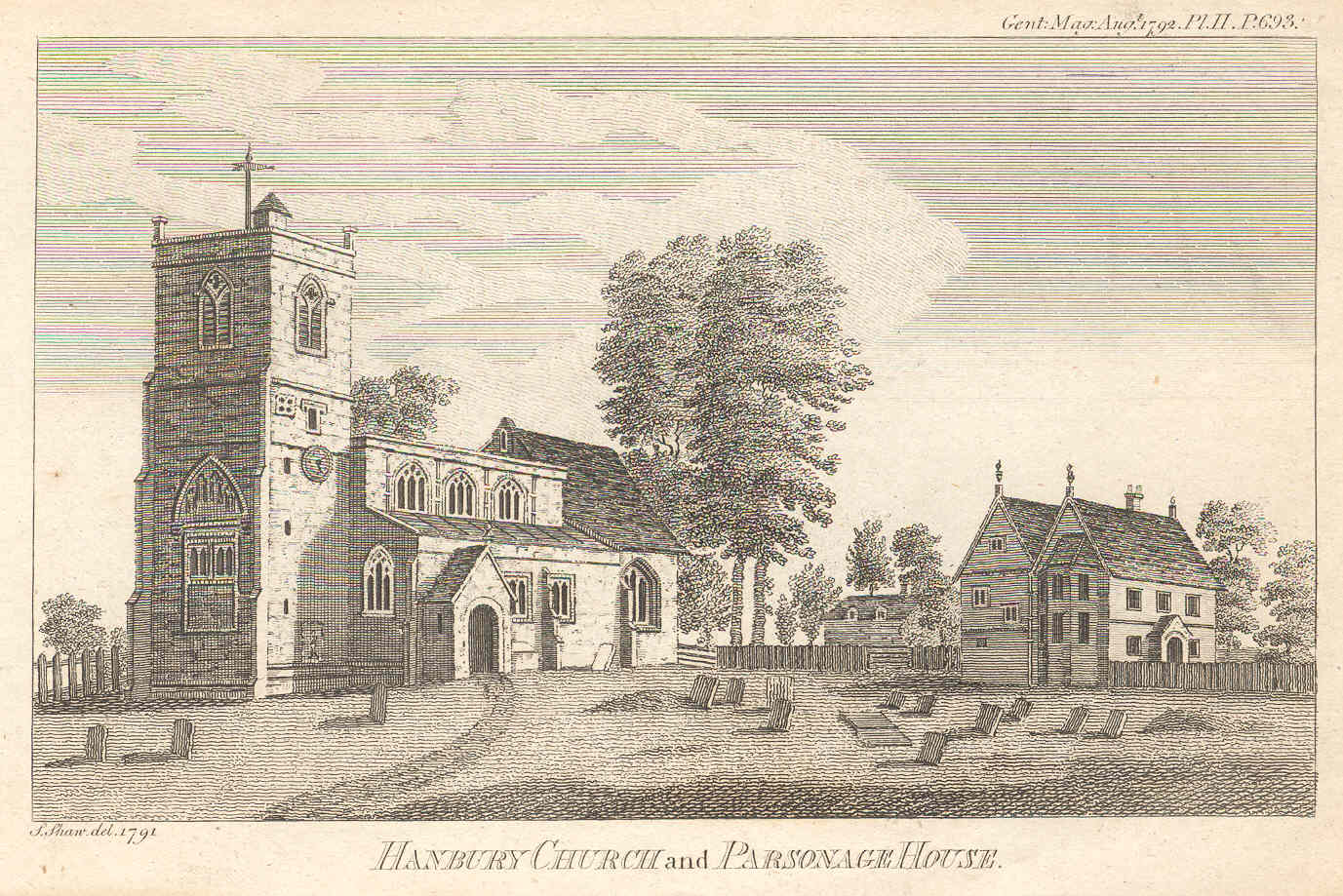
Speaking to Hanbury WI in Worcestershire I showed them various images on powerpoint, including an engraving of their church (which also doubles as St Stephen’s in The Archers!), which they all insisted wasn’t Hanbury Church. A little embarrassing! This was a bit strange because the actual engraving said it was. Was it pre Victorian alterations, with a bit of artistic licence thrown in? Then someone, when I mentioned this story to them later, said they wondered if it was a different Hanbury. I searched the internet, and yes it is Hanbury Church in Shropshire, not Worcestershire. Someone obviously came across the engraving and passed it to us, assuming it was our Hanbury and we added it!
Sharing on social media opens up the possibility of people sharing their knowledge and letting us know if we’ve got anything wrong. What we thought was a photo of Broadway Railway Station which we put online is in fact Harvington Railway Station – the former was double lined and the latter single lined, so the description was obviously wrong and we’ll update.
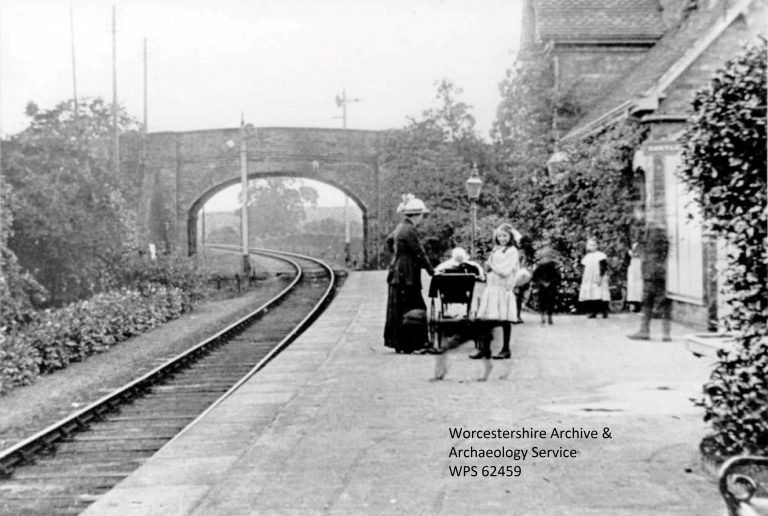
As none of us are experts on our entire area we’ll all have plenty of times when we need to go with what something is labelled as.
I recently came across another image wrongly titled, but one created 100 years ago and with the location printed on a published postcard. For the WWI Centenary in among the many images we used during exhibitions and projects was one of the Julian Tank in Gheluvelt Park Worcester. The Julian tank toured round the country helping to collect money from the public for the war effort. It would attract big crowds who flocked to see this new-fangled contraption, and it was ideal for encouraging donations to the Tank Fund.
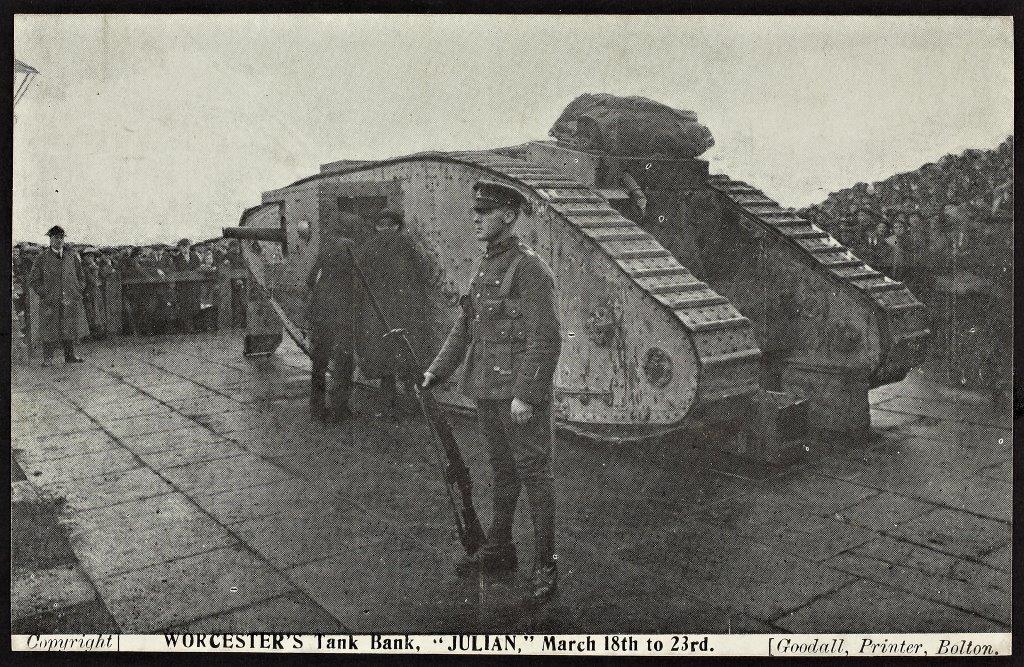
Goodalls of Bolton produced postcards of the visits of the tank to the different towns. Except… they are not Julian and they are not of the place they say they are. I came across this when researching it to add information alongside the photo recently. The full story can be found on a website (warning – rather colourful language!). It seems Goodalls did the 100 year old version of photoshop, taking out distinctive backgrounds, and adding names of places and dates to the image to sell as postcards around the country! Apparently, the exact same image can be found with numerous town names printed on. You may have one in your collection! It shows you can’t always take what is printed on a postcard at face value. So it looks like we’d been incorrectly using it during centenary events.
So, as we have probably all found out, things aren’t always as they are described.

 CILIP Local Studies Group