
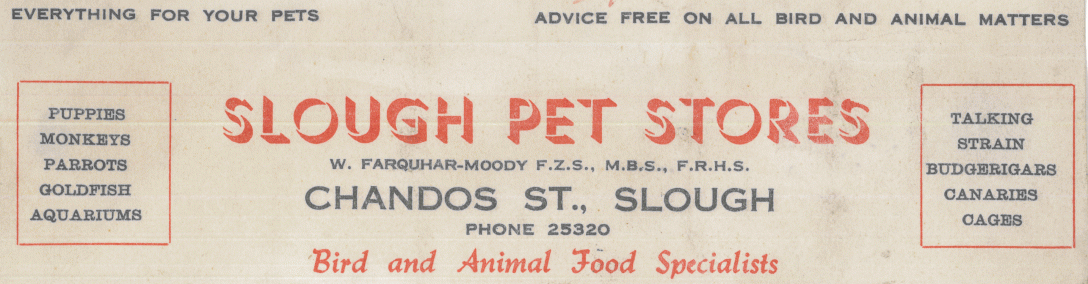
the minor transient documents of everyday life
Maurice Rickards, founder of the Ephemera Society.
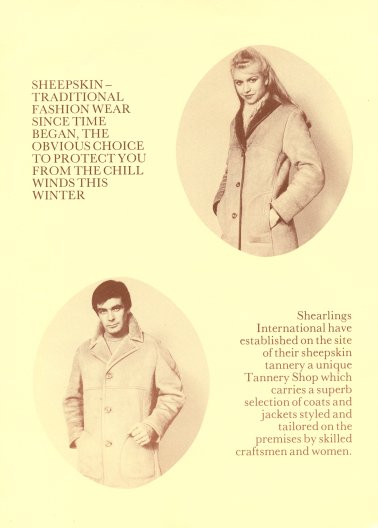
Ephemera can give a real insight into what everyday life was like within a given period often in a very visual way, so it is useful both to the serious researcher and those with no particular interest in a subject but are attracted to it by its design and then want to find out more about the subject or period of time. It can add to what is known about a subject or be the only record that an event has taken place, and therefore be invaluable.
What is ephemera?
Ephemera is a term usually used to describe single paper items, produced for example to promote a one-time only event or created for a limited time period, with the eventual intention of being thrown away once the time period has passed. In most collections, ephemera dates from the nineteenth century onward, although earlier examples can be found particularly in special collections.
There are many different types of ephemera but they usually fall within three main categories:
- Items produced for a practical purpose, for example; bus or rail timetables, tickets, theatre or musical programmes;
- Promotional material, for example; business flyers, posters for specific events and postcards
- Miscellaneous material, for example; greetings cards or special editions of newspapers etc.
Political and religious ephemera can also be found in collections along with rarer items including mourning cards, advertisements for estate sales, posters of executions, beer mats and bookmarks.
As it was produced to be thrown away, the paper chosen for ephemera is often of poor quality and over time becomes quite fragile. Designs can vary from only basic text to the highly decorative with beautiful illustrations.
Ephemera gives us a flavour of the cultural and social past, in an authentic way. It may be the only tangible evidence that an event took place or that a business existed. In addition to traditional users of local history collections and people with a special interest, ephemera may also be useful to those with interest in the arts, including students of graphic design and fashion.
Despite being an invaluable resource, we also need to be aware of its potential issues. For example, in a poster advertising a play, the year may be missing, the same printing blocks or design may have been used for multiple annual events or the content may be biased towards a specific point of view.
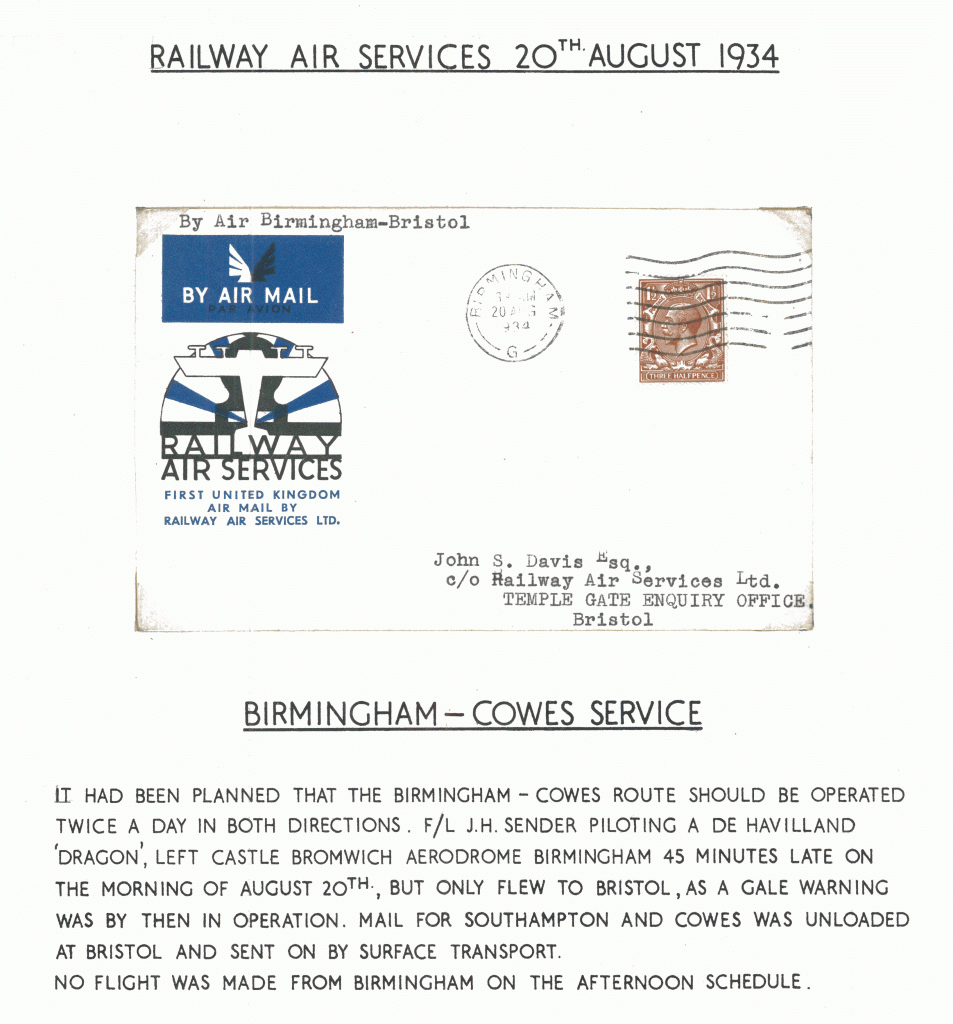
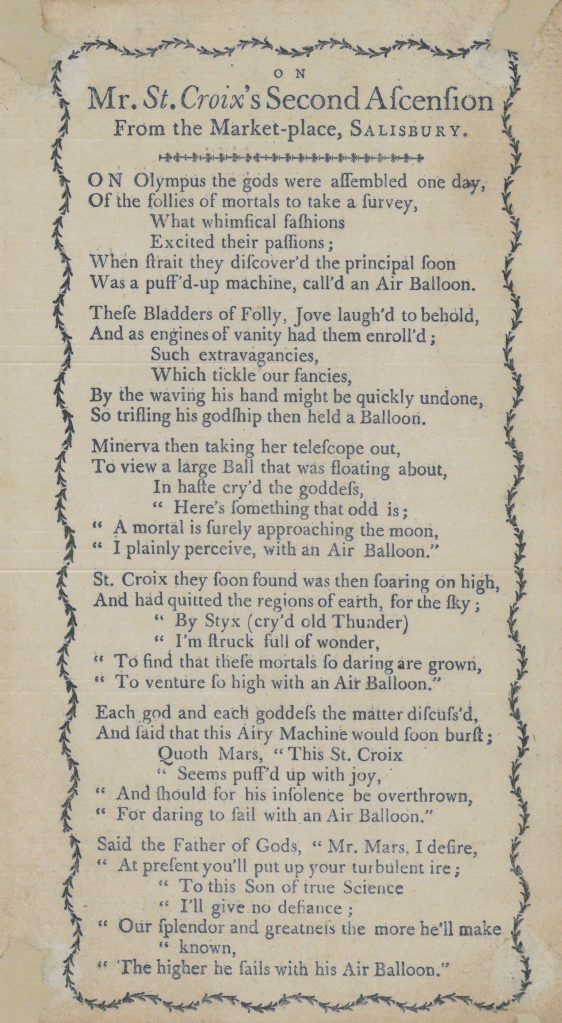
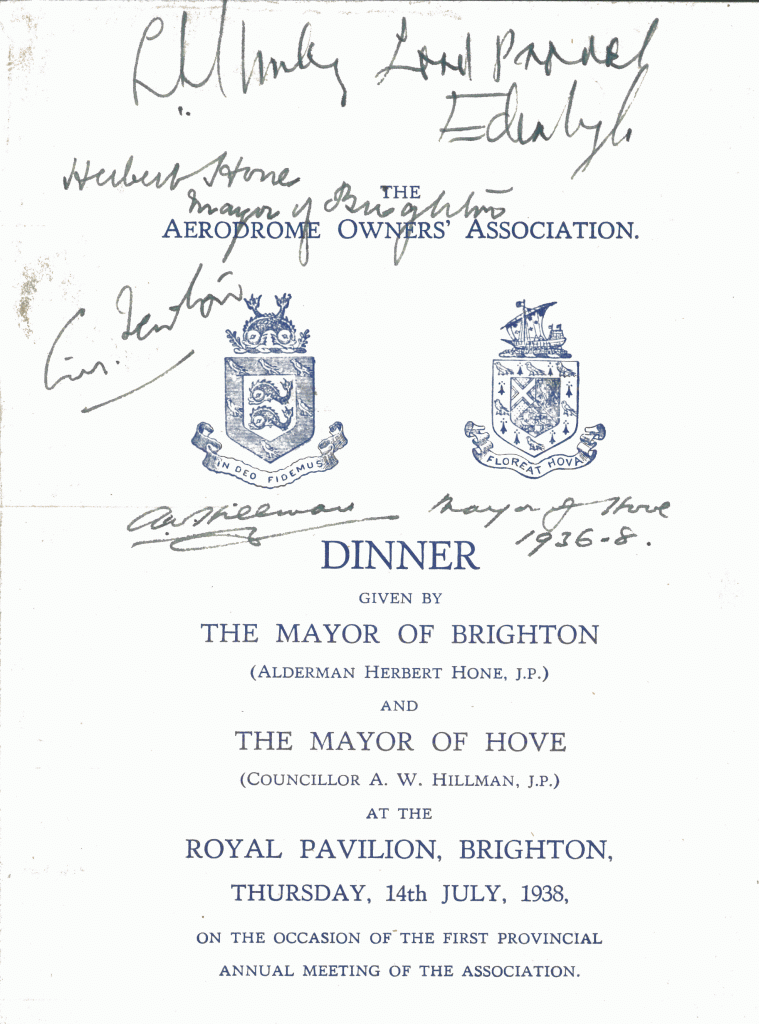
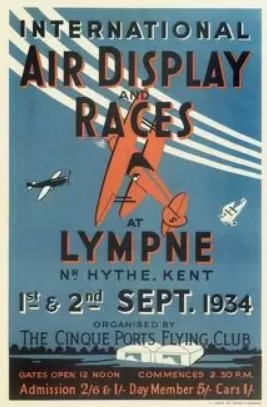
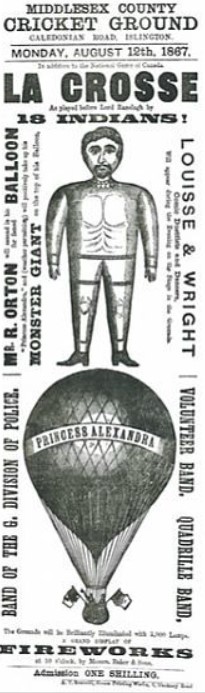
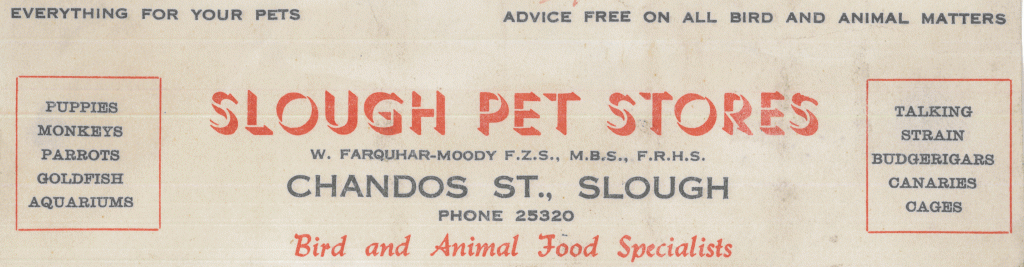
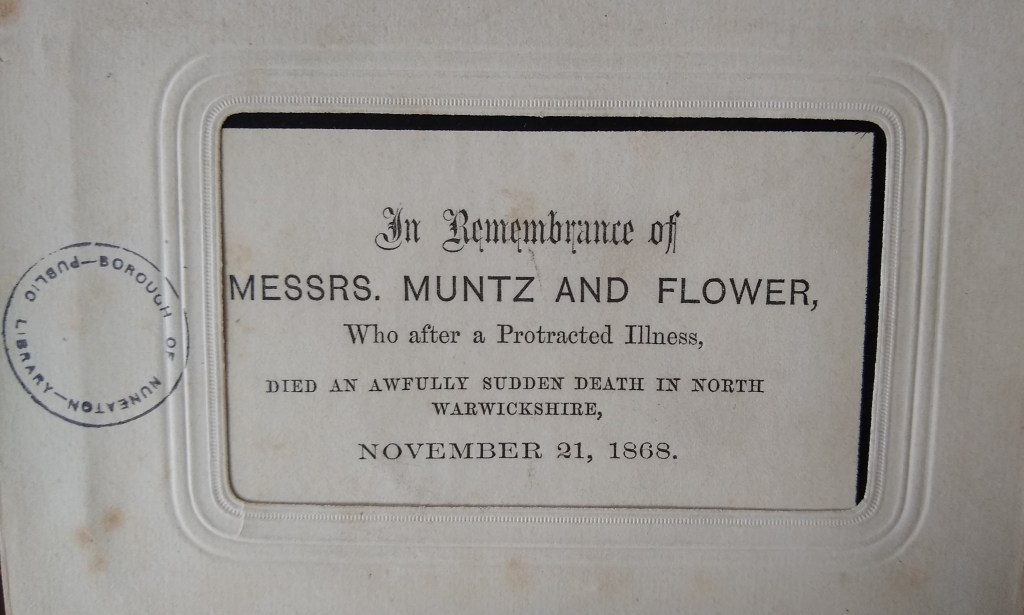
Collecting ephemera today
Because its purpose is short lived, ephemera is often discarded before a librarian or archivist knows about it. For example, current flyers pushed through the door may end up straight in the recycling bin in many households and older items found clearing a house after a bereavement may be discarded as being out of date or just “rubbish”.
In addition to the more usual pieces of ephemera, an awareness of local fringe organisations, even extreme political groups and campaigning groups that may produce literature, reflecting an aspect of the community often unrepresented elsewhere should not be forgotten. This is where new subjects such as the history of LGBTQ people often first appears in documents. The library can sometimes go on mailing lists for this kind of material. Cataloguing these items can be complicated, including finding a terminology that the groups themselves favour, but this barrier should be overcome.
Talking to colleagues, customers and the community about the value of ephemera items should be done at every opportunity so it can be saved for future generations to enjoy and use.
Organising and cataloguing ephemera
Ephemera is often one or two pages long and is usually filed with other material of interest on the same subject within subject files in filing cabinets. Alternative ways of organising material include using Dewey Classification numbers or an in-house designed classification system. In some libraries, booklets and pamphlets that don’t fall into the periodical category may also be referred to as ephemera and are filed in subject files whilst other libraries may have a separate section for pamphlets and booklets, or file them within the main sequence of books. (The disadvantage of this is that they can easily be damaged or lost) so be aware that the standard definition may be expanded. In some cases, for example, postcards, the precedent may be that they are filed with photographs and illustrations.
You may also find that some larger ephemera for example, posters or estate sale particulars are stored in vertical map tanks or on a horizontal shelf so it is always worth bearing this in mind when accessioning items to give clear references to enable their quick location for staff.
As always, it’s useful to follow the precedent of the collection but bear the conservation requirements of the item and the customer in mind when deciding where to place it and how to catalogue it.
In public library collections, particularly those over 100 years old you may find that a card index is still the traditional way of accessing most of the ephemera held. However, many libraries have stopped using card indexes and have started adding material to online databases or catalogues. If this is the case then ideally, accessioning older items retrospectively to replace the card index would be recommended but this may be a long-term aspiration and only possible with the help of volunteers. Adding ephemera to online databases or the library catalogue improves the visibility of the items especially if good key word indexing is adopted, to ensure the items are available to all who may be interested in the content, period of production or design. Though it is always best to catalogue each item of ephemera, time restraints may make this difficult for larger collections in which case it would be worth considering cataloguing groups of items, for example, as has been done with this collection of menus.
Preservation of ephemera
As a piece of ephemera is often a single piece of paper, it can also be easily lost, misfiled or stolen and so extra care needs to be given when working with it or giving it to a customer to view. In the latter situation, if in a closed building, such as an archive, where the weighing in and out of documents is usual practice and items belonging to a customer, for example, coats and bags, are locked away this may not be so much of an issue. However, for public libraries some system does need to be in place to ensure that items within a folder are recorded. A simple signing in and out sheet might be adequate; where items are counted out in front of a customer and then counted back in on return.
As previously mentioned, the quality of the paper used to produce ephemera is often poor and so many pieces are quite fragile and may need specialist conservation. Handling such items can damage it further and so in these cases the use of cotton gloves isn’t recommended as you aren’t able to feel the paper you may inadvertently tear or damage the item further.
Much can be done to preserve these items even if the budget is tight; including, making sure that they are in individual acid-free pockets (for example, Melinex archival polyester) and if necessary, supported with conservation grade mount board (for example, Microchamber). These can then be placed in a boxboard pamphlet or archive box.
If items are stored vertically within a drawer then they should have “breathing space” so they are not tightly constrained. If something is particularly fragile then the item may be placed in a separate box within the sequence or in a separate sequence. (Amend the existing index card or online entry to show the new location)
For fragile, useful, commercially valuable or popular items (if copyright allows) a digital copy can also be made and kept alongside the original. Usually the surrogate copy is adequate for most customers. If the digital image is safely named and stored it can be used if a copy is later required for a customer, for use on a wall mounted display or if you decide to digitise the collection in the future.
In certain circumstances you may have a group of similar items, for example, a series of play bills that you feel would be best preserved together. A special conservation grade album or box with pockets to insert the individual items might be the best way to do this. This enables them to be seen more easily as a collection, but also gives them a greater level of protection from general handling.
If you are working within an organisation with a separate archive facility, it may be possible for them to advise you on how best to store the item or make a box or album for you. Similarly, a conservation resources supplier can provide readymade resources, or a bespoke box.
Some specialist collections have pull out drawer units offering the ability to lay related pieces of ephemera together to offer an instant display of material on a given subject. This would be the ideal way to store ephemera and is an aspiration for many with such collections.
The Ephemera Society http://www.ephemera-society.org.uk/ promotes the conservation and preservation of ephemera and they maintain a useful website.
Collections of ephemera
Most library collections will have some ephemera, and this will usually be incorporated into the main local studies collection. However, special collections of ephemera exist in libraries all over the country. Examples include:
- The Evanion Collection at the British Library
- The John Johnson Collection at the Bodleian Library, Oxford
- Visit http://Bodleian.ox.ac.uk/johnson/projects for links to other special collections.
Many local historians and other individuals also collect ephemera so it is useful to find out who may have a collection in your community as they may be able to help you with your enquiries, lend material for exhibitions or talk about their collections as part of your library events programme.
Further reading
Got something to add?
Do you have any comments, suggestions or updates for this page? Add a comment below or contact us. This toolkit is only as good as you make it.

 CILIP Local Studies Group