
A couple of weeks ago I went to a Day Conference on ‘Schools and WWI’. As we, like many of you, are expecting an upsurge in interest from schools on this topic, I booked on.
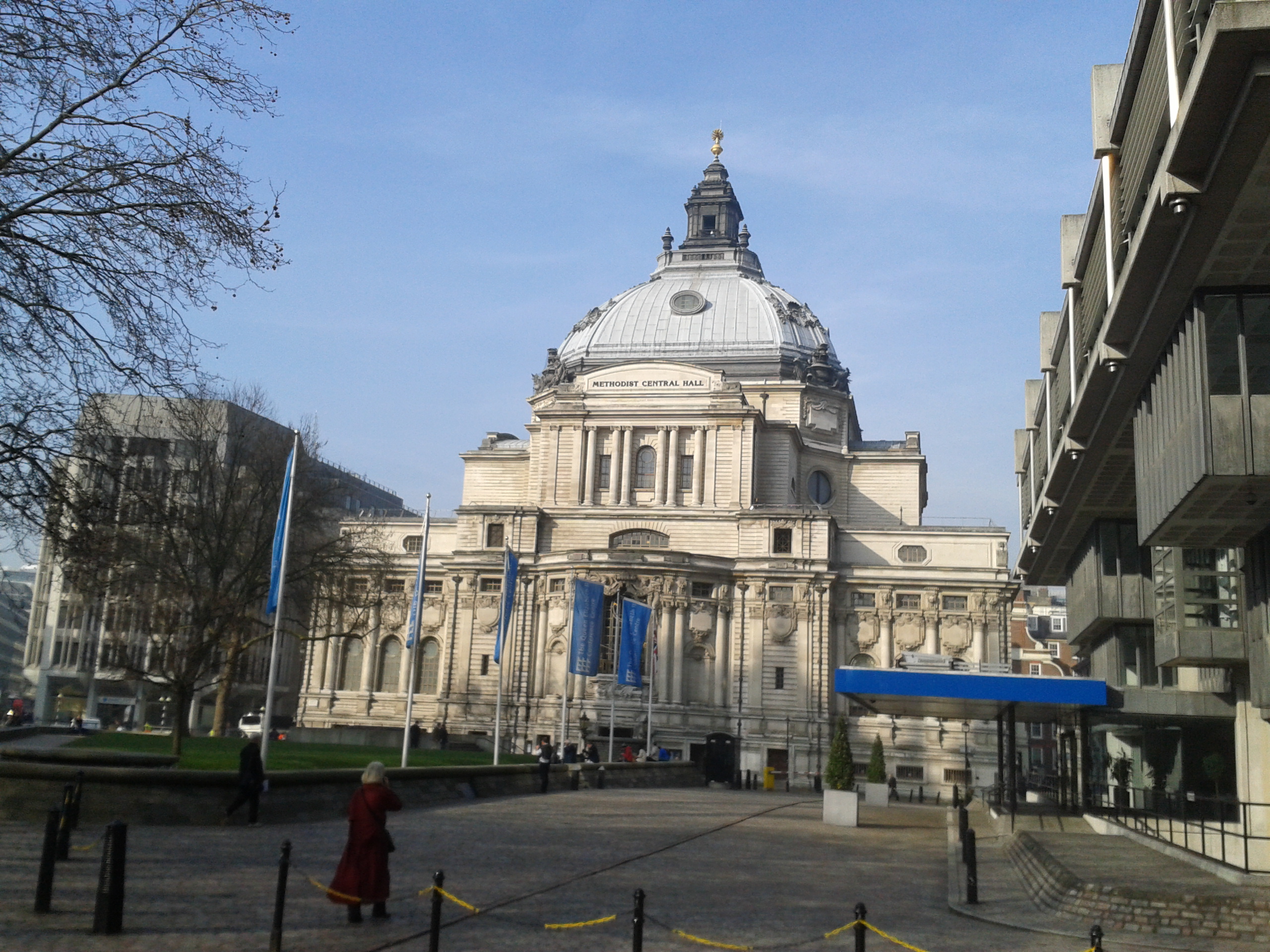
It was a very interesting day, held in Westminster Central Hall, where anti-war meetings took place in summer 1914, and where the United Nations first met. It was rather different from most day schools and conferences I’ve been to. Partly on scale, over 400 people there, and speakers, with Jeremy Paxman, Ian Hislop, Michael Morpurgo and Huw Strachan among the speakers!
It was noticeable how most people start with their personal connections, just as speakers did at the LSG Day School last year, highlighting that it is the personal connections which draw us in. Having said that, Huw Strachan said how when he spoke to a class recently none of them knew of their own family connections to WWI. As they are going on a trip to the battlefields it is likely that they will be discovering these connections and will be educating their parents, and we’ll have the opportunity to help this.
I did get a bit concerned when Strachan said he was worried at all the focus on the local stories, as that is what most of us do! I was fearing our ideas crumbling. Fortunately he went on to say that this is only when it is left only at that level, and that local stories/people can be used to illuminate the mega narrative. Whilst people struggle with big topics such as Gallipoli, The Somme, the scale of casualties, they can be taught starting with the local aspect and then going onto the big story, so local studies is still very relevant to this.
Another theme was challenging the stereotypes. Ian Hislop spoke about the Wipers Times, showing clips from the TV drama, which I felt a little embarrassed at not having seen yet. He was saying that whilst the war poets are covered we should not forget the satiricists, who present another view, which is just as valid. He said he was keen that we shouldn’t condescend the past we should treat people as people and that they knew what they were doing. Other people said that preconceptions need to challenged, for instance only 56% of casualties were in France/Flanders with the rest elsewhere in the world; a large proportion of casualties died outside of the major setpiece battles; and that ‘only’ 1 in 8 British servicemen were killed which is less than most think, although many who came back had physical or mental wounds which we should consider. This corresponds with projects I know about in Worcestershire, looking at the Home Front (often ignored in WWI History), and the Worcestershire Regiment in Gallipoli, Iraq and Egypt.
One disappointment was that there were limited references to local sources. I realise I’m biased, and we are just one source, but it would have been great for teachers to hear about the information we have which can help. Michael Morpurgo touched on the power of letters and other documents, real objects which prove that something was not just a story. A speaker in the afternoon, Barry Blades, gave a short 10 minute talk on how schools could tackle a history of their school in the war. Interestingly he left the war memorial, often used as a starting point, to the end, as chronologically it comes after the war ends. He has a website www.ww1schools.com which goes through in more details (although a little concerned that he talks about school logbooks without mentioning that many are closed for 100 years which could be a problem). Another speaker, talking about visiting battlefields, discussed local enquiries schools could do before and after their trips, but other references were sadly few. The BBC, Imperial War Museum and Commonwealth War Graves Commission had opportunity to explain about their new online resources, but it was a shame little reference was made to local museums, archives and local studies libraries. There was also no opportunity to give ideas for lesson plans and activities, which I was a little surprised about. However it did prompt me to discus with colleagues about creating a brief guide for teachers when I got back to Worcester, and reminded me that there is probably a need with teachers for this information.
It was an interesting day with fascinating speakers, even if I’d have changed a few things. It reminded me how big this topic is, how important it is for it to be commemorated, and that there is a vast amount for people, school children included, to discover over the coming years with the TV programmes, exhibitions, books and events which are planned. And this is something local studies can contribute to.

 CILIP Local Studies Group